On June 22, three leaders of developing countries made expeditions to three different Western capitals to plead their case for greater support from the rich world. Viewed jointly, these demands—largely successful—provide a neat panorama of the escalating global crises of debt, development, and security.
In Washington, India’s Narendra Modi won transfers of sensitive military technology. He insisted that India not only buy GE fighter jet engines, but that his country manufacture them. He bagged the deal, arguing that it would fortify his defensive posture with regard to China.
In Paris, Barbados’s Mia Mottley made the case for reforming the international financial system to afford developing countries the fiscal space to spend on climate and development.
This week, as Janet Yellen prepared for the G20 in Gandhinagar, India—her third trip to the country, which she has visited more than any other as Treasury Secretary—she argued that competing demands from the global South are mutually compatible, not zero-sum. Ending the war in Ukraine, she said, was a moral imperative, but “also the single best thing we can do for the global economy.”
The new president of the World Bank had a gloomier assessment. “Beneath the surface, a deep mistrust is quietly pulling the Global North and South apart at a time when we need to be uniting,” Ajay Banga wrote soon after Paris.
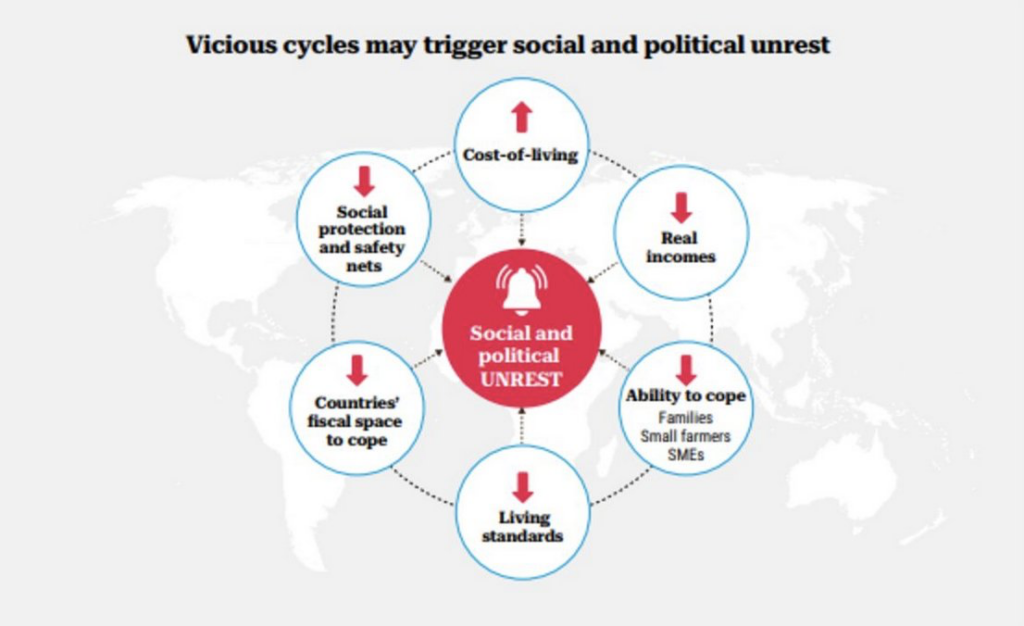
Where these crises might once have been conceived of and tackled as separate phenomena, our interdependent risk society is forced to reckon with them simultaneously. Mottley, Zelenskyy, and Modi’s framing of their demands shows how developing countries are determined to shift the global power structure to make their states capable of solving pressing problems. If War Makes the State (pace Tilly), what kind of states are war and climate making?
London
Who will pay for the reconstruction of Ukraine? This was the central question of the Ukraine Recovery Conference in London, attended by ministers and businesspeople from fifty-nine countries last month. According to UK officials, it was “not a pledging conference,” yet pledges were made. These included an additional $1.3 billion from the US, which has already sent the lion’s share—more than all EU countries combined—of aid to the country.
Zelenskyy has been more successful in obtaining materiel, funds, and public support than most developing countries. But a vast “reality gap” exists between Ukraine’s needs & Western delivery. The obstacles at play echo those that recur at international climate summits: A developing country leader insists that the wording on the urgency and scale of the funds required should be strengthened, while rich country leaders seek to limit their commitments. The recipient country’s shortcomings in governance and capacity are cited by donor countries and multilateral development banks; technical solutions are touted.
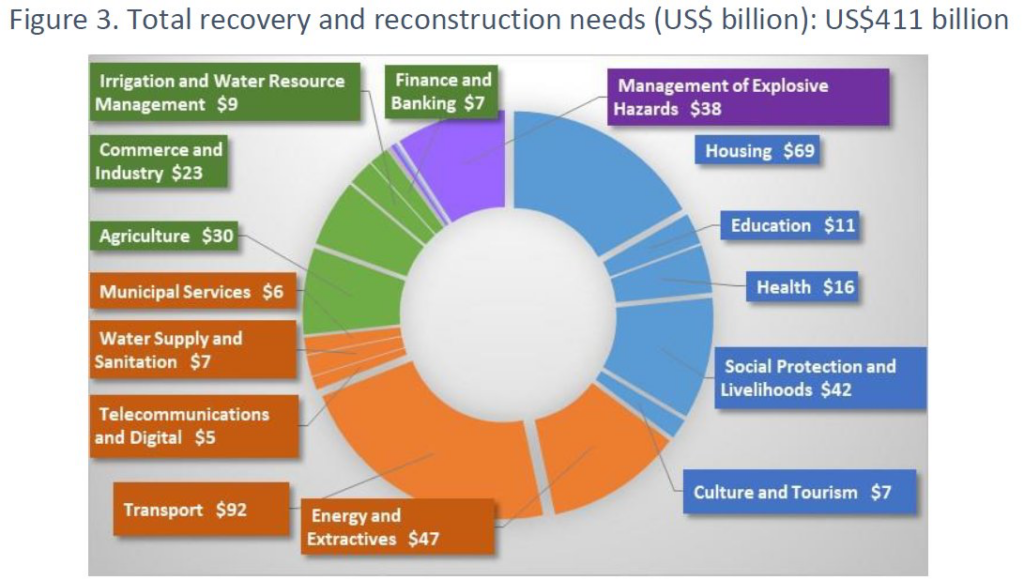
How much damage is there from Russia’s invasion? The World Bank has painstakingly done a Rapid Damage & Needs Assessment, which estimates that total reconstruction costs add up to $411 billion, almost twice Ukraine’s pre-war GDP. That’s the investment required to rebuild housing, power, transport, water, municipal services, etc. Ground teamsassessed damages from direct destruction to infrastructure (the Russian army has destroyed almost all power plants and heating) which amounts to an additional $135 billion. The human toll is still more vast. Some 13.5 million Ukrainians—almost 1 in 3 of its pre-war population— have been displaced within the country and across Europe. Seven million people have been pushed into poverty.
World Bank Rapid Damage and Needs Assessment
As at the Paris Summit, the World Bank reported that money for Ukraine’s reconstruction would come from public-private partnerships, which would, in the classic “billions to trillions” formula, “leverage limited public and donor funding with private investment.”
Which companies will invest? BlackRock has signed a Memorandum of Understanding with Ukraine to do the advising and cajoling. Andrew Forrest, the Australian iron ore billionaire and owner of Fortescue Metals, was instrumental in connecting BlackRock with the Ukrainian government. Vying for reconstruction contracts in what the Ukrainian Chamber of Commerce calls the “world’s largest construction site” are nearly 500 businesses from forty-two countries. A New York Times report describes the scene: “Latvian roofing companies and South Korean trade specialists. Fuel cell manufacturers from Denmark and timber producers from Austria. Private equity titans from New York and concrete plant operators from Germany.”
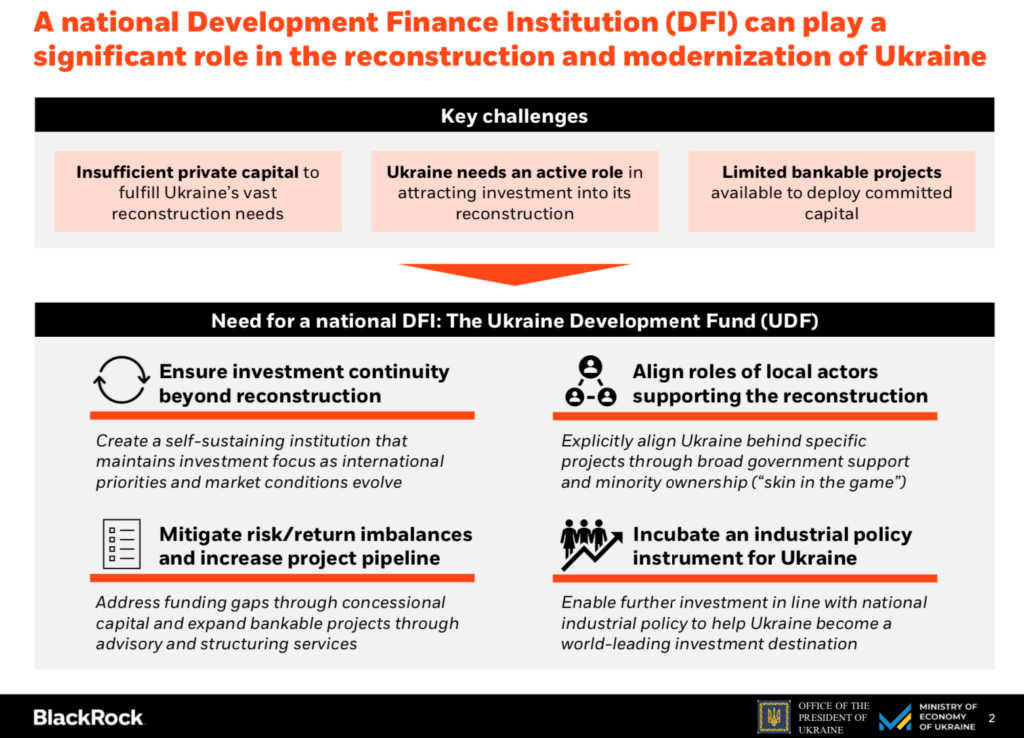
Working with the Ukrainian government, BlackRock has proposed a ‘Ukraine Development Fund’ for reconstruction that focuses on five sectors – agriculture, manufacturing, renewable energy, IT, and infrastructure. (Source: BlackRock)
Derisking will be required as few companies want to take large risks without external government guarantees. The risks that companies are wary of are further war, expropriation (i.e. nationalization by Ukraine’s government), transfer and currency conversion risk, and breach of contract. Relaunching a functional insurance market for Ukraine is the priority for the European Bank for Reconstruction and Development and World Bank’s Multilateral Investment Guarantee Agency. France and Germany have created funds to compensate investors in case of losses. The EU, too, announced a new multi-year facility of up to €50 billion for recovery, reconstruction, and modernization.
Grants and guarantees only go so far. Ukraine has lobbied the G7 for war reparations. Last week’s G7’s joint declaration says that Russian assets in their jurisdictions—estimated at over $300 billion—will remain immobilized until Russia pays for the damages it has caused Ukraine. The Council of Europe has announced a first step to use frozen assets to compensate victims and support Ukraine’s reconstruction in their “Registry of Damages.” But it is not yet clear if the US will support it. The US has been cautious about setting a precedent in international law that might enable states to demand reparations for US invasions, or be deterred from holding reserve assets in US or EU currency.
What technologies does Ukraine want? Zelenskyy promised to not “replace communist-era rubbish Russian infrastructure” but instead “leapfrog to the latest technology.” Ukraine’s scientists and government have come up with a green recovery plan that emphasizes agriculture, green steel, green hydrogen, and renewables. In short, Ukraine intends to green in a European value chain—that is, in collaboration with other countries.
For the European Union this green reconstruction framework makes it an easy sell to their populations. But Ukraine, as the IMF and EU acknowledge, was riven by oligarchs and underdevelopment before the war. It was one of a handful of countries that became poorer between 1991 and 2018—growing less in those years than all countries but Yemen, Burundi, and the DRC. Remarkably, Ukrainians continue to rank corruption as their top concern in polling, even during the war.
The IMF and EU will function as a disciplinary authority to improve Ukraine’s governance. Ukraine is trying hard to meet EU accession rules. It has promised to strengthen the National Anti-Corruption Bureau and the Specialized Anti-Corruption Prosecutor’s Office.
Paris
While the Ukraine conference was happening in London, Barbados’s leader Mia Mottley was in Paris to make the case for pausing debt repayments and remaking the power structure that forces countries to choose between debt repayments, development, and climate. Her appeal framed problems of finance as problems of war and reparations.
“The UK took a hundred years to repay its debt for World War I and Germany had all the benefits of being able to have its debt service capped at three to five percent of its gross domestic product in order to rebuild after World War II,” she said. “We are people too, we are countries too, and we deserve a similar treatment.”
“Those who have really polluted the planet over the last 200 years are those who made the industrial revolution,” Brazil’s President Lula thundered to a large crowd in front of an iconic symbol of that revolution, the Eiffel Tower. “They must pay the historic debt they owe the planet.”
No Western country, however, is prepared to tax the rich or polluters to pay for loss and damage liabilities that are projected to hit $400 billion annually by 2030. In the US, reparations have become verboten. Just last week John Kerry vowed the administration would never support “climate reparations,” under questioning from Republicans in the House.
That more attention was being lavished on Ukraine in London’s conference was repeatedly pointed out by developing country leaders at Paris. (The absence of UK Prime Minister Rishi Sunak being particularly criticized by civil society groups.) Kenya’s President William Ruto pointedly remarked that the shareholders of Bretton Woods institutions who are calling the shots were missing from the room. The only G7 country heads of state at Paris were Germany’s Chancellor Scholz and France’s President Macron.
War of territory?
Which war are we in? The late French philosopher Bruno Latour distinguished between two kinds of territorial wars: “the territorial war being waged by the Russians in Ukraine and this other, equally territorial war being waged by the climate crisis in its broadest sense.” For Latour, the physical destruction of large chunks of Pakistan and Nigeria by floods last year was also a kind of lethal violence exercised by richer states that have dumped carbon into our shared atmosphere. He wrote that “we are not dealing with a territorial war in the ‘classical’ sense with additional ‘environmental concerns,’ as we still so strangely say, but rather with two territorial conflicts over the occupation of soils by other States as well as the violence exercised by States on other territories. If it is correct to characterize the conflict in Ukraine as a colonial war, then this is even more so the case with climate wars.”
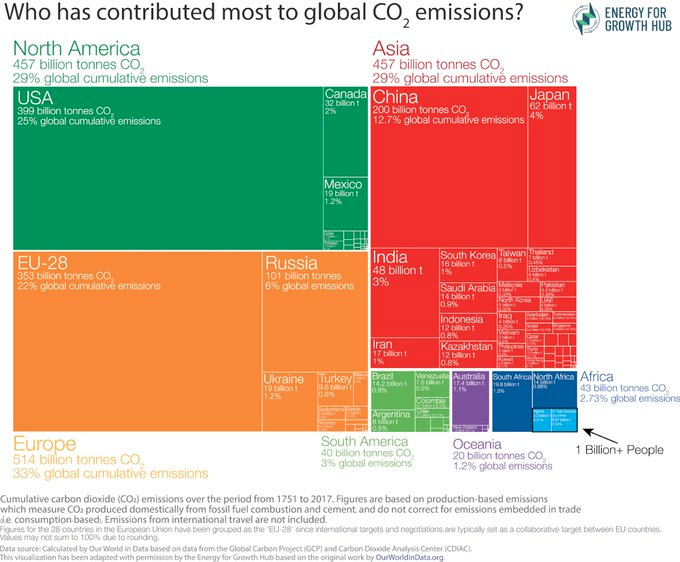
The roughly 1 billion people living in 48 African countries have contributed just 0.55% of the stock of atmospheric CO2 that creates global warming and damages countries’ security and prosperity.
Washington
In Washington, Biden and Modi signed a series of strategic technology transfer deals. The 58 paragraph Biden-Modi statement, the product of months of negotiations between the US and India, comes off as a “boys and their toys” arcade haul: Fighter Jets! Drones! Artillery! Satellites! Semiconductors! AI! Nuclear reactors! Green Technology!
India is wresting technology transfer from the US to secure itself as a bulwark against China. Slowing growth in India has widened the power gap—military, technological, economic—between the two. India has become more fearful of territorial incursion after China gobbled up a chunk of the Indian Himalayas in 2020. Modi’s pitch to the US congress emphasized technology transfer and co-production. That has been a critical demand of developing countries since the first 1992 UN earth summit in Rio, whose declaration states that besides financial resources, “technologies so developed [should] remain in the public domain and accessible to developing countries at affordable prices.” The chances of Modi’s India pushing an equitable technology transfer agenda multilaterally with other developing countries, instead of looking for its own interests during an intensifying Cold War, remain slim.
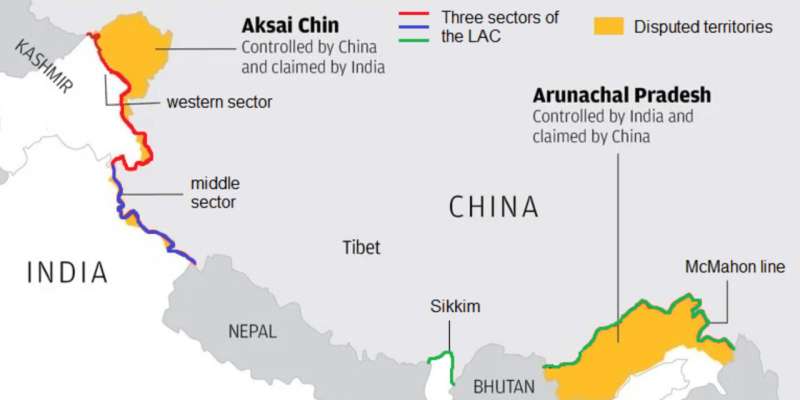
India-China is the longest disputed border in the world. Conflict has recurred since the 1962 Sino-Indian war, last in 2022. Conflict occurs in two distinct regions of the Himalayas: Aksai Chin, a region north of Nepal that is controlled by China but claimed by India, and Arunachal Pradesh, a region east of Bhutan that is controlled by India but claimed by China.
No matter the scale of their crisis—a country fighting for its survival, an island nation at existential risk of hurricane destruction, or a subcontinent whose citizens earn a paltry $7 a day —their respective leaders would not portray themselves as hapless victims, but as agents of their own destiny.
The last day of June marked the final printing of the London Inter-Bank Offered Rate (LIBOR)—an average of anticipated interest rates among London banks which has thus far served as the benchmark for short term and off-shore lending around the world. For all dollar-denominated loans, LIBOR has been replaced by the Secured Overnight Financing Rate (SOFR), a measure based on real transactions in the US Treasury repurchase market. SOFR is thought to be an improvement on LIBOR because it is based on observable rates rather than anticipated ones.
The shift has initiated cascading regulatory dilemmas in funding and risk markets. In the former, regulators have begun to scrutinize benchmark design with the aim of standardizing the construction of interest rates to avoid the proliferation of unobservable and unfounded numbers. In derivatives markets, regulators like the International Organization of Securities Commissions (IOSCO) and the US Securities and Exchange Commission (SEC) seek to shape the behavior or market actors through the creation of a single centralized clearing house for all dollar based and credit sensitive interest rate derivatives. These two approaches to regulation may conflict: because only large market makers can afford to participate in a centralized clearing house, a shortage of liquidity in the interest rate swap market might limit credit provision in the funding market.
These policies came under scrutiny for their impacts on derivatives and funding markets. But they also affect an additional and far less recognized aspect of global financial markets: the payments system—most wholesale payments depend on the liquidity conditions in funding as well as hedging markets. Overlooking the consequences of these rules is not an accident. Rather, it results from a longstanding hesitation around surveilling the evolutions in market structures, including those that facilitate the flow of payments, in order to understand systemic risks.
In conventional understandings, scholars and regulators conceptualize the payments system through the transfer of funds and exchange of information. I, however, argue that the contemporary payment system additionally depends on the flow of risk. I introduce the perspective of corporate treasurers, for whom managing the risks of wholesale, cross-country payments precede funding. As cash-rich institutions, multinational corporations (MNCs) are concerned not so much with access to funding but with obstacles posed by foreign exchange fluctuations, cash flows, and supply chain disruptions. To account for these risks, treasurers integrate a hedging strategy into their payments process.
For regulators, this analysis contains an important upshot: stability in the global payments system depends on the health of derivative markets. Beginning with the practices which constitute market microstructure thus highlights the indirect implications of regulatory measures, demonstrating the linkages between ostensibly separate spheres of market behavior.
The class view of payment as a system of daily credit management
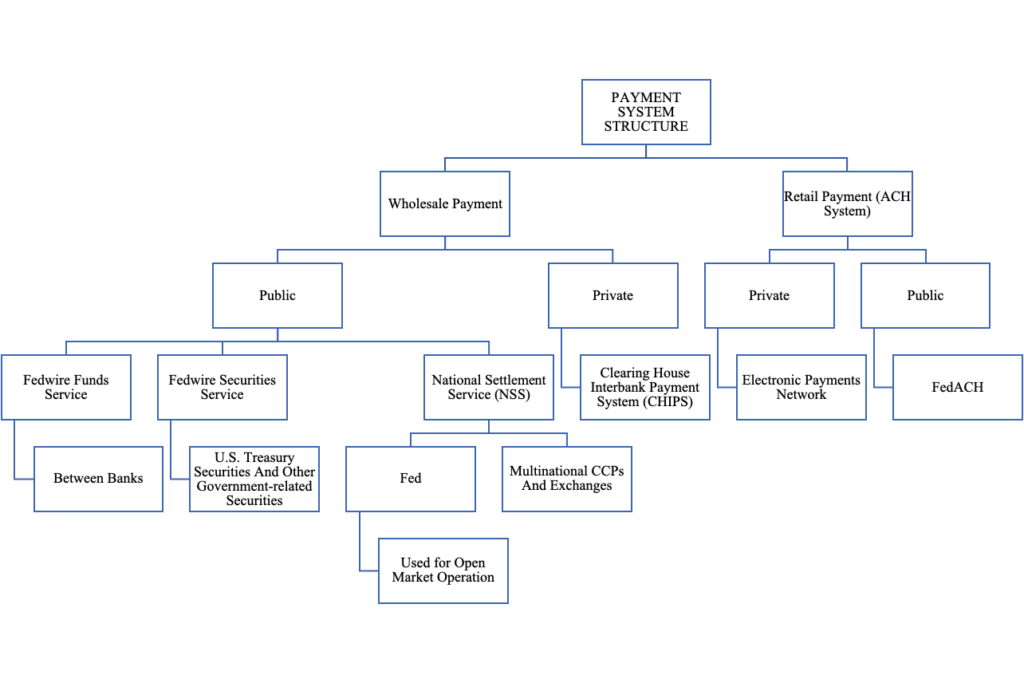
Two understandings of the global payments system prevail. Among regulators, the payments system is primarily understood through the lens of clearing and flow of information. It is divided into three stages: payment, clearing, and settlement. At each of these stages, transactions depend on IOUs (i.e., liabilities) issued by various entities. Payments between actors within the real economy are made through bank deposits. These deposits are cleared via information sharing between major financial institutions. And finally, net payments are settled using reserves.
Figure 1: Organizational Chart of Institutions Providing the Payment Services
Transactions within the flow of payment thus illustrate the hierarchy of money underpinning our contemporary financial system. Small and medium-sized banks issue deposits, automated teller machines (ATMs), and electronic fund transfers. Non-banks provide credit and debit card networks. These claims are cleared using private intermediaries who route information among financial institutions. And finally, they are settled through central bank reserve issuance.
Among scholars, the payment system is often conceptualized as an intraday credit management system. In this framework, central banks manage liquidity based on an intraday credit. With this service, banks and non-banks temporarily expand their balance sheets to increase the system-wide credit level. This “operational intervention” or “payment coordination” happens when banks and non-banks supply the minimum liquidity required to settle all payments by critical intraday deadlines. When time-critical payments experience a delay or are at risk of being missed, these institutions intervene (by pledging more collateral, providing more credit, or altering payment timings). This expanded purchasing power enables clients to meet their critical intraday payment deadlines without depending on settlements from central banks. When such payment coordination or credit intervention does not occur, it could trigger systemic missed payments or outright central bank intervention.
But only a fraction of intraday credit expansion is ultimately funded by reserves. Liquidity-saving mechanisms (LSM) complement the real-time gross settlement systems (RTGS) by allowing banks to delay payment or place payments in a “queue” with specific rules for release (typically once the bank has sufficient reserves in its account or once the payment can be offset by other transactions). LSM significantly reduces the amount of reserves compared to the total value of transactions in the real economy and financial system.
The dynamics of intraday credit creation and contraction transform the payment system into a private-public network of credit management. During the day, newly created means of payment become indistinguishable from reserves. But once markets close, central bank liabilities become the only acceptable money to fund outstanding payments. The majority of the private purchasing power the banks create during the day disappears.
The two different conceptualizations of the payment system bear different implications for system stability. Among regulators, the primary concerns are the lack of transparency and insufficient infrastructure for information sharing. By contrast, scholars foresee systemic disruptions resulting from a lack of intraday liquidity for large-value real-time gross payment. Each of these views leads to different solutions to ensure stability: regulators push for standardization and central clearing of the products while central banks direct their member banks to hold extra overnight reserves on their accounts to ensure financial stability.
The modern view of the payment system as a hybridity of risk and credit management
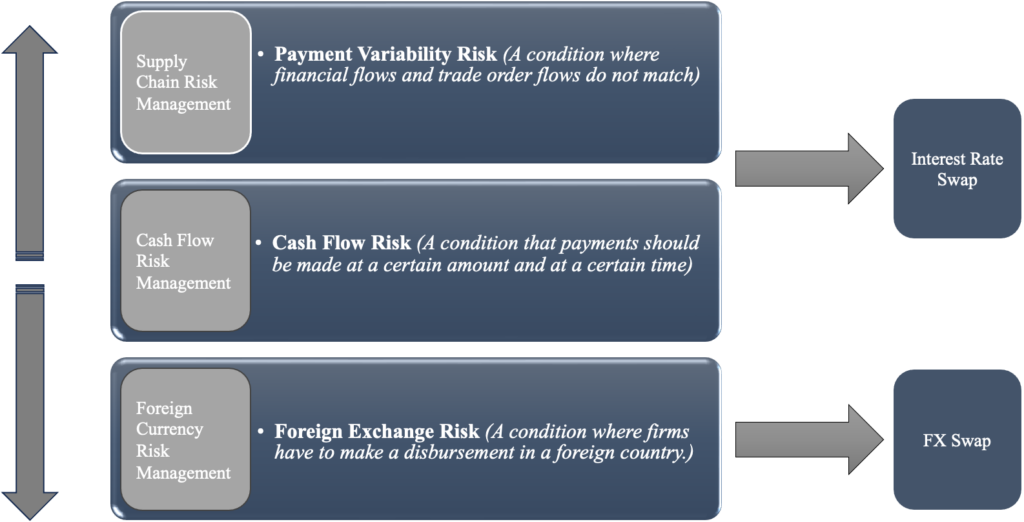
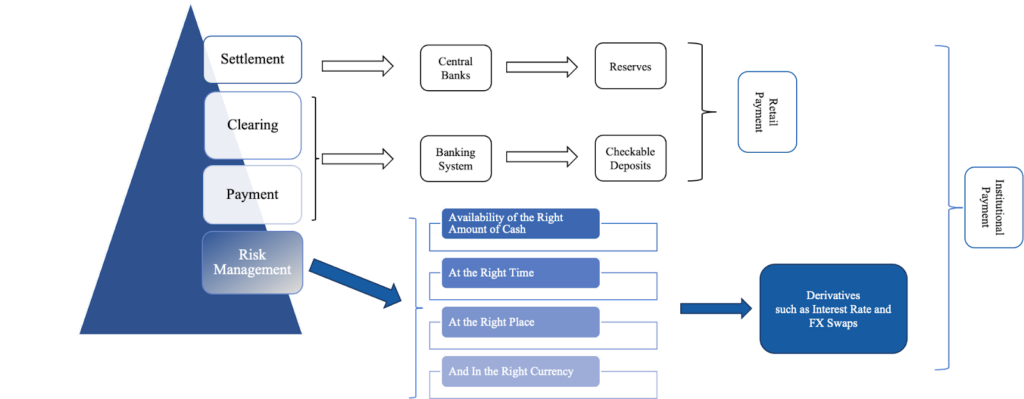
Things look different from the perspective of actors in the market. Analyzing the behavior of corporate treasurers actually responsible for making payments reveals a parallel infrastructure underpinning payment flows: risk management. In order for a retail agent to make payments, corporate treasurers must manage a spectrum of payment-related risks, including supply chain, cash flow, and foreign exchange risks. In other words, for most corporate treasurers, the payment system has four, rather than three, stages: risk management, payment, clearance, and settlement.
Figure 2: Corporate Payment Risk Spectrum
Even when institutions have sufficient means of payment, certain risks might still prevent them from paying on time, at the right amount, and in the correct currency. First, most transactions by multinational corporations happen in foreign countries and through foreign currencies. These companies therefore must manage risks arising from control over foreign-located funds, governmental restrictions on the cross-country movement of funds, and financial market regulations. Foreign exchange risk, which captures this category of exposures, could imperil their ability to pay.
A US multinational firm with cash inflows in Euros, for example, bears the risk that the latter will move adversely to the firm’s exposure in that currency: cash inflows are exposed to the depreciation of the Euro relative to the US dollar, while outflows are exposed to an appreciation of the Euro relative to the U.S. dollar. To deal with this risk, treasurers hedge their exposures using derivative instruments like foreign exchange swaps. These derivatives ensure the company’s ability to pay in the future by fixing the price of foreign currencies. For corporates handling charges in different countries, access to foreign exchange hedging instruments is the de-facto first step of payments.
Global corporations are also vulnerable to fluctuations in the global supply chain. Payment variability risks arise from a mismatch between products, information, and money—if the prices of vital inputs change significantly, or a container ship traffic jam affects production costs, for example. In these instances, firms must make similar or even higher payments with a lower output. If the firm is an essential player in the global supply chain, it could reduce its revenue, minimize trades with its partners, enter a cycle of missed payments, and ultimately break the supply chain. Corporate treasurers manage supply chain risks using derivative instruments like forward and futures contracts. These hedging products help corporations maintain production even when the input prices change significantly.1To understand such hedges and their importance for the payments, let us assume a company that purchases plastic resin regularly during the regular production course. The fluctuations in the cost of plastic resin can change the production costs. As part of its risk management strategy, the company entered into resin forward hedging transactions constituting approximately 15 percent of its 2023 resin needs and 10 percent of its 2024 resin needs based on 2022 volumes. These contracts obligate the company to make or receive a monthly payment equal to the difference in the unit cost of resin per the contract and an industry index time of the contracted pounds of plastic resin. Such contracts are designated as hedges of a portion of the company’s forecasted purchases through 2024. They are effective in hedging the company’s exposure to changes in resin prices during this period.
Finally, corporations are concerned about their ability to pay an exact amount of cash at a precise time. This cash flow mismatch risk may stem from an anticipated loss due to defective products or other operational mishaps. It is dealt with using the “cash flow hedge.” Through risk neutralization, a company can mitigate the outcome of an expected loss from an identified risk by reducing the likelihood of it occurring or reducing the severity of the loss should the identified risk be realized. Alternatively, the firm can “transfer risks” to a third party. For instance, the corporation may enter into a contract with a counterparty willing to take on those risks. Otherwise, the firm may embed the risks into a structured financial product and sell the securities in the fixed-income market. In this case, the risks will be shifted to the bond investors willing to accept it. These transactions take place through derivatives and structured finance.
Figure 3: The Hierarchical Structure of Payment Stages
Using derivatives, corporate treasurers are thus able to mitigate potential disruptions to firms’ payment commitments. For these actors, payment is inseparable from risk management. Corporate treasurers administer institutional payments by forecasting transactions and managing a spectrum of payment risks. They use derivatives to ensure the risks do not materialize and payments go through. Credit and risk management, therefore, add a fundamental outer layer to the hierarchy of the payment system.
Hybridity as a pillar of financial stability
The payment system is a dynamic map of global cash flows facilitated by a network of private entities and central banks. The market microstructure lens reveals the countless linkages facilitating these payments. Notably, it points to the connection between risk management and the flow of payments, integrating derivative and funding markets into our understanding of how payments work.
The shift from LIBOR to SOFR imposes different sets of rules on dealers and bankers, with dealers likely to face a bigger regulatory burden than their bank counterparties in the funding market. Because the payment system links the business model of bankers and derivative dealers, such developments have the potential to impact the payments system as a whole—systemic risk in the payments system may arise out of diverging business models and financial incentives of key institutions. This approach goes beyond measuring a few designated systemically important institutions’ liquidity, capital, and leverage ratio. At the core, the stress shifts from the static measurement of the balance sheets to the dynamic changes in the business models that could affect essential functions in the ecosystem.
In today’s financial system, the secular rise of missed payments in the corporate world can be rooted in the pipelines facilitating both hedging and credit instruments. Such interpretations allow policymakers to capture the shifts and linkages in the complex financial ecosystem and design regulations that control market-based cycles rather than charge them postmortem.
In Spain’s forthcoming snap elections, the energy transition is high on the agenda, and solar power at the forefront. Prime Minister Pedro Sanchez has often expressed ambitions to make Spain the lead producer of solar electricity on the continent, positioning renewables as a cornerstone of the country’s “transformation in this decade.” By exploiting Spain’s great potential in solar power generation, the Spanish center-left coalition intends to upgrade the Spanish economy and reorient it towards higher value-added activities, in order to create well-paid jobs and appeal to manufacturing firms through low energy prices.
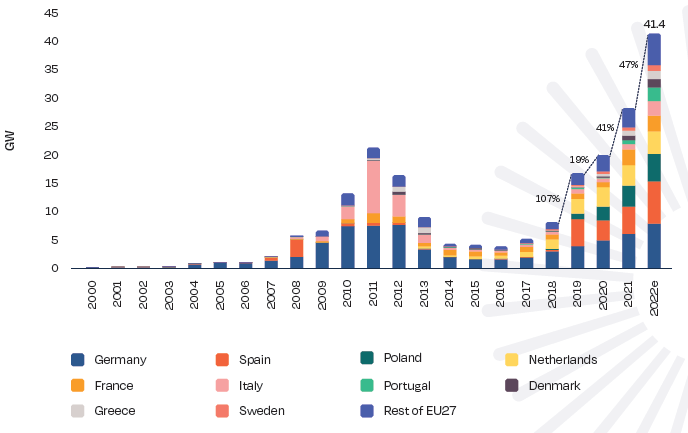
At first glance, the results look good. Under the tenure of the well-respected Minister for Ecological Transition Teresa Ribera, Spain has drawn out ambitious public investments and new regulatory measures to hasten the approval of solar plants and provide certainty to investors regarding contracts and energy prices. The country’s photovoltaic (PV) installed capacity is currently estimated to reach 49GW by 2025, hugely surpassing initial ambitions to reach 39GW by 2030. The government has upwardly revised its target for renewable energy share in electricity production from 73 percent to 81 percent.1From 42 to 48 percent in terms of final energy consumption which includes transportation. The limited production incentives required to achieve these aims testify to the fact that solar energy has reached grid parity: the point where a renewable energy source can produce at or below the price of energy from the electricity grid.
But these achievements should not distract from the chinks in the armor. The possibility of a new solar crash, echoing that of 2010, haunts Spain’s solar sector. With a mediocre capacity for high voltage transport and storage, falling energy prices, blockages in the permit process, and limited connection to France, the country’s solar infrastructure faces an uphill battle. The possible victory of the right in forthcoming elections could ignite a new string of bankruptcies and further undermine the renewable transition. The policies have also faced significant resistance across rural areas heavily impacted by renewable energy plants—protests which the right has tried to exploit. Finally, like other European countries, Spain relies heavily on cheap, high quality Chinese solar panels, raising issues of technological dependence, security of supply, and exposure to geopolitical shocks.
For countries embarking on their own green development initiatives, the trajectory of Spain’s solar energy policy offers insights on the possibilities and limitations of a market-oriented productivist industrial policy focused on regulation and leveraging private investment. While important steps have been taken, addressing bottlenecks in production and storage may require a more vertically integrated approach—and more proactive state intervention.
Entrepreneurial state?
Since 2019, the Spanish government’s green energy initiatives2The most important of which are the (<)a href='https://www.miteco.gob.es/es/prensa/pniec.aspx' target='_blank' rel='noreferrer noopener'(>)2019 EU-mandated National Integral Plan of Energy and Climate(<)/a(>), the 2021 Climate Change and Energy Transition Law, the National Plan of Recuperation, Transformation, and Resilience, and the the 2021 (<)a href='https://planderecuperacion.gob.es/como-acceder-a-los-fondos/pertes' target='_blank' rel='noreferrer noopener'(>)Strategic project for Recovery and Economic Transformation(<)/a(>). have shared a transformational ambition far surpassing any we have witnessed in recent decades. By 2030, Spain is expected to reduce 23 percent of its greenhouse gas emissions and reach 81 percent reliance on renewable electricity production. To pursue these objectives, the government plans to double wind energy generation, quadruple solar energy generation, and evolve into a continental leader in green hydrogen—with plans for the construction of a hydrogen pipeline between Spain and France. The goals demand an astounding €241 billion in total investment, with €91 billion for renewables alone over the present decade. They are expected to bring positive macroeconomic effects, generating 1.8 percent in additional GDP growth annually by 2030 and nearly 300,000 jobs.
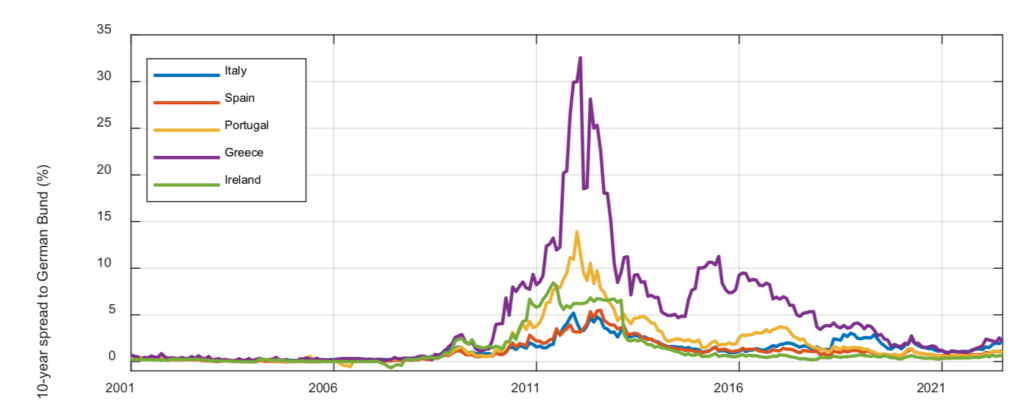
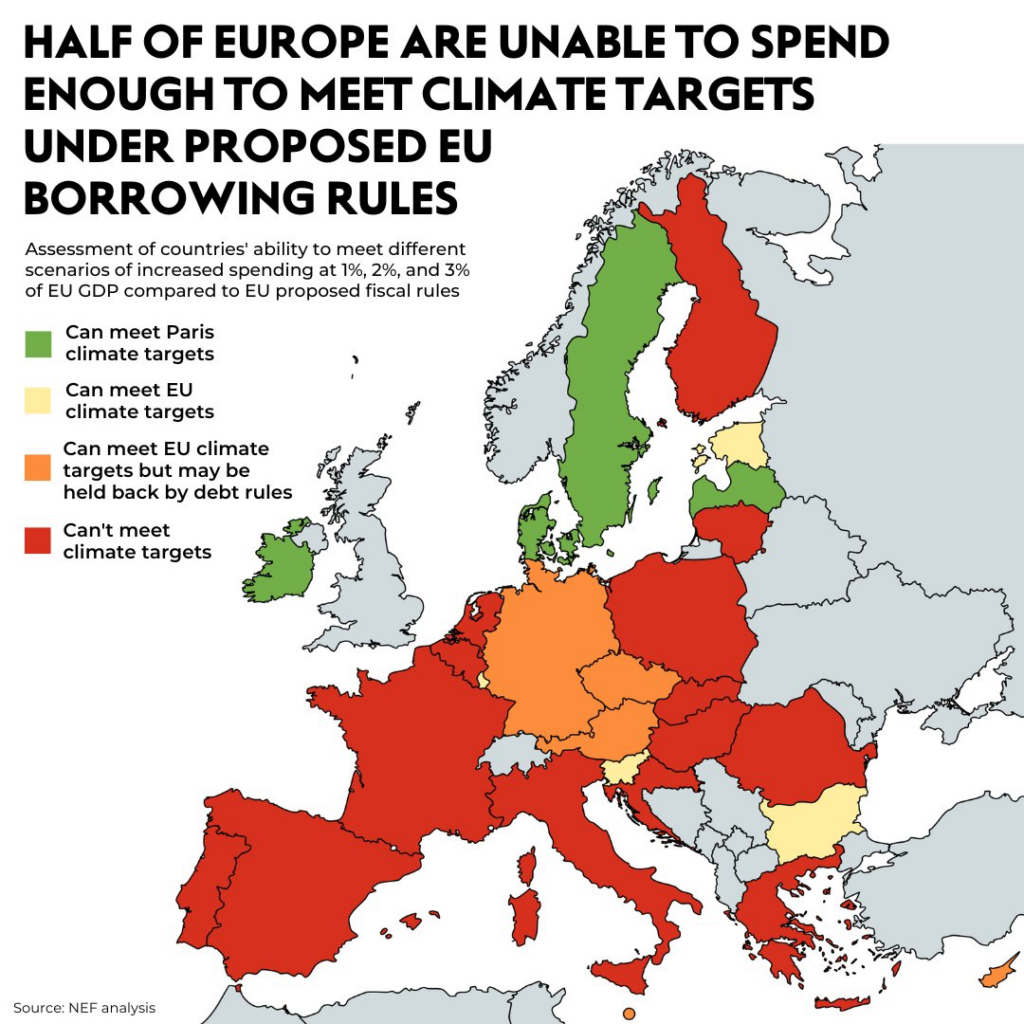
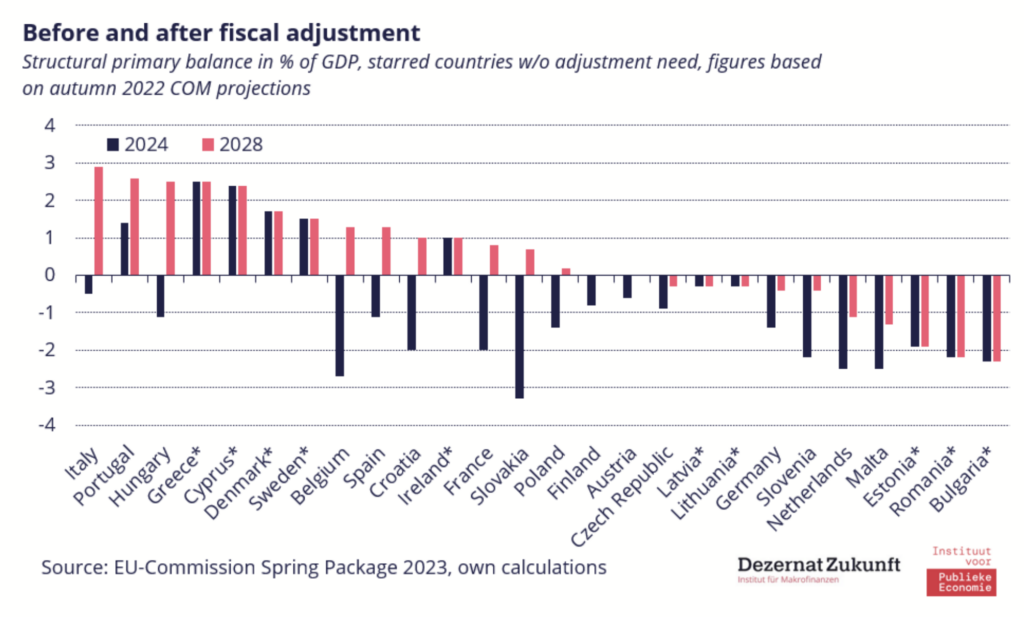
These plans reflect a break with the continent’s austerity consensus of the 2010s. Then, indebted EU members like Spain, Italy, and Greece were forced to slash state spending and public investments, leading solar energy capacity to plateau. Climate policy was entrusted to financial experts via arrangements like the European Emissions Trading Scheme, with very little role for public institutions. With the dawning of the “New Washington Consensus,” policymakers have been eager to stress a departure from the neoliberal suspicion of the state. Motivated by growing geostrategic competition with China, Western governments have embraced a more proactive industrial policy and sought to rebuild a domestic manufacturing base while accelerating the post-carbon energy transition. We face a global shift from neoliberalism to neostatism, in which government intervention has gained a renewed prominence in policymakers’ toolkit.
The greater degree of government interventionism is apparent in many recent policies introduced in Europe and in the US. The Biden administration IRA (Inflation Reduction Act) provides over $200 billion in energy-related tax incentives to accelerate the green energy transition. Similarly, the CHIPS and Science act uses both grants and tax credits in order to strengthen domestic capacity in the semiconductor sector. These policies break with Gary Becker’s infamous contention that “the best industrial policy is none at all.”
Within this reemergence of the state, varying approaches abound. As Spanish economist David Lizoain highlights, there is an evident difference between “the American reliance on tax incentives and the European emphasis on regulation.” This latter approach is characteristic of Spain, which is counting on the private sector to provide 80 percent of the investments outlined in the transition plans.
Phantom crash
The current surge in Spanish solar energy in Spain is not unprecedented. Between the late 2000s and early 2010s, Spain experienced a solar boom that saw the country reach 4.5 GW of solar PV installed capacity in 2012, from just 125MW in 2006. This impressive growth was made possible by generous premium feed-in tariffs, which encouraged investors to flock into the solar energy sector. In 2008, Spain became the second country in the world for solar power generation (after Germany) as well as a leader in concentrated solar power.
This boom, however, was unsustainable. With solar plant construction far exceeding initial forecasts, the government was saddled with over €100 billion in investor obligations. Under financial pressure from the 2008 crash and the ensuing sovereign bond crisis, in 2011 the Zapatero government cut premium tariffs, leading to a 30 percent reduction in revenues for 90 percent of solar PV plants, while limiting installations to 500MW every year.
The measure meant bankruptcy for 30,000 investors who found themselves with far lower revenues than they had anticipated. The People’s Party government led by Mariano Rajoy also introduced a highly unpopular “sun tax” to pay for connection to the energy grid, further increasing the costs of using solar panels for individual consumption and generating widespread disappointment among investors. The policy was only repealed in 2019 by the new Socialist government led by Sánchez, in a sign of renewed support for the solar energy industry.
Today’s industry conditions have drastically changed. With grid parity, solar energy production makes commercial sense, and the government no longer needs to provide the subsidies which led to the previous bubble. National incentives for utility-scale plants have all but disappeared, except for small self-consumption solar PV plants and solar thermal and heat pump technologies. Furthermore, feed-in-tariffs (FITs) by which the government guaranteed a fixed price have nearly been phased out, substituted by Power Purchase Agreements (PPAs), long-term contracts between energy producers and consumers which guarantee a fixed price. These more predictable price agreements now cover around two-thirds of all solar PV projects.
Regulatory changes have made enormous strides, but they cannot resolve infrastructural gaps. The partially privatized grid operator Red Electrica de España (REE) is struggling to provide grid access given the backlog of applications. This backlog has been fed by huge speculation in permit auctions, with some actors gathering grid connections without the intention of actually building plants.
The solar energy sector is also faced with a deeper perversity: its very rapid success may augur its undoing. The momentous growth of renewable energy installations risks triggering a solar energy glut, namely a situation in which price reductions resulting from the abundance of solar energy significantly lower profit margins for producers and in turn decrease future investment. This is already the case during sunny days in late spring and summer in some countries, when the price of electricity can even go negative.
The consequence of a solar energy glut and its depressive impact on wholesale prices, also described as “price cannibalization,” is that the industry’s rate of growth could see a protracted decline, jeopardizing Spain’s green transition targets. As energy researchers Juan Ignacio Peña , Rosa Rodríguez, Silvia Mayoral claim in a recent journal article “If currently proposed policies aiming at solar and wind reach 74 percent in electricity generation by 2030, the market remuneration of all technologies will likely be well below their current estimated levelized costs.” This situation casts a doubt on the possibility of relying on the private sector to support long-term growth.
The risk of price cannibalization is exacerbated by limited grid storage capacity. Unlike oil or nuclear energy, solar energy accumulates intermittently when the sun shines, threatening to overcharge the grid. Despite advances in utility-scale lithium batteries, adequate storage remains a major obstacle for the Spanish solar transition, particularly as the share of solar energy grows.
A victory for the right will likely exacerbate these structural constraints. The leader of the conservative People’s Party has promised to extend the use of nuclear power stations slated to be retired from operation and introduce a tax on renewable energy, threatening solar companies already operating in the sector. The far-right Vox party, likely to be a junior partner in the new government, has expressed more explicit skepticism of the green transition. The party has capitalized on discontent from rural families who have been displaced and distressed by the construction of solar energy plants and wind farms.3These tensions are made evident in two recent films; (<)em(>)Alcarràs(<)/em(>) by Catalan director Carla Simón and (<)em(>)As Bestas(<)/em(>) Rodrigo Sorogoyen. As ecological activist Hector Tejero highlights “the government has not done enough to reward rural areas…whose solar plants serve large cities, with few employment, infrastructural, or economic benefits.”
Perhaps the most significant challenge to the Spanish solar transition comes from its dependence on Chinese panels. Solar panel manufacturing depends on a complex supply chain involving the refining of silicon and the production of polycrystal or monocrystal silicon ingots; their cutting into wafers (similarly to microchips), the transformation of wafers into solar cells, the assembling of solar cells into solar panels, and the production of other key components such as cables and inverters to transform the direct current produced by solar panels into an alternating current.
Solar panels require no rare earth inputs. They are 95 percent constituted by the Earth’s second most common mineral: silicon. But for production, this silicon needs to be painstakingly refined with a purity of at least 99.99 percent through the energy intensive Siemens process. While until the early 2000s this industry was still dominated by European and Japanese companies, today China provides around 80 percent of solar panels and is dominant across 90 percent of the supply chain. This was made possible because Chinese firms received large subsidies from the Chinese government, and they also purchased manufacturing equipment from European firms. Now Chinese firms have achieved impressive efficiency in the production of solar panels, much of which is now automated, thanks to the use of coal for energy-intensive processes such as the refining of polysilicon.
Spanish renewable energy expert Pedro Fresco notes: “In the past, Spain had many companies involved in the different components of solar panel production. It has since lost much of this, and getting it back will be difficult.” According to some estimates, the country still holds around 60 percent of the value chain, including some capacity in the refining of polysilicon (though the result is of a lower grade). However, Chinese solar panels remain almost impossible to beat: their price is around 20 percent lower than European panels and the average quality is higher.
Rebuilding solar manufacturing
Ribera has often stressed the importance of adopting a holistic approach and fostering a sustainable “energy ecosystem.” Her outlook positions the government as a logistical force responsible for ensuring that all the necessary pieces operate properly, smoothing the regulatory pipelines and eliminating clogs in the permit process. But this regulatory approach is unlikely to adequately meet the challenges ahead for the Spanish energy transition. Mitigating the counterproductive market incentives generated by falling prices, generating sufficient storage capacity, balancing the distributional benefits, and developing the hardware necessary for energy generation will require far more public sector intervention.
Some of these interventions can be taken at the national level: the Spanish government will need to make significant investments into energy storage, which presently remains commercially unattractive. To avoid mass company bankruptcy, it will also need to offer a minimum electricity price guarantee. Other issues require continental coordination: as Simone Tagliapietra and Reinhilde Veugelers have argued, coordinated continental action will be required to develop adequate industrial hardware. Besides national champions, EU authorities should adopt vertical industrial policy actions to create continental champions, with different European countries specializing in different components of the value chain, and investments to provide a better interconnection across national electricity grids.
While the growth of Spain’s solar industry has overwhelmed expectations, the current trajectory is fragile. Grid parity is only the beginning; there will soon be calls for the state to address bottlenecks in energy storage, deal with the risk of solar energy gluts, ensure better high-voltage transmission, and work towards the long-term goal of “reshoring” the solar panel industry. Regulating private investments is not enough. At some point, due to price cannibalization, market incentives will not be sufficient to ensure the growth in solar electricity generation required to meet net zero target. The Spanish government will likely be forced to consider either the introduction of new subsidies or the creation of a publicly-owned renewable energy company. If Spain is to fully exploit the power of the sun to transform its devalued economy, its next government must take a proactive role—not just as regulator, but as architect of the renewable energy sector.
On August 5, 2019, Indian Home Minister Amit Shah presented the draft of the Jammu and Kashmir (J&K) Reorganization Bill in the Lok Sabha, the lower house of India’s parliament. The bill threatened to permanently alter the legal, political, and economic status of the state, sparking widespread outrage in the region and across the world. As Yamini Aiyar of the Hindustan Times commented:
The undemocratic manner in which the J&K reorganization bill was passed in Parliament, the silencing of voices of those affected by these actions, and the unprecedented move to convert a recognised state into a Union Territory (UT) —mark a rupture in India’s federal trajectory. India is now firmly on the path to centralisation of power and may well be inching toward transforming into a unitary rather than federal state.1Aiyar, Yamini, “India’s March towards Centralisation,”(<)em(>) Hindustan Times, (<)/em(>)August 11, 2019.
The bill proposed revoking the state’s constitutional autonomy, downgrading it to an Indian Union territory directly administered by the Indian government, and opening its international legal status to dispute. Most importantly, it abrogated Article 370 of the Indian Constitution, which in 1949 gave Jammu and Kashmir “special status,” including measures of autonomy from the Indian union government and the ability to grant special employment and land ownership privileges to permanent residents.
The right-wing ruling Bharatiya Janata Party (BJP) used its majority to force through the bill in both houses of Parliament. On August 6, a day following the bill’s presentation, Article 370 was repealed by Presidential order. The move was widely considered illegal by constitutional experts and the Indian Supreme Court and lacked support from J&K’s elected state government—a coalition led by the local People’s Democratic Party—which itself was dismissed by Presidential decree in June 2019. Preempting resistance in what has been the site of continuous armed insurgency against Indian rule since 1988, Shah added 35,000 armed forces to the existing 308,000 stationed in J&K. Indian soldiers stretched barbed wire across neighborhood exit points; the state cut mobile and internet services and imposed restrictions on movement. The lockdown served to silence Kashmiri resistance, allowing the Indian government to control the information emerging from the protests. The government crafted a narrative of Kashmiri violence and backwardness.
The centralization initiated by the bill bears powerful implications for regional development. In his speech before Parliament, Amit Shah declared that corruption had ruined the state, claiming that “only 3 families benefited from Article 370.” The government narrative held that the repeal would ultimately facilitate investment to benefit the state. But contrary to the depiction of the region as underdeveloped, chaotic, and in need of governance, Jammu and Kashmir boasts one of the lowest poverty rates in India.
Jammu and Kashmir’s distinct distributional history is intimately linked to its regional autonomy. It was J&K’s special status that empowered the state government to implement the most radical land reform policies in the nation post-Independence, in which over 90 percent of land owned by landlords was redistributed. These unrivaled policies laid the foundation for the state’s later development success.
Measuring development in Jammu and Kashmir
Despite Shah’s assertions, J&K has consistently been ranked among the highest across most developmental indicators. Examining Census of India and Planning Commission data from 2011, H.A. Drabu notes that “the relative inequality, the distribution of income as well as consumption in J&K are all much more evenly spread across the population.”2Drabu, H. A. “Was Special Status a development dampener in J&K?”,(<)em(>) Livemint,(<)/em(>) August 7, 2019.
Figures from the 2012 Reserve Bank of India report (the most recent report available) show the absolute poverty rate in J&K was 13.1 percent, compared to 37.2 percent in India. With an overall Gini coefficient of 0.24, J&K has significantly less income inequality than India, which has a Gini coefficient of 0.34—making it one of the eleven most unequal countries in the world.3The Commitment to Reducing Inequality Index measures government action on social spending, tax, and labor rights, the three areas international experts say are critical to reducing inequality. India ranks 147th out of 157 countries in this index because of massive government failures in collecting tax from the richest, extending public spending and providing entitlements to the millions who work in the agricultural and unorganised sectors. In its report on CRI globally, Oxfam International described India’s neglect in addressing inequality as “a very worrying situation given that it is home to 1.3 billion people, many of whom live in extreme poverty.” These figures help make J&K “one of the most egalitarian sub-national economies in the country.”4Drabu, H. A. “Was Special Status a development dampener in J&K?”,(<)em(>) Livemint,(<)/em(>) August 7, 2019.
The percentage of indebted households in J&K was estimated at 29.5 percent for rural areas and 17.9 percent for urban areas, compared to 31.4 percent and 22.3 percent, respectively, at the all India level in 2017. In the same year, the percentage of indebted households in J&K was estimated at 29.5 percent for rural areas and 17.9 percent for urban areas, compared to 31.4 percent and 22.3 percent in India.5National Sample Survey Office (<)em(>)“(<)/em(>)NSS Survey 71st round, August 2016, Schedule 25,” New Delhi: Ministry of Statistics and Programme Implementation Central Statistics Office, Research & Publication Unit, 2017. According to Drabu, “Households in J&K [had] the second lowest incidence of indebtedness in the country. Combining the incidence of indebtedness and the average value of assets per household, J&K, with a debt-to-asset ratio of less than one, is one of the best in the country.”
With low poverty and indebtedness, Jammu and Kashmir scores higher than India on average on other Human Development Indicators, including life expectancy at birth, infant mortality rate, maternal mortality rate, household access to clean drinking water, household access to sanitation, nutrition, and prevention of homelessness and child marriage.
Key HDI Indicator
India
Jammu & Kashmir
Sex ratio of the total population (females per 1,000 males)
991 Rural 1,000
972 Rural 978
Sex ratio at birth for children born in the last five years (females per 1,000 males)
919 Rural 927
922 Rural 928
Households with electricity (%)
88.2 Rural 83.2
97.4 Rural 96.3
Households with an improved drinking-water source (%)
89.9 Rural 89.3
89.2 Rural 85
Households using improved sanitation facility (%)
48.4 Rural 36.7
52.5 Rural 45.9
Mothers who had antenatal check-up in the first trimester (%)
58.6 Rural 54.2
76.8 Rural 74.1
Mothers who had at least four antenatal care visits (%)
51.2 Rural 44.8
81.4 Rural 78.8
Average out of pocket expenditure per delivery in public health facility (Rs.)
3,198 Rural 2,947
4,192 Rural 4,104
Children age 12-23 months fully immunised (BCG, measles, and three doses each of polio and DPT) (%)
62 Rural 61.3
75.1 Rural 72.9
Children under five years who are stunted (height-for-age)12 (%)
38.4 Rural 41.2
27.4 Rural 28.8
Men who are literate (%)
85.7 Rural 82.6
87 Rural 86.5
Women who are literate (%)
68.4 Rural 61.5
69 Rural 65.4
Institutional Births
78.9 Rural 75.1
85.7 Rural 82
Women whose Body Mass Index (BMI) is below normal (BMI <18.5 kg/m2) (%)
22.9 Rural 26.7
12.1 Rural 14.1
Men whose Body Mass Index (BMI) is below normal (BMI < 18.5 kg/m2) (%)
20.2 Rural 23
11.5 Rural 13.6
Anaemic children between 6-59 months (<11 gidl) (%)
58.4 Rural 59.4
43 Rural 44.1
Pregnant women age 15-49 years who are anaemic(<11g/dl) (%)
50.3 Rural 52.1
38.1 Rural 39.4
Infant Mortality Rate (per thousand live births)
41
32
Under five mortality rate (per thousand live births)
50
38
Life expectancy at birth(in years)
67.9
72.6
Source: National Family Health Survey, Indian Institute of Population Sciences, 2015-16.
These figures from the Indian government-supported National Family Health Survey indicate that J&K leads India in twenty out of twenty-two of the key indicators. With a Human Development Indicator (HDI) score of 0.53, the state is well above India’s average HDI score of 0.47.6Planning Commission, (<)em(>)India Human Development Report(<)/em(>), New Delhi: Government of India, 2011.
“New Kashmir”
Jammu & Kashmir’s legal autonomy and unique political circumstances have been key to its development achievements. When India became an independent nation on August 15, 1947, J&K was characterized by feudal land ownership, an abysmally low literacy rate of 5 percent (compared to 18.3 percent in India), and a life expectancy of just twenty-seven years. Like many other princely states in India, it was given the choice to join either India or Pakistan, but the territory’s leader Maharaja Hari Singh favored independence and remained sovereign until October 1947. The 1947 tribal invasion from Pakistan dramatically shifted the political calculus. The Maharaja was forced to appeal to India for military assistance, in exchange for which the Indian government demanded that J&K join the Dominion of India. During the ensuing Partition, thousands of Muslims from Jammu were killed by the Maharaja’s Dogra mercenaries, with assistance of the Hindu nationalist Rashtriya Swayamsevak Sangh (RSS).7Christopher Snedden (2001), “What happened to Muslims in Jammu? Local identity, ‘the massacre of 1947’ and the roots of the ‘Kashmir problem,’”South Asia: Journal of South Asian Studies, 24:2, 111-134. The Maharaja signed Article 35A of the Indian Constitution, which later became Article 370, and negotiated the terms of membership so that J&K could draft its own Constitution as well as retain the right to ratify all Indian laws through the state Assembly. This granted the newly semi-autonomous state the tools to craft a distinct legal foundation for its development policy.
The invasion’s aftermath led to an interim emergency administration headed by Sheikh Abdullah, who was supported by Indian Prime Minister Jawarahal Nehru. The Maharaja was soon forced to leave Kashmir; he spent the remainder of his life exiled in Bombay, with Abdullah left to serve as the first Prime Minister of J&K from 1947 to 1953. The emergency administration was granted sweeping powers, giving Abdullah the unique chance to implement his party’s communist-inspired agenda, unfettered by the possible political fallout as state elections were only held in 1952. The Maharaja and his old feudal loyalists had little influence—military support from New Delhi gave Abdullah effective control of power, and a close personal relationship with Nehru further bolstered his position. The monarchy was formally abolished in 1952, eroding resistance from landlords on the ground. The weakened political position of landowners combined with the state’s legal status thus paved the way for land reforms.
Abdullah’s key alliances extended beyond Nehru. Influenced by communist ideals and his friends B.P.L Bedi and Freda Bedi, Abdullah made asset redistribution a primary objective. The Bedis, committed communists active in the “Quit India” movement, were closely allied with Abdullah and his party, the National Conference. Borrowing ideas from Stalin’s constitution in the Soviet Union , B.P.L. Bedi led the drafting of the National Conference’s 1944 manifesto, “New Kashmir,” which was meant to modernize the then princely and semi-feudal state.8Whitehead, A., (<)em(>)“(<)/em(>)The Rise and Fall of New Kashmir,(<)em(>)” (<)/em(>)in Chitralekha Zutshi, ed., (<)em(>)Kashmir: History, Politics, Representation, (<)/em(>)New York: Cambridge University Press, 2018, p. 75-76. The radical directive principles promoted not only a planned economy, but also the abolition of the “big private capitalist” and “landlordism.” The J&K state Constitution adopted specific provisions of the document, including:
the promotion of the welfare of the mass of the people by establishing and preserving a socialist order of society wherein all exploitation of man has been abolished, and society wherein justice—social economic and political—shall inform all the institutions of national life.
Legal autonomy and development
J&K’s special status meant that unlike other states, the region’s land policies were not restricted by Article 19 of the Indian Constitution, which prohibited land redistribution without paid compensation to landowners and enshrined the right to property. Even in West Bengal and Kerala, where communist parties held power for several decades, land reforms were limited, with costs of compensation serving as a major barrier. In both states, only a small percentage of land was distributed—66,000 out of 4 million acres in Kerala,9Jayadev, Anishia and Huong Ha, “Land Reforms in Kerala: An aid to ensure sustainable development” in Huong Ha ed, (<)em(>)Land and Disaster Management Strategies in India(<)/em(>), New Delhi: Springer, 2015. and one million out of 13 million acres in West Bengal.10UNDP, West Bengal Human Development Report, 2014. In most other Indian states, powerful landlord lobbies successfully blocked land reforms, leaving exploitative ownership structures in place. This led to persistent poverty, malnutrition, and indebtedness, with caste and landed hierarchies remaining firmly in place.
Article 370 gave unparalleled legal powers to the state government and served as a shield against Article 19, with a sub-clause of J&K’s constitution preventing the land reforms from being annulled by the Indian Supreme Court. In total, successive state governments transferred the ownership rights of more than 620,875 acres of land to the tillers, out of a total of 687,500 acres of land owned, without any compensation for landowners.11Beg, Mirza Mohammad Afzal, (<)em(>)On the Way to Golden Harvest: Agricultural Reforms in Kashmir(<)/em(>), Government of Jammu & Kashmir, Jammu & Kashmir, 1951. More than 90 percent of all land under feudal landlords was redistributed to landless tillers. The effects were immense: according to the 1941 Census of India, agriculture supported 87.5 percent of the total population in these areas, and land redistribution substantially weakened the territory’s landed aristocracy. The district-wise allocation of land was as follows (figures in kanals12A kanal is Jammu and Kashmir’s official unit of measurement of land. One kanal is one eighth of an acre.):
Kashmir
Srinagar
20943 (least in Kashmir)
Budgam
736188 (most in Kashmir)
Anantnag
214660
Kulgam
40833
Bandipora
70988
Kupwara
131844
Ganderbal
55351
Baramulla
69336
Shopian
55903
Pulwama
108152
Ladakh
Leh
17614
Kargil
12608
Jammu
Jammu
777508 (most overall)
Doda
158271
Reasi
559981
Kathua
447825
Udhampur
476543
Kishtwar
63332
Samba
120405
Ramban
166955
Rajouri
658939
Poonch
3462 (least overall)
Total
4967641
District-wise allocation of land (figures in kanals) (Source: Department of Revenue, Government of Jammu and Kashmir. Figures tabled in the Jammu and Kashmir Legislative Assembly, 2017)
Drabu notes, “It is because of land reforms that our poverty ratio is 10 percent, which is less than half of all India level; our indebtedness at 12.67 is nearly one third of the national average [and] there is a near absence of landless labor, less than 2 percent of our workforce.” Other development indicators—including the region’s vast improvements in literacy and life expectancy over the second half of the twentieth century—can be tied to the post-1947 policies that targeted inequality. In addition to land redistribution, the Distressed Debtors’ Relief Act of 1950 abolished all non-commercial private debt, breaking the stranglehold of the moneylender system which charged exorbitant rates of interest and imposed debt slavery on the rural poor. The debt conciliation policy ensured that the land redistributed would not be mortgaged by farmers in lieu of debts. No other state in India has passed legislation targeting indebtedness as comprehensively. Moneylenders across the country still exploit the poor “with interest rates as high as 120 percent,”13Qazi, M “Inside the world of Indian money lenders,” (<)em(>)The Diplomat(<)/em(>), March 31, 2017. though limited legislation to write off farmer’s loans was passed in Tamil Nadu in 1936 and in Haryana in 2007.
Because the autonomous J&K Constitution excluded the right to property, landlords initially had little recourse to challenge the initial land and debt reforms. In 1954, when the jurisdiction of the Supreme Court of India was extended to the state, the bulk of the land had already been given to the tillers, and landlords could not afford long and costly legal battles. The reforms’ political effects were tremendous—they catapulted Sheikh Abdullah’s status across the state, and he soon came to be seen as the savior of tenant farmers. To this day, the Jammu & Kashmir National Conference maintains a loyal rural voter base.
After August 5, 2019
Recent tax policies, “anti-encroachment” measures, and quota systems targeting residents are only the latest in a long history of Indian government attempts to control the nation’s only Muslim-majority state. Through what has been termed a “civilizing mission,” successive liberal administrations sought to “show Kashmir’s overwhelmingly religious Muslims the light of secular reason, by force if necessary.”14Wade, F., (<)em(>)“(<)/em(>)The Liberal Order Is the Incubator for Authoritarianism: A Conversation with Pankaj Mishra,(<)em(>)”(<)/em(>) (<)em(>)The Los Angeles Review of Book(<)/em(>)s, November 15 2018. In 1953, Sheikh Abdullah was imprisoned on charges of political conspiracy. Conservative governments attempted to curb Kashmir’s autonomy, dismissing elected state governments and curtailing financial and legal authorities through twenty-seven constitutional orders between 1964 and 1975. In 1987, the federal government rigged state elections on a mass scale, prompting the armed insurgency that launched in 1988. The Indian government then imposed direct rule in 1990, with state Parliamentary elections only resuming in 1996. Kashmir was transformed into the most militarized region in the world. With the victory of Narendra Modi in 2014, the BJP seized the opportunity to build on this political tradition.
The Reorganization Order threatens the core identity of Jammu and Kashmir. “Israel style settlements” bode displacement, reduced access to employment for the local population, and worsening violence.15The union government claimed that private investment was previously hindered by Article 35A (the restrictions it imposed on land ownership by non-residents. But before August 5, land for industry was available for a ninety-year lease (renewable further) on easy terms by the Jammu and Kashmir government, much like other state governments across India. Although the BJP argued that eliminating Article 370 would stem militancy, youth recruitment has persisted. Ipsita Chakravarty notes, “Ceasefire violations on the Line of Control doubled in 2019 from the year before . . .The first six months of 2020 have been one of the most lethal periods in recent years, killing 118 militants and 26 security forces.”
Additionally, with the repeal of 370, independent statutory bodies that dealt with women’s rights, children’s welfare, disability rights, human rights, and public accountability are now in danger of elimination. J&K was previously the only state in India to reserve half of its medical seats for women, thereby improving women’s health access. The lockdown’s movement and internet restrictions further impeded access to education and healthcare, and the Kashmir valley’s economy lost ₹40,000 crore. 500,000 Kashmiris lost their jobs due to closures.16Kashmir Chambers of Commerce and Industry. The Covid-19 pandemic only intensified economic distress.
Jammu and Kashmir’s dramatic turnaround after 1947 signals the success of a radical redistributive policy. The formerly feudal territory enacted the most extensive redistribution policies in the nation, but its gains in development occurred alongside the restriction of political choice. Understanding the J&K’s developmental trajectory—and the legal autonomy that enabled it—offers a glimpse of the Reorganization Order’s long-term significance. The residents of Jammu and Kashmir have been further disempowered, leaving the state’s resources open for plunder. With the purported aim of “opening up” Kashmir to India and the world, and under the guise of “development,” the pursuit of investment and militarized control now reigns.
At the start of her three-nation tour of Africa this January, US Treasury Secretary Janet Yellen spoke to the Associated Press in Senegal, bemoaning the “piling, unsustainable debt” that, she said, “plagued” many African countries. This was a problem, she argued, “related to Chinese investments in Africa.” Two days later Yellen was in Zambia, a country which, having defaulted on its external debt in 2020, was still trying to clinch a final deal with creditors more than two years later. In 2021 the G20 had agreed on the Common Framework, a vague set of guidelines meant to smooth such restructuring talks among low-income debtors and a variety of creditors, each with sometimes contradictory demands. If successful, Yellen stressed, such negotiations would unlock much needed disbursements from a $1.3 billion International Monetary Fund (IMF) loan. The problem, according to Yellen, was that China had become a “barrier to concluding the negotiations.” Back in the US, World Bank President David Malpass told Bloomberg that “China is asking lots of questions in the creditors committees, and that causes delays, that strings out the process.” The following day, the Chinese Embassy in Lusaka released a statement defending China’s role in the Zambian talks, chiding Yellen over US debt ceiling uncertainties and advising that “the biggest contribution that the US can make to the debt issues outside the country is to act on responsible monetary policies, cope with its own debt problem, and stop sabotaging other sovereign countries’ active efforts to solve their debt issues.” In this context, it is hardly surprising that ex-Zambian trade minister Dipak Patel has complained of his country becoming a pawn in a “Common Framework Cold War.”
Global sovereign debt crises are not a new phenomenon. They date as far back as the Panic of 1825, when a wave of defaults by newly independent Latin American states contributed to a financial crisis in London that came close to collapsing the Bank of England. Similar episodes have occurred over the years, with varying responses, even as the framework which exists today for restructuring defaulted debts and restoring debtor governments to solvency has remained relatively unchanged since it emerged in the Latin American debt crisis of the 1980s. Responsibility for coordinating the process has laid principally with the IMF and the Paris Club of major bilateral lenders, most of which are members of the Organization for Cooperation and Development (OECD). Zambia is seen as a test case for these institutions’ ability to resolve a new form of debt crisis, one in which for the first time a significant proportion of the defaulted debt is held by Chinese creditors. The glacial progress in Zambia is therefore far from encouraging, in a context where the governments of Lebanon, Argentina, Sri Lanka, Ghana, Ecuador, and Suriname have also all defaulted on their debts in the past three years, sparking fears of a wider global sovereign debt crisis.1Most, though not all of these states have substantial debts to both Chinese and traditional creditors. Other states—among them Tunisia, Egypt, Bangladesh, Pakistan, Kenya, Uganda, Jordan, and Costa Rica—have sought bailout deals with the IMF over the same period.
Frictions around debt restructuring are certainly exacerbated by the US-China rivalry amid a rising Second Cold War. But a fundamental incompatibility exists between two parallel systems of sovereign lending: on the one hand, a Chinese circuit of development finance which has emerged in the past fifteen years, centered on the country’s state-owned policy banks; and, on the other, the incumbent US-centered system of international financial institutions, bilateral lenders from the global North, and private creditors. Crucially, the current architecture for resolving episodes of debt distress was formed by and for actors from the US-centered lending complex. Today, the gaps in the system are becoming more visible, and it has struggled to accommodate and integrate the distinct modalities of Chinese financing.
Two systems
Until recently, governments unable to repay their international debts faced a predictable, if onerous, set of hurdles. First, they agree to a bailout loan plan with the IMF in exchange for austerity measures and liberalizing economic reforms. They then secure final IMF approval of this loan by negotiating sufficient financing assurances (broad commitments to give debt relief or provide new money) from multilateral organizations and the Paris Club of major bilateral creditors. Governments next hammer out the details of this multilateral and bilateral assistance and, finally, reach a deal with private creditors (banks or bondholders) on reducing or extending commercial debt payments.
This so-called global financial safety net has never functioned satisfactorily. Debt workouts can take many months, and bailout packages hinge on IMF programs which mandate ruinous austerity measures and often fail to bring debt down to manageable levels. Creditors negotiate in groups, across the table from individual, isolated debtor governments. Despite commitments to “comparability of treatment” among creditors, private sector lenders have a track record of getting better deals than their official sector counterparts.
Within this system, multilateral agencies, governments and private lenders were able to coordinate their efforts, primarily because the financing system’s center of gravity lay in the advanced economies of the global North, underpinned by global economic hierarchies and a broadly shared set of modalities. Traditional creditors support the IMF—always headed by a European and over which the US continues to exercise veto power—as the central coordinating institution delegated to stitch together the unwieldy sovereign debt restructuring system. This support reflected confidence in the IMF’s ability to embody common norms via its functions of assessing debt sustainability, setting the parameters for restructuring talks, and negotiating packages of policy reform with debtor governments, which signal credibility to other creditors. Until the rise of Chinese lenders, bilateral and private creditors rarely questioned the status of the IMF, World Bank, and other official multilateral banks as senior creditors who are not expected to restructure their own outstanding loans to distressed debtors. While never unified into a single institution, and often subject to calls for reform, a broad creditor consensus has meant that this system of sovereign debt restructuring has thus constituted as much of an expression of the liberal international order as the World Trade Organization or World Bank. Over the past fifteen years, however, China’s parallel circuit of sovereign lending has emerged to sit uneasily alongside and largely disconnected from this regime.
Chinese aid and development finance has its own long history, encompassing the Tazara Railway in the 1960s and the Mao era stadium diplomacy often aimed at competition with Taiwan. Chinese lending experienced a step change in the twenty-first century, especially after 2008. Led by policy banks (principally China Development Bank and China Export Import Bank), Chinese institutions since then have made foreign loans amounting to anything from $498 billion to perhaps almost double that, depending on which estimate is cited.2Chinese overseas lending has considerably slowed since 2020, with some (<)a href='https://www.scmp.com/news/china/diplomacy/article/3212071/new-megaprojects-africa-show-chinese-finance-skews-commercial-market-amid-beijings-lending-slowdown' target='_blank' rel='noreferrer noopener'(>)indications(<)/a(>) of a shift towards equity rather than loan financing for development projects. Though the scale and speed of this expansion is remarkable, the relative significance of Chinese development lending is nevertheless often exaggerated. Chinese loans are not the dominant form of development finance in low- and middle-income countries. While China is now the world’s largest bilateral creditor, the proportion of public external debt owed to commercial creditors significantly outweighs the Chinese share across Africa, Asia, and Latin America.
Chinese-financed projects, particularly in Africa, began to attract western skepticism around the mid-2000s, with complaints that “rogue aid” was propping up dictators and undermining traditional creditors’ efforts to promote good governance in recipient countries. Other concerns revolved around Chinese involvement in natural resource projects, especially in Africa. On visits to Zambia in 2011 and Senegal in 2012, Hillary Clinton, then US Secretary of State, twice accused China in thinly veiled terms of extractive practices and lack of concern for governance and human rights on the continent.
Confusion abounded for some time over how to classify Chinese financial flows, which were often discussed in English-language publications as “aid,” since they tended to go to low- and middle-income countries and to some extent retraced an earlier era of northern development assistance which emphasized big-ticket infrastructure projects.3While institutions like the World Bank never gave up on funding infrastructure projects, by the 2000s large scale infrastructural investment understood as a key catalyst for structural transformation and development took a back seat in traditional donors’ assistance portfolios, in favor of a focus on the “(<)a href='https://doi.org/10.1111/apv.12192' target='_blank' rel='noreferrer noopener'(>)software(<)/a(>)” of development- capacity building, social programs and governance. As Emma Mawdsley has noted, the subsequent return of infrastructure as a priority for traditional development donors and creditors is at least in part a reaction to the emergence of infrastructure finance from China and other southern states. Part of this confusion—and suspicion—over Chinese finance was due to its opacity. Neither CDB nor China Exim Bank make detailed loan data available to the public. Chinese lenders are not alone in this regard among G20 nations. However, Paris Club members do provide country-level loan figures, while OECD states share data on export credits. Since China remains outside both organizations, it is not subject to their reporting requirements, which constitute key elements of global financial surveillance systems.
This lack of transparency meant that for a number of years, outside knowledge of the size, geographical distribution, repayment terms and intent behind Chinese lending remained patchy. To a large extent, media reports or simply rumors took the place of reliable data. Considerable efforts by researchers have since provided a much fuller picture for all of these issues, though gaps certainly remain. Rumors and inaccuracies have also persisted, to the point of influencing policy debates in borrowing countries and in the global North. Most prominent of these, in recent years, has been the notion of debt-trap diplomacy, first coined by Brahma Chellaney in 2017 and coinciding with rising fears over debt sustainability in the global South. This is the claim that China deliberately lends unsustainable sums, waits for borrowers to enter debt distress, and then uses its leverage to take possession of strategic assets. The idea was most famously—and erroneously—evoked in connection with Sri Lanka’s sale of a majority stake in the Hambantota Port to China Merchants Port Holdings. Despite repeated debunkings, the charge of debt-trap diplomacy continues to be leveled at Chinese creditors, and even found its way into a letter from sixteen US Senators warning of China’s predatory loan practices.
Beyond the rhetoric and geopolitical rivalry, there are more fundamental features of Chinese development finance which have made it a poor fit with the incumbent system. Many of the standard modalities of bilateral development finance have emerged as a mix of shared norms and voluntary agreements, often coordinated through the OECD’s Development Assistance Committee (DAC). Among these modalities is an acceptance of the role played by the international financial institutions (IFIs), and particularly the IMF, in setting conditions for the receipt of aid and credit, with bilateral as well as multilateral flows contingent on such policy reform. In turn, this reflects a shared overall conception among DAC members as to what constitutes appropriate economic and development policy for recipient governments—broadly characterized by economic liberalization, post-Washington Consensus institutional norms and some form of fiscal discipline.4While faith in post-Washington Consensus policies has certainly begun to wane among OECD governments in recent years, (<)a href='https://www.oecd-ilibrary.org/development/the-dac-guidelines_19900864' target='_blank' rel='noreferrer noopener'(>)DAC guidelines(<)/a(>) still broadly reflect these principles. In key respects, China’s domestic development experience departs from this understanding of best practice, and these differences tend to be reflected in Chinese approaches to development overseas. While Chinese development finance is usually conditioned on diplomatic recognition of Beijing over Taipei, the absence of other policy conditions is often seen as a selling point for governments taking on Chinese loans. This approach is linked to the nature of Chinese finance, which tends to be project- rather than program-based.
Another area of divergence concerns the use of finance to support exports. One of the key drivers behind the growth of Chinese lending has been an effort to support capital goods export industries (such as high speed rail and nuclear plants) and to find outlets for surplus domestic capital and production, especially after the government’s post-2008 stimulus measures. US estimates suggest that by 2015, the annual total of Chinese export credit finance was greater than that provided by all G7 states combined. OECD countries are party to a voluntary agreement which places strict conditions on the extent to which public subsidies can be used to support exports in this way, with information on each state’s export credit deals shared among members as a means of ensuring compliance. A related agreement exists which limits “tied aid”—conditioning aid flows on the procurement of goods and services from the donor country. China is not party to these agreements and nor does it routinely report on the financing or procurement conditions attached to its loans. However, stipulations to use Chinese contractors and industrial inputs are common in Chinese financed-projects, and since many loan deals involve some element of concessionally, it is likely that Chinese finance packages often may not meet OECD standards.
A third area of incompatibility relates to the assessment of risk. Put simply, the geographical distribution of Chinese policy bank loans does not correspond to standard credit-rating criteria. States conventionally judged as high risk investment destinations, particularly in terms of governance standards, often receive large amounts of credit from China. To some extent, this pattern reflects Chinese ambivalence to post-Washington Consensus indicators of institutional quality. But it also reflects the distinctiveness of Chinese policy banks’ approach to risk. Emphasis is often placed on building political relationships. For example, certain projects may often not appear economically viable, but will nonetheless be considered as part of a broader cluster of projects which may cross-subsidize one another, or which are conceived of as part of a “big push” approach where the combined impact of the suite of projects is expected to catalyze economic development to a greater extent than the sum of its parts, thus helping to guarantee sufficient returns. Other risk mitigation strategies have attracted more controversy, such as the use of proceeds from resource exports or other revenue streams as collateral.
Despite these incompatibilities, US and Chinese-centered systems of lending had largely maintained an uneasy, separate coexistence until the wave of debt crises that hit the global South during and after the pandemic. Most southern states borrowed from a mix of the policy banks (and other Chinese lenders), global capital markets, traditional bilateral donors (along with a few other emerging lenders such as India and Saudi Arabia), and the usual multilaterals such as the World Bank and regional development banks. In some cases, China and other creditors successfully collaborated, as in a $5.5 billion 2017 bailout package for Mongolia jointly financed by China, Japan, Korea, the World Bank and Asian Development Bank. Occasional problems did occur, as in the Democratic Republic of Congo, where a $9 billion Exim Bank loan in 2007 was deemed to have been contracted under commercial terms by the IMF. As such, this would have stalled the Fund’s efforts to restart a program with DRC, since the country was not permitted to contract further debt on market terms. The impasse was negotiated via a compromise, whereby the Exim Bank loan was substantially reduced in size, while the IMF quietly reclassified the terms as concessional, and therefore permissible.
In 2019, in response to debt trap accusations and concerns around default risk, China’s Ministry of Finance launched the Belt and Road Debt Sustainability Framework, aimed at monitoring debt sustainability in debtor countries and placing upper limits on borrowing. Perhaps surprisingly, it is largely based on the 2017 World Bank-IMF framework, an updated version of the same guidelines which proved a stumbling block in DRC. Notably, however, the Chinese version leaves room for even debt-distressed states to take on further borrowing, with the rationale that, if properly directed, new finance may be used to generate economic growth and thus make debt more sustainable over the long run. This attitude to dealing with debt problems is in sharp contrast to the logic of austerity which continues to underpin the IMF’s approach to debt distress (and which is broadly shared by the US-centered circuit of creditors which defer to IMF judgements on these questions).
Yellen’s January trip to Lusaka overlapped with a visit by IMF Managing Director Kristalina Georgieva. Unlike Yellen, Georgieva did not criticize China directly. Instead, she praised the Zambian authorities for implementing many of the policy reforms stipulated as part of the country’s IMF loan program, even as the stalled negotiations between creditors threatened to derail the deal and prevent the country from receiving further disbursements. A major element of this program is a series of austerity measures aimed at reducing the budget deficit, including the cancellation of a large number of Chinese loan-financed infrastructure projects. Georgieva in particular commended the Zambian government for its “efforts to improve the use of public resources by reallocating resources from poorly targeted and inefficient spending.” A few days later, Chinese Foreign Ministry Spokesperson Mao Ning would underline the difference in principles by stressing the growth-enhancing effects of Chinese-financed projects in Africa, singling out the Kafue Gorge Lower Hydropower Project (KGL) as having “generated significant economic benefits and contributed notably to Zambia’s fiscal revenue. We believe that loans for projects like the KGL have helped bolster Zambia’s debt sustainability, not otherwise.”
A Common Framework?
In the context of a rising debt crisis and ratcheting tensions between the US and China, global debt workout mechanisms are becoming ever more dysfunctional. In the midst of the pandemic and anticipating a wave of defaults, the IMF, World Bank, and G20 countries did temporarily suspend repayments from seventy-seven of the world’s poorest countries (private creditors declined to follow suit). This was followed in late 2020 by the G20’s Common Framework, an attempt to agree a joint debt restructuring process that would bring China and other non-traditional bilateral creditors into the fold alongside the established international financial institutions and Paris Club lenders.
The loose Common Framework agreement has produced little of substance. While governments can request talks under the Framework whether they have defaulted on their debts or not, concerns over how such a request might affect their credit ratings have apparently discouraged many debt-distressed governments from participating. Only Zambia, Ethiopia, Ghana, and Chad have signed up for talks so far. Ethiopia asked to begin negotiations in February 2021, and over two years later with little progress to show for it, the government is now bypassing the G20 and attempting to negotiate with China bilaterally. Only Chad has fully concluded a Common Framework deal—and only because creditors reached a precarious agreement which offers no upfront debt reduction, in the hope that higher oil prices will restore the country’s solvency. Zambia finally reached a restructuring agreement with bilateral creditors in June this year. The deal will see repayments stretched out over twenty years, with an initially much reduced interest rate which, however, may rise if the country’s economic performance improves. Zambian authorities now must negotiate a separate but “comparable” deal with private creditors, including the holders of $3 billion in Eurodollar bonds. Long delays have also been seen in cases not covered by the Common Framework. Most prominently, Sri Lanka’s April 2022 default brought talks which were mired in stasis for almost a year before an IMF loan was finally confirmed, still leaving the hard work of agreeing debt restructuring specifics with the countries’ creditors.
In Sri Lanka as much as in Zambia, Chinese banks have been accused of foot-dragging in restructuring talks, and failing to offer sufficient relief on debt, leading to the long delays in agreeing a bailout. Chinese officials, by contrast, have begun to question the fundamental rules of the game. Where institutions such as the IMF and Paris Club are often treated as representatives of a global, universal interest, the stance adopted by Chinese negotiators in recent talks suggests they see such institutions as western particularists, arrayed alongside western-dominated bondholders in a more or less united front. As such, Chinese officials have adopted a two track approach. On the one hand, Beijing pushes for reform of the international debt restructuring architecture. Simultaneously, Chinese actors work outside these structures to the extent possible, conducting negotiations on a bilateral, often loan-by-loan basis, with a preference for ad hoc solutions over binding multilateral standards. The result is a curious mixture. Chinese policy banks have proven more flexible than other creditors in their willingness to provide restructurings, often well before debtors enter default. But this flexibility exists within rigid boundaries. While agreements to extend repayment periods are common and sometimes accompanied by interest rate reductions, Chinese lenders have almost always proved unwilling to offer a “haircut” in the sense of reducing the principal owed.5Relatively small zero interest loan debt owed to China by a variety of countries has been canceled and there are a few exceptional cases where principal amounts have been reduced on larger, interest-bearing loans (e.g. Cuba, Venezuela, and Iraq). Since the beginning of the pandemic, for example, Angola has agreed a three year deferral of principal repayments, with payments then stretched out over a longer period than in the original terms. Prior to default, Sri Lanka was provided with new credit lines, a limited delay on repayments, and a reduced interest rate on some debt. Others, such as Kenya and Tajikistan, seem to have encountered more difficulty in gaining relief beyond a temporary suspension in line with the G20 agreement. Reluctance to offer a reduction on loan principal appears to stem from the practicalities of China’s institutional decision-making structures, whereby individual bankers may be held responsible for losses, and debt forgiveness requires approval from the State Council. It also reflects some of the distinctive features of policy bank lending, whereby loans are usually tied to specific projects that should, in principle, generate future returns with which debt can be repaid—roads, power plants, or ports, for example. On this basis, when a debtor struggles to make repayments, Chinese officials tend to view this as a temporary problem of liquidity, rather than a more fundamental crisis of solvency requiring debt forgiveness.6Some of these principles seem to be reflected in the compromise reached on Zambia. Most obviously, the deal does not impose a haircut on creditors. Additionally, the amount of interest rate reduction will depend on Zambia’s future ability to pay (defined by a technical analysis of the country’s debt carrying capacity). In line with Chinese preferences for loan-by-loan negotiations, reports suggest that Chinese negotiators unsuccessfully pushed to exempt debt related to the Kafue Gorge dam from the restructuring, since this has been a profitable project.
When Chinese policy banks have engaged in negotiations with other creditors, like under the Common Framework, they appear reluctant to accept IMF judgements on the debt treatments required. Chinese negotiators have suggested that private creditors should be expected to make greater commitments earlier in the process. Most significantly, they have argued that multilaterals, including the IMF and World Bank, should not be excused from offering relief and thus taking losses on their loans. Such a shift is seemingly unthinkable for IFIs themselves. IFIs have argued that the ability to offer highly concessional finance is predicated on their AAA credit ratings,7Since the IMF raises capital from shareholders it does not have a credit rating, though a conservative concern with the Fund’s financial solvency means that the same logic applies to the Fund as to the World Bank and other IFIs. and the top level rating requires that they have first claim to be paid in full during sovereign debt restructurings. Chinese officials have responded by pointing out that IFIs have at times provided new loans to debt distressed countries as means of kicking the can down the road, avoiding restructuring at the cost of adding to the debt burden. To some degree, China itself has engaged in similar practices, issuing emergency loans to the likes of Sri Lanka and Pakistan in an attempt to prevent default and help friendly borrowing governments avoid calling on the IMF.
Bypassing China
With negotiations stalling earlier this year, talks in Sri Lanka threatened to become a proxy struggle over the future of the international debt architecture. By last September, the Sri Lankan government had agreed the basic terms of a $3 billion IMF bailout—which some argue may cause more problems than it solves. But final approval was delayed as Chinese creditors’ restructuring offer fell well short of that judged necessary by the IMF to put Sri Lanka’s debt on a sustainable footing. In February, Yellen, the Paris Club, and the Indian government all called for stronger Chinese commitments on debt relief.
IMF officials then raised the possibility of using the Fund’s Lending Into Official Arrears (LIOA) policy as a means to break the impasse. Under certain circumstances, this mechanism allows for restructuring and IMF program approval even in the absence of sufficient financial assurances on the part of all official creditors. Debts to recalcitrant creditors like China can be separated from the restructuring and left to accumulate unpaid arrears. The Fund has had a similar policy for private creditors since the 1980s to prevent individual banks from exercising veto power over debt deals. But an equivalent for official lenders was long thought unnecessary, so long as most bilateral loans came from Paris Club members. In 2013, discussion around a policy change explicitly responded to the rise of new official creditors like China not bound by Paris Club rules on restructuring.
In principle, LIOA is meant as a temporary measure to expedite a much-needed relief deal for the debtor and place pressure on a holdout creditor to sign up rather than allow claims to remain unpaid. One stipulation is that the debtor must continue good faith efforts to reach agreement with any holdouts. However, when the IMF adopted the LIOA policy in 2015, it was immediately used to push through a debt relief package for Ukraine in the wake of Russia’s Donbass and Crimea takeovers. $3 billion in Russian debt contracted under the Yanukovych government was excluded from the restructuring and remains in default to this day.8Unusually, this debt was issued in the form of $3bn of Eurobonds, held by Russia’s National Wealth Fund and thus deemed by the IMF to be an official rather than private credit. Since the bonds were issued in London, Russia has had recourse to the English court system in an effort to recover their full value. After several rounds of appeal the case is now set for a (<)a href='https://apnews.com/article/ukraine-russia-loans-trial-zelenskyy-putin-2ac2db99348aaf90451ae7103ef0f6b1' target='_blank' rel='noreferrer noopener'(>)High Court trial(<)/a(>). This set a precedent where LIOA policy may be used as a de facto repudiation of debts to a bilateral lender for political reasons.
In the Sri Lanka negotiations, China blinked—on March 7 the IMF reported that it had received sufficient financing assurances to allow for the approval of a loan program two weeks later. Even if the LIOA were applied in Sri Lanka or elsewhere, it would aim to pressure China to join a restructuring deal, rather than to exclude it indefinitely, as with Russian claims in Ukraine.9 In practice, a restructuring deal which moved ahead without Chinese creditors would rely on both the LIOA and the equivalent provision for private creditors, since some policy bank loans are classed as commercial rather than official bilateral credit. The Ukrainian government has had little desire to settle its debts to Russia, a stance which the IMF has tacitly supported by excluding Russian claims from its assessments of Ukraine’s debt sustainability. For states in default to the Chinese policy banks, the calculus is very different, given the importance of maintaining economic relationships. Most governments would therefore hope to avoid choosing between China and the US-led creditor complex.
Integration or bifurcation?
Recent events, however, have demonstrated a mounting pressure to choose. In addition to Zambia’s IMF deal and the cancellation of most Chinese projects, Pakistan has been squeezed between competing Chinese and IMF demands. In 2021 the US Senate passed a bill directing US officials to use their influence at the Inter-American Development Bank (IADB) to prevent members from accumulating further debts to China, an expanded version of an agreement made by the outgoing Trump administration with Ecuador. Although the IABD provisions were dropped from the final version of the bill, lawmakers have expressed a desire to revisit the original proposals.
There is some optimism that Zambia’s recent deal on bilateral debt may serve as a precedent for other restructuring workouts.10Zambia’s restructuring is not yet complete, however. The next phase of negotiation is with commercial creditors, a process complicated by the presence within this group of (largely) northern banks and bondholders alongside Chinese lenders. This makes it more likely that multilateral efforts at debt restructuring will continue muddling through the existing, increasingly dysfunctional frameworks, continuing to generate long delays and considerable suffering for those debtor countries. But this may soon become unsustainable. With deteriorating US-China relations, the IMF is reaching the limits of its own quiet rule-bending.11In (<)a href='https://theomaret.substack.com/p/suriname-blurred-lines-between-imf' target='_blank' rel='noreferrer noopener'(>)Suriname(<)/a(>), an IMF deal was allowed to proceed despite only hazy financing assurances from China (as well as India). The “Common Framework Cold War” bemoaned by Dipak Patel could reach a fever pitch if a strategically important state like Pakistan were to default in the near future. One possible path forward is reconciliation. Rather than simply forcing China to adopt OECD and Paris Club norms on debt treatment, the development finance architecture could rather integrate—or at least make compatible—US-centered and Chinese systems. Individual, ad hoc deals such as that agreed with Zambia do not necessarily point the way to the kind of systemic reform which would be required, given how far apart the two systems remain in their understanding of several crucial issues, including appropriate policies for debt distressed states and the role that austerity or further borrowing might play in resolving debt crises. The poor state of US-China relations also means that there is little chance of China and OECD countries agreeing to the much higher level of information sharing required to integrate the two systems. The alternative path may be a kind of financial friendshoring, whereby global North and Chinese development finance are separated into discrete geographic spheres of operation, with debtor states assigned to one or another of the two systems. That kind of bifurcation could only be accomplished via a fundamental rewiring of global financial circuits, a process much more likely to deepen the current crisis.
Comments Off on Carbon Budget versus Fiscal Budget
Negotiations at the Summit for a Global Finance Pact in Paris last week took place between fifty heads of state. They revolved around how poor countries might develop and decarbonize, within the confines of the existing financial system. A common refrain was that the rules of the international order were laid down during World War Two, when many of the countries present had not yet decolonized and won independence. “A new financial architecture” must be created, Kenyan president William Ruto bluntly told Macron and World Bank and IMF heads, “where governance and power is not in the hands of a few.” “Many of our countries lack the necessary fiscal room to take on additional debt,” he added.
Ruto was not concerned with where the US or EU would find the money; their financing constraints are ideological and political compared to the hard structural barriers faced by Kenya and peers. Even if it was light on concrete fixes, the summit negotiations highlighted that the “non-regime” of global finance favors the big shareholders of the Bretton Woods Institutions, and constricts both economic development and cutting emissions.
Problem
Solution
Instrument within EU
Negotiations between North-South
Cost of borrowing is too high
Central bank should purchase country’s debt if its borrowing costs rise because of excessive risk avoidance by investors
ECB bond purchases (PEPP, Transmission Protection Instrument)
Europe is in a similar predicament. Drought has disrupted firms, farms, and families across the continent. Investment has fallen off the pre-pandemic and war trend. Technically (though employment has never been higher) it is in a recession midway into 2023. Interest rates are slated to rise further. Where will the continent find the trillions of euros for its green transition?
Taxes and borrowing are two options. But new taxes in the EU require unanimous support of the 27 member countries to become law. That’s when things become tricky. Here is how the conversation usually goes. Let’s say you want a wealth tax on super rich, tax-avoiding corporations: try getting a yes vote from the havens of Ireland, Netherlands, and Luxembourg. A tax on nitrogen? Dutch farmers are in rebellion. How about a tax on the incredibly dirty marine diesel that ships use? Shipping merchants in Greece. A tax on heavy industry? Opposed by Poland and Czech Republic. A minimum tax on corporations? Poland again. A higher tax on petrol? Have you heard of France’s Yellow Vest movement? Can we tax the commodity traders that have made a fortune off the war? Good luck with Switzerland. So can we try borrowing instead? Welcome to the fiscal rules debate.
To understand why the choice of macroeconomic policy determines countries’ ability to go green, look at what happened to green investments during the Eurozone’s ruinous 2010s austerity policy. Solar panel installations dropped off a cliff in Germany, Italy, Greece, Spain and more, as the Eurozone wrongheadedly pursued macroeconomic policy of austerity. Politically, the EU was just as climate-friendly as it is today, but seven years of green investment were lost—which it now has to regain in the 2020s.
Solar panel installation dropped off a cliff in Germany, Italy, Greece, Spain etc as the Eurozone pursued ruinous austerity policy. (Source: SolarPower Europe)
Everyone now recognizes that green investment will create jobs, cut emissions, and provide more security. It also involves up-front capital costs. The EU has done the sums. Meeting the target of 55 percent emissions cuts by 2030 (compared to 1990 levels) requires further investment of about 2 percent of GDP in total each year for transport, homes, and electricity. The EU committed to enhanced Fit for 55 (2030) targets in 2022. What it now needs to find are funds, which means letting go of old ideas about fiscal responsibility.
Public expenditure in European countries is closely monitored by the Commission as a condition of EU membership.
Borrowing costs for core versus periphery countries—the “spread”—in the Eurozone are affected by policy decisions at the European Central Bank. When perceived default risk increased, investors sold off countries’ bonds. However, once the ECB pledged to purchase bonds issued by Portugal, Italy, Greece, Spain, their borrowing costs plummeted and became almost as safe as Germany. Source (European Parliament)
Kenya is shut out from the markets, with most of its external debt owed to China and multilateral development banks. (African countries are currently borrowing at obscenely expensive rates of up to 20 percent.) Ruto has pushed for reform of Western credit rating agencies and accused them of a bias against African countries that substantially increases their cost of borrowing. Most European countries can borrow money from debt markets at less than 4 percent; for Germany, it’s closer to 2 percent.
Europe constrains its ability to use this relatively cheap finance. Under the 1992 Maastricht Treaty and the 1997 Stability and Growth Pact, the fiscal movements of EU members are monitored for signs of exceeding prescribed ratios: 3 percent deficit to GDP, and 60 percent debt to GDP. Those ratios have no deep empirical basis, but reflect a combination of the average debt-to-GDP ratio of the twelve countries negotiating EU rules in 1992, and the deficit ratio at which that debt would stabilize under 1990s growth rates. The rules proved to be too restrictive, throwing many countries into disciplinary processes, and have been revised five times.
A sixth revision is now under way, but the rules have been suspended since 2020, first due to Covid, and then due to energy shock due to Russia’s invasion of Ukraine. Inflation has since soared, strengthening the hands of fiscal hawks in the European Central Bank. Germany plus the “frugal four” coalition of Netherlands, Denmark, Austria and Sweden that oppose deficits and debt have also gained power. Fiscal rules come back into effect in January 2024, at which point many countries will have to make difficult decisions in order to comply with them.
Shrinking fiscal space
It’s difficult to know exactly what the effect of the new fiscal rules will be on EU countries, because it relies upon projections of growth, expenditure, and interest rates over several years. But if the fiscal rules are to be strictly followed, a lot of the bloc is going to be undertaking fiscal consolidation.
IMF projections analyzed by Zsolt Darvas at Bruegel suggest that when the rules come into force in 2024, seven countries would be subject to discipline under the proposed new rules and a further nine would likely have to reduce their deficits to avoid a procedure. Of the remaining 11 countries, six of them will consolidate anyway, by 1 percent to 3.5 percent of their GDP between 2023 and 2028.
The shrinking of fiscal space is sharper still if budget allocations are assumed to meet the EU’s own climate targets. Philippa Sigl-Glöckner, an economist formerly in Germany’s finance ministry, remarks, “We have it upside down at the moment: Debt to GDP is constrained, and CO2 emissions are not. Fiscal policy, the whole financial and monetary system, should always follow our societal goals—that’s what it’s there for. And for some reason, we’ve managed to flip this around.”
EU’s self-imposed fiscal rules prevent it from meeting its own climate, health and defense goals (Source: NEF)
NEF research finds only Ireland, Sweden, Latvia, and Denmark would be able to to practically undertake a 1.5 degree-aligned scenario within debt and deficit limits.” A further five could meet the EU’s own targets (which are less than 1.5C aligned). Another five, including Germany, could potentially meet the low end of the investment required for EU’s climate targets but at risk of triggering EU sanctions for being at medium debt risk, while eight countries including France and Spain would certainly breach the 60 percent debt-to-GDP threshold, according to NEF’s calculations.
The current (suspended) iteration of EU fiscal rules assessed countries’ compliance and performance using complex, assumption-heavy projections, including whether the country is meeting its potential economic output. Sanctions are politically negotiated. The proposed new framework removes both complexity and flexibility. It applies a more rigid application of the 60 percent and 3 percent rules; the most transgressive countries would have to cut their expenditure by at least 0.5 percent of GDP per year.
One of the key tools under the proposed new system is the “debt sustainability analysis,” a forward-looking projection used to determine how rapidly fiscal consolidation has to take place. It allows a degree of discretion and judgment, but it also buys heavily into a fundamental problem: hard ratios of debt and deficits to GDP can be self-defeating because austerity measures tend to shrink the denominator: growth.
The current proposal is still too lax according to Germany, whose liberal finance minister Christian Lindner is pushing for more rigidly and broadly enforced austerity: including requiring an annual minimum reduction of 0.5 percentage points per year even on countries with only moderate debt challenges. Bruno le Maire, his counterpart from France—which was subject to an “Excessive Deficit Procedure” disciplining program for almost a decade from 2009—says such numerical rules risk repeating the sustained mistakes that followed the financial crisis. “We tried in the past to have automatic and uniform rules and it led to recession and economic hardship.”
Could a carve out be made for green expenditures? A fudge for EU’s green deal? Nein. Countries with both excessive deficits and greater than 60 percent debt-to-GDP ratios won’t qualify for that consideration.
Without such a requirement, the discretion to choose how to spend a narrowing budget is unlikely to favor green investments. Faced with constraints, writes Darvas in the Bruegel report, politicians “prefer cutting investment over current spending and unpopular tax increases, partly because the interests of future generations have less electoral support.”
With no hard requirements to prioritize green investment, what will European countries do?
Common funding
While discussions in Paris focused on finance for the developing world, the European Commission unveiled its proposal for a “Sovereignty Fund.” When state aid restrictions were lifted after the war, countries rushed to subsidize their national champions. Firms in countries with big pockets like Germany and France gained at the expense of others. Berlin and Paris together grabbed 77 percent of the €672 billion approved state aid exemptions. The Sovereignty Fund’s goal is to compensate those countries that don’t have the fiscal space to give generous subsidies to their firms and avoid deindustrialization.
But the common fund, unveiled last week, was meager, amounting to only €10 billion. Why wasn’t it bigger? Once again, raising new joint EU debt was opposed by Germany. And instead of being used to deploy existing technologies, a la IRA, the monies are channeled to frontier technologies like chips, hydrogen, and biotech. To get a bigger pot, it now aims at leveraging private finance; optimistic when the EU still lacks a unified capital market.
Societies boil and politicians heads roll when monetary and fiscal discipline force governments to cut budgets during a cost-of-living crisis (Source: UNCTAD.)
Fiscal rules and austerity will politically undermine the EU, already in a technical recession. A recent paper on voting patterns finds that the “main economic explanation behind the populist vote in Europe is the economic performance of the region, measured as annual regional growth in GDP per capita.” Center-left and center-right parties risk being swept away as they have in recent elections in Italy, Spain, Austria, and Greece.
In theory, there’s space to throw off ideological constraints, but with inflation the grip of fiscal hawks has tightened. No one should be shocked by a far right wave across the continent that will threaten each objective: climate, transfers within the Eurozone, and North-South solidarity. To riff on the New Yorker cartoon: “Yes, the planet got destroyed. But for a beautiful moment in time we ran deficit-neutral budgets.”
Since the late 1970s, cutting edge semiconductors have figured at the heart of the political economy of the United States. Often called the “crude oil of the information age,” they have become increasingly ubiquitous and are now considered the basic building blocks of a broad swath of industry, including telecommunications, automobiles, and military systems. By the 1980s, semiconductors had become so significant to the economy that they came to be seen as symbolic of American power itself, and the essential element in the country’s post-Cold War future. In 2003, a National Academies of Science Report could refer to the pervasiveness of semiconductors as “the premier general-purpose technology of our post-industrial era. In its impact, the semiconductor is in many ways analogous to the steam engine of the first industrial revolution.”1National Academies of Sciences, Engineering, and Medicine. 2003. Securing the Future: Regional and National Programs to Support the Semiconductor Industry. Washington, DC: The National Academies Press.
Historically, the success of the US semiconductor industry was built on a collaboration between state and capital. When Japan threatened to dominate the field in the 1980s, US policymakers worked to ensure US dominance. In recent years, however, interventionist policy has fallen out of favor, and American chipmakers like Intel now find themselves lagging behind competitors in Taiwan and Korea. Following the panic that surrounded pandemic supply-chain shortages, semiconductors have returned to their earlier status as a litmus test for American power and decline. President Joe Biden’s Executive Orders, as well as the CHIPS Act of last year, signify an effort on the part of the government to “make America(n industry) great again.” In that sense, these latest moves are something of a return to earlier policies which foregrounded intervention, rather than a declaration of “world war,” as some have suggested. Whether or not they will have the desired effect remains to be seen, as the money earmarked for production in the CHIPS Act falls short of the capital investment required to truly revive the industry.
The rise of Intel
The story of America’s post-Cold War dominance in semiconductors is in many ways the story of Intel. Incorporated in Mountain View, California in 1968 by Fairchild employees Gordon Moore and Robert Noyce, the company focused on semiconductor production, and by the 1980s had become one of the top ten producers in the world. It was in 1965 that Gordon Moore made his prediction that chips would get smaller, cheaper, and faster at regular intervals. Canny public relations campaigners for Intel turned this into “Moore’s Law,” and by the 1990s it was widely touted as the natural cause of the company’s remarkable success.
Intel was formed when metal-oxide semiconductors—a marked improvement on the existing technology—were in prototype but hadn’t yet been widely produced. This good timing allowed Intel to reap the benefits from the boom it was about to generate. The company benefited from other strokes of luck in its early years. Importantly, IBM chose Intel to supply chips for its answer to the Apple PC in 1981. Like many American semiconductor companies, Intel was threatened by Japan’s growing dominance in the field, but it made the quick and advantageous decision in 1985 to pull out of manufacturing memory chips (DRAMs)—stemming losses (Intel was losing $1 per chip). In the 1980s, US tax laws allowed domestic companies to write off the construction of new factories; chip capability doubled every two years, and profits surged. As competition with Japan ramped up, Intel decided to speed up its product development cycle still further; its chip capability was increasing at a dizzying speed—quadrupling every three years. The stunt worked to pressure Japanese competitors to do the same to keep up, but whereas Intel planned to wind down the breakneck speed after a couple of years and return to a profitable rate of production, Japanese industry had permanently altered its production model to keep up with the new pace. This made it increasingly difficult for Japanese companies to turn a profit, and so when combined with Japanese economic woes in the early 1990s and diplomatic pressure from the US government, the industry faltered. The US, and Intel in particular, reclaimed the lead. US industrial policy, favorable regulatory changes, the advantages conferred on Intel via the international roadmap, and the US government’s tolerance of Intel’s extremely close relationship to Microsoft (known at the time as Win-Tel) allowed the firm to maintain its dominance through the 2000s.
Success in the 1990s planted the seeds for future problems. Former Intel executive Paolo Gargini noted that Intel’s triumph in 1994 took the pressure off the government to maintain its rate of investment.2Author interview with Paolo Gargini February 18th, 2022. As a result, by the early 2000s, US industry lacked resources and at the same time required massive investments to make the conversion to a new chip design that could continue Moore’s Law improvements. The US industry was forced to go beyond American shores. Because of his involvement with the US National semiconductor roadmap, among other things, Gargini was tapped to organize the rest of the US industry to support this shift. Likewise, because of his many trips to Japan on behalf of Intel during the Japanese panic, he was tasked with organizing Japanese industry figures into new international institutions. The US–Japan conflict cast a long shadow; Gargini claims that the memory of the conflict made it difficult to convince US semiconductor figures to join international institutions, such as the World Semiconductor Council and the International Semiconductor Roadmap. Nonetheless, he managed to convince US producers that “collaboration” was the way forward. But Sematech, the industry research consortium developed in the 1980s, was unwilling to test new chip prototypes. This led US producers to develop IMEC in Belgium, further removing pieces of the production process from US shores.
The new international roadmap preserved Intel’s lead until the 2010s by coordinating the international division of labor. In addition to maintaining the US lead in high-end chips, the roadmap also provided incentives for other international stakeholders. The conversion to a new chip design which precipitated this international turn gave figures like Gargini the opportunity to advocate for more government support. He found success, gaining political support for foreign negotiations to set up these international institutions. He also managed to secure more funding—and with it, industrial planning and other government resources—which was distributed through several government agencies.
Losing the edge
By 2016, however, Intel had lost its lead in cutting-edge manufacturing. Enormous transfers of technology had taken place since the nineties—in broad daylight and without causing any alarm. The most significant of these transfers were to the Dutch ASML, which is the only company that produces the EUV lithography equipment necessary to make the best extant chips,3 The transfer of EUV lithography technology (the technology to produce the current generation of leading chips) to ASML happened largely because they were the only company willing to make long-term investments in developing the technology after the US government pulled funding and Intel realized they couldn’t fund development alone long-term. and to the Taiwanese Semiconductor Manufacturing Co. (TSMC), which produces the largest proportion of cutting-edge chips globally. It was common practice in the semiconductor industry to sell older technologies a few generations behind to other foundries once those chips depreciated in price. While these technology transfers raised few eyebrows at the time, they paved the way for the loss of American dominance.
By the early 2000s, it became apparent across the industry that new manufacturing equipment was necessary to keep up with the expectations set by Moore’s Law. Beginning in the late 2000s, the transition to 300mm high-k metal gate chips required all-new and extremely expensive factories. Many of the US companies who decided not to convert to 300mm had products that relied on Taiwanese foundries. When they realized these foundries did not have the technology, they sent their development teams to Taiwan to upgrade their tech.4This made some US semiconductor researchers who had been working for these companies understandably upset; they had been working on this technology for years and were told they had to teach it to their Taiwanese replacements for free, after years of fierce competition. This brought Taiwanese companies much closer to the leading edge. Realizing Taiwanese foundries would become major customers, suppliers gave them additional technological knowledge that they had gathered from other leading companies. At the same time, there was also an exodus of Taiwanese Intel engineers back to Taiwan between 2006 and 2008 after Intel closed its second research facility in Santa Clara. These engineers were in their mid-to-late 40s and went to TSMC with expertise in Intel’s technology.
Meanwhile, the growing success of Apple helped propel TSMC ahead of Intel. Apple had offered a contract to Intel to provide chips for their computers in around 2006, but Intel declined because they thought they would not make enough money per chip. TSMC got the contract instead, and as demand for Apple products skyrocketed both companies profited. By 2012, the design-manufacturing model pioneered by Apple had significantly transformed the electronics industry. Intel continued to specialize in expensive leading chips, but it received little government investment and research and development (R&D) budgets dwindled. Confidence in US corporate dominance nonetheless remained high because of previous successes, but by 2016, when the next generation of EUV lithography was rolled out, Intel found itself significantly behind its competitors. Today, Intel lags behind its competitors and looks unlikely to catch up any time soon. Several commentators have noted that the company’s financial future, despite the CHIPS Act and other subsidies, looks bleak.
Government and industry
Even though it became clear that American dominance in the industry was waning in the 2010s, the government chose not to step in to protect Intel, as it did for semiconductor firms in the 1980s when Japanese companies were taking the lead. As a result, the government broke with decades of policy precedent which had consistently buoyed the American chip industry. The government similarly could have addressed the risks incurred to the reliable supply of cutting edge chips by the increasing monopolization of the industry by a few players, but failed to do so as well. Examining the history of the semiconductor industry and the US state helps explain American hubris.
Since the early Cold War, semiconductors have figured at the heart of US defense strategy, giving the US the technological edge over the Soviet Union’s manpower advantage. (This is known as the “Offset Strategy.”) Likewise, US hubris in Vietnam was driven in part by exaggerated claims about US technology’s ability to deliver precision command and control. This vision was partially realized later with Operation Desert Storm where more advanced electronics allowed the US military to bomb military targets with more precision.5The success of Desert Storm gave US leaders an outsized sense of what information technology could offer which has contributed to their deployment of drones despite regular errors that lead to significant civilian death. In the late 1970s, with the rise of civilian computing, the industry experienced major structural shifts. Civilians, not the military, became the main consumers of chips, which caused larger companies such as Bell Labs —which consisted of major research arms and subsisted on large government contracts—to give way to smaller start-ups focusing on the civilian market. These smaller companies developed a close relationship with the US government when they began facing fierce international competition in the late 1970s and early 1980s. They needed the federal government not mainly as a source of contracts but, more fundamentally, to negotiate with foreign governments, secure favorable trade deals, provide subsidies, relax anti-trust and other major regulations, and help centrally plan the industry and its suppliers.
Aggressive trade and diplomatic pressure characterized US strategy on semiconductors in the 1980s and 1990s. The US government threatened and at points even applied sanctions on Japanese firms in an effort to ensure American dominance.6They also made sure Japanese companies got big margins in the short term. The Reagan administration used sanctions and other threats to force Japan to cede 20 percent of the Japanese domestic market to foreign—namely US—chipmakers. In fact, US intervention on behalf of the semiconductor industry inaugurated an entirely new approach to trade policy, which infuriated right-wing think-tanks like Heritage at the time.7Laura Tyson and David Yoffe, writing in 1991, claim “It was the first major US trade agreement in a high-technology, strategic industry and the first motivated by the loss of high-tech competitiveness rather than concerns about employment. It was the first US trade agreement dedicated to improving market access abroad rather than restricting market access at home. Likewise, they write “[u]nlike previous bilateral trade deals, it attempted to regulate trade not only in the US and Japan but in other global markets. It was the first time the US government threatened trade sanctions on Japan for failure to comply with the terms of a trade agreement.” (from “Semiconductors: From Manipulated to Managed Trade”).(<)/p(>)
(<)p class='wp-block-paragraph'(>)Beginning in the 1980s, the federal government also offered the services of several federal agencies, including the National Institute for Standards and Technology (NIST) and the National Labs, which provided important infrastructure for semiconductor research, development, and testing, and helped direct the course of academic research. The industry became particularly reliant on NIST—a fact that explains its extensive lobbying on NIST’s behalf when, in the mid-1990s, the Gingrich House attempted to eliminate it. By relaxing regulations, lowering taxes, and creating infrastructure for these entities, the federal government moreover helped create a new funding ecosystem around high tech which was highly lucrative for private participants; most of the real risk was shouldered by federal agencies, who in turn were given influence over the system as a whole.[fn]For example, some agencies in the 2000s formed VC firms and through those investments got seats on the boards of new tech companies. By the mid-1990s, Democrats and Republicans found common ground in using the success of the tech industry to promote right-wing narratives about the triumph of free markets, American exceptionalism, and the brilliance of US entrepreneurs, while the agencies conducting industrial policy for the “tech” sector were protected from neoliberal demands to shrink the state
Influenced by the political strategy of Atari Democrats, the Clinton administration of the 1990s embraced the tech industry with particular vehemence, believing it would help them resolve the contradictions between “fiscal responsibility” on the one hand, and employment demands from its working-class constituents on the other. This was in part thanks to the rise of new growth theory within economics and industrial policy proponents like Robert Reich and Joseph Stiglitz who foregrounded tech as essential for economic growth. They also believed that the tech industry uniquely accrued “natural” monopolies and there was no way around it. In the late 1990s, the US built a series of new post-Cold war international institutions like the World Trade Organization (WTO) and the World Semiconductor Council that significantly favored US semiconductor and other information industries in the interest of preserving US hegemony. Similarly, the new international roadmap coordinated firms, suppliers and other participants in the industry, creating “cooperation”among sector participants, with strict roles and hierarchies. The cooperation necessary to build and maintain the international roadmap was predicated on US firms’ dominance and encouraged industry consolidation.
Active government involvement in industry began to change under George W. Bush. Donald Rumsfeld had always wanted to hand tech policy to the Department of Defense and had tried to do so under Ford. During the Bush administration, the security state had a close relationship with the industry but held little direct control or management. Obama maintained this close relationship to Silicon Valley following the Democrat’s pro-tech policies under Clinton. Crucially, by the mid-2000s, companies like Apple, Google, and Facebook needed the cheap chips manufactured by TSMC to succeed. For companies which focused on design, this was a good deal; it meant that they didn’t have to spend money on staggeringly expensive new 300mm factories (today, a typical fab costs around $4 billion while cutting edge fabs can cost $10 to 20 billion or more). This arrangement allowed smaller chip design start-ups to survive. It also benefited consumers in the short term—another justification for the government’s decision against intervention. The US political class was not concerned about losing the cutting edge in chip manufacturing until it was too late.
It wasn’t until 2016 that the defense world began to worry about Intel and access to cutting-edge chips. Four years later, the onset of the Covid-related supply-chain issues concerning generic chips led US politicians to pay attention to semiconductors as well. The White House claims that the chips shortage cost the US a full percentage point of economic output. Because of the lack of technical knowledge in Congress (stemming from reforms like Gingrich’s elimination of the Office of Technical Assessment), current policymakers conflated access to lower-end chips with Intel’s failures to stay ahead of their competition. From their point of view, the drop in US production explained the supply chain shortages. It’s this conflation that produced the CHIPS Act and Biden’s executive orders, as well as the renewed political pressure to increase both generic and leading-edge domestic chip production.
Present state of play
The Biden administration’s new executive orders limit Chinese access to semiconductors and semiconductor manufacturing equipment (including “human capital”). There’s reason to believe the orders are more rhetoric than substance. They are difficult to enforce, requiring both the cooperation of other countries and control of the black and grey markets. They also do little to blunt China’s ability to advance technologically—in terms of artificial intelligence applications, there are workarounds. For example, NVIDIA, a major AI chipmaker, claimed in their business report from October that they will sell China slower dies but make up for it with a faster network. Moreover, the executive orders do not address the underlying problems with US industry.
Majority Leader Chuck Schumer’s statement on competition with China might as well have been lifted from the 1980s—replacing only “China” for “Japan.” He declared that “the Senate will work in several ways to further strengthen America’s position against China’s exploitative economic and industrial policies that aim to undermine American microchip manufacturing and other innovations, endangering our economic and national security.” Some on the left have expressed concern that these executive orders will strangle Chinese “technological progress,” but this is also an overstatement. Despite having spent more than three times the amount designated in the CHIPS Act, China produces no leading-edge chips and is in a period of political turmoil and economic downturn, stemming from both Covid-19 restrictions and real estate market collapse. Much like Japan in the early 1990s, China is struggling to make a serious effort in chip manufacturing, with little chance of catching up to the much more costly leading-edge. Bloomberg recently reported that the Chinese government is “pausing” investment in semiconductors. Still, the industry could find some workaround. Unlike Russia, for example, China can buy from Europe. The US will likely try to block these attempts, but as John Bateman notes, “I question whether that’s a sustainable strategy for Washington to continually drag its allies kicking and screaming.”8According to this(<)a href='https://www.wsj.com/articles/u-s-to-allow-south-korean-taiwan-chip-makers-to-keep-operations-in-china-5d7d72cc' target='_blank' rel='noreferrer noopener'(>) new WSJ article(<)/a(>), the Biden administration has significantly walked this back.
The dominance and evolution of the US chip industry has historically relied on both hot and cold conflicts, like those in Korea, Vietnam, Desert Storm, and the “war on terror.” Wars prompted semiconductor improvements and provided places to test technologies. After the official end of the war on terror, the government now needs a new emergency to motivate state investment legible to the public. The major long-term concern for the US security state is that cutting-edge chips are no longer produced by US firms—they are produced by TSMC in Taiwan. This fact puts US security state interests into conflict with China, because China claims Taiwan as its own territory. A recent statement by US representative Seth Moulton makes this clear, “If you invade Taiwan, we will blow up TSMC (Taiwan Semiconductors).”9In an aside, he added “… of course Taiwanese really don’t like this idea…”
Can the US make its own cutting-edge chips? The efforts by US politicians to bring leading-edge chips back to the US are notable but inadequate. Chip production is an extremely capital-intensive industry; new fabs cost between $4 and $20 billion to make. The CHIPS Act commits a one-time payment of $52 billion, but only $39 billion is earmarked for “manufacturing incentives” while $11 billion is allocated for R&D. The CHIPS Act has two main goals: to revitalize the domestic semiconductor industry and to bring supply chains back to the US.
The CHIPS Act aims to produce at least “two new large-scale clusters of leading-edge logic fabs…owned and operated by one or more companies.” Other targets for US production include advanced packaging, leading-edge memory chips, and generic chips. The Act promotes the production of economically competitive leading-edge memory chips and the R&D for future leading memory chips in the US, as well as increased capacity for producing standard chips. These are great ambitions for $39 billion, and the vision document admits this sum will not be sufficient. Implicitly at stake the US relationship to domestic and foreign producers. Will there be an attempt to push Intel ahead of TSMC or will the US double down on working with foreign leading edge companies but encourage them to manufacture in the US? Or will we see a combination of the two?10(<)a href='https://www.nytimes.com/2023/02/23/business/economy/chip-makers-fight-federal-money.html' target='_blank' rel='noreferrer noopener'(>)This quotation from Gina Raimondo (<)/a(>)seems to suggest they are leaning toward the non-Intel options: “‘We have very clear national security goals, which we must achieve,’ Ms. Raimondo said, noting that not every chip maker will get what it wants. ‘I suspect there will be many disappointed companies who feel that they should have a certain amount of money, and the reality is the return on our investment here is the achievement of our national security goal. Period.’” The future of industrial policy in the US may hang in the balance. Proponents of industrial policy have expressed worry that CHIPS’ failure to achieve its stated goal could prevent future investments.11This, despite (<)a href='https://www.canarymedia.com/articles/clean-energy-manufacturing/the-remarkable-upsurge-in-usclean-energy-manufacturing-in-charts?utm_campaign=canary&utm_medium=email&_hsmi=261229267&utm_source=newsletter' target='_blank' rel='noreferrer noopener'(>)much clearer success (<)/a(>)in solar, wind, and EV manufacturing.
There are also a number of implementation issues. The political pressure exerted by the US government through semiconductor customers like Apple as well as car companies like GM will temporarily compel TSMC and Samsung to bring higher-end chips to the US. Production in the US is at least twice as costly as in Taiwan and China. While it remains to be seen who will bear those costs, companies like Apple may well pass them onto consumers. State governments have offered these foreign companies significant subsidies, in the form of tax breaks, land, and other amenities, but the federal government has yet to spend a dime (though meetings on expenditure are ongoing). Without sustained investment, the outcome could repeat the pitfalls of the late 1990s, when Intel temporarily manufactured chips in Ireland because the EU threatened to prefer other companies and offer Intel subsidies. When political pressure subsided, Intel relocated to cheaper production locales. Today, competitors have warned that Intel similarly might take federal money and build only “shells” of factories.
Despite talk of China’s threat to TSMC, Dutch company ASML’s monopoly is arguably more significant for US security concerns around industry concentration. If TSMC imploded, Samsung and Intel could purchase equipment from ASML (though of course, there would be chaos for a few years as the industry adapted). But ASML does not have a substitution—there are no other equipment manufacturers in the world with expertise in EUV lithography to replace it. The US government has significant leverage in the semiconductor ecosystem, and it could pressure ASML to manufacture in the US or distribute EUV manufacturing knowledge. This is a matter of political will.
Despite public investment, the semiconductor industry is plagued by low margins, high costs, and volatile business cycles. Today, Intel is the only US company that can produce leading edge chips, and it is already heavily subsidized. But there is an alternative to resuscitating Intel’s leading edge business or relying on foreign firms: the US government could run a nationally-owned fab. While a national factory would be costly, the US already funds and maintains access to necessary technologies. A nationally-owned fab could produce the volume needed to accurately error test chips by supplying the civilian market, reducing government aid to US companies and stabilizing businesses and consumers that rely on such fabs. Adding a national player to the chipmaking industry might be politically complex, but it would be a strategic and effective response to the overlapping challenges in the current infrastructure. Most importantly, a nationally-owned fab would ease tensions with China around US access to cutting-edge chips, helping avert a global crisis in the making.
A brewing sovereign debt crisis threatens to engulf as many as sixty-one countries in debt distress over the coming year. Aid flowing from the global North—which carries the most responsibility for the atmospheric carbon stock—to the global South—which bears the brunt of its impacts—must be dramatically scaled up. Despite professing the need for global climate solutions, governments in the more prosperous countries have responded to this threat with lassitude and indifference, as evidenced by the slate of unambitious, unserious, and demonstrably ineffective responses issued from their recent summits. Meanwhile, democratic deficits within the institutions of multilateral governance show the difficulty of grappling with the pronounced asymmetries in our international financial architecture. Even the most ambitious reforms slated for discussion at week’s Summit on a New Global Financing Pact in Paris fail to confront the fundamental role of debt in that asymmetrical architecture.
There is a growing consensus among global South governments, civil society organizations, and even some staff within the twin pillars of the Bretton Woods Institutions (BWIs), the World Bank and International Monetary Fund, that a thoroughgoing overhaul is required to contend with twenty-first century problems. New governance of the institutions, new trade conditions, and a new debt architecture should all be part of reforms that acknowledge that the main barrier is not access to finance, but who sets the terms and defines the processes of the current economic framework.
As United Nations Secretary General António Guterres recently noted in a policy brief on reforms to the existing financial architecture, there is a substantial gap between what must be achieved to create equitable pathways toward financial and environmental sustainability and what global North governments will allow. G7 countries seem to be taking a wait-and-see approach to catastrophe by failing to support long-term green and just transition plans in the global South. Debt restructurings advance at a glacial pace without a workout mechanism, the US and Germany block new Special Drawing Rights (SDR) issuances and the end of IMF surcharges, and Japan blocks multilateral development bank (MDB) reform, unwilling to finance a capital increase. Transformative change, G7 countries seem to say, is politically infeasible.
The problem of the case-by-case approach
The combined pressures of debt and ecological crisis have rendered places such as Pakistan, Dominica, Kenya, and Ecuador doubly vulnerable to macroeconomic fluctuations. A recent report from ActionAid showed that 93 percent of the countries most vulnerable to climate impacts are in or near debt distress, and that more than half are likely to cut spending on social services in order to continue servicing debt.
This is particularly true for middle-income countries that are facing extreme vulnerability to climate shocks and have relatively high debt burdens that are being further strained by the global cost-of-living crisis, to which European countries responded with almost 800 billion euros in energy subsidies in 2022. This situation echoes the Third World debt crisis of the 1980s and 1990s, during which middle-income countries languished without access to concessional debt restructuring made available to countries the BWIs classified as low-income. When the Heavily Indebted Poor Countries Initiative eventually broke the standstill in the late 1990s, middle-income countries were largely left out.
According to a report released by Recourse in mid-June, 62 percent of the IMF borrower countries are at the bottom third of the ND-GAIN Index of countries’ vulnerability and readiness to climate change. The double vulnerability to climate and economic shocks comes from a complex brew of local and global political economic relations, but its ramifications are clear. Heavily indebted countries must rely on foreign currency-denominated bonds due to creditors’ preference to hedge exchange rate risk, exposing those countries to greater risks from interest rate volatility (both the 1980s and current debt crises were linked to the US hike in interest rates). Not all these countries have access to international debt markets, but the ones that do have higher borrowing costs than their less vulnerable peers. Official climate finance has so far been primarily loan-based, to the tune of 81 percent in 2020. This leaves vulnerable borrowers in need of climate finance at the mercy of BWI policy.
In the face of these mounting challenges, the governments at last year’s COP27 conference resolved that the 2023 World Bank and IMF Spring Meetings should be a turning point for international finance reform. They called on these institutions to generate a “full suite” of climate finance products, “from grants to guarantees and non-debt instruments,” especially to fill the gaps in responding to loss and damage from climate change.
The COP27 text builds on the proposal by some G7 countries during the 2022 IMF/WB Annual meetings in October 2022, which kickstarted the discussion on an Evolution Roadmap for the World Bank. Shareholders would agree on a document on what reform of the World Bank should look like, including its new mission, operating model, and financial capacity. Lofty rhetoric, however, has not translated into meaningful commitment or action. The Evolution Roadmap’s consultation draft does not recognize the need to overhaul the bank’s unequal governance structure, and the biggest shareholders at the IMF have made no commitments to increase the capital base or subsidy accounts of the Poverty Reduction and Growth Trust, the IMF’s concessional lending program, or the Catastrophe Containment and Relief Trust, which provides grant-based disaster relief.
Much of the impetus behind G7 and BWI willingness to at least entertain discussions of transformative change comes from a combination of deteriorating economic conditions and more concerted advocacy from social and governmental leaders across the global South. The rise of Barbadian Prime Minister Mia Mottley as a climate advocate is emblematic of this dynamic. After her 2018 election, Mottley led debt restructuring negotiations with the IMF and subsequently became a champion of reform at COP26 in Glasgow in 2021.
Mottley’s special advisor Avinash Persaud is now spearheading the Bridgetown Initiative, an agenda to reshape international financial policy to better serve the needs of the double vulnerable. The short list of proposed reforms could plausibly be initiated within the next eighteen months, before the next US presidential election cycle renews geopolitical uncertainty. It is designed to be palatable to G7 countries while scaling up much-needed financing as the debt and climate crises accelerate.
The first version of Bridgetown released in September 2022 was something of an inkblot test. Some saw a complete system overhaul where others saw a call to merely accelerate processes already in motion. The proposal generated substantial discussion over the ensuing ten months, culminating in a new version circulated in May 2023.
Bridgetown 2.0 has six primary components:
Providing emergency liquidity after climate-related disasters
Restoring debt sustainability
Expanding concessional lending
Mobilizing $1.5 trillion of private investment annually towards a green transition
Changing the governance of international financial institutions to include equitable representation of global South countries
Reforming international trade to support clean development
As the leader of a country suffering the twin consequences of predatory debt architecture and the climate crisis, Mottley’s agenda has captured the attention of the main shareholders of both the World Bank and the IMF. As momentum gathered after the publication of Bridgetown 1.0, the Egyptian presidency of COP27 managed to include international financial reform in the summit’s final declaration with the G7’s support. In response, French President Emmanuel Macron announced the Summit on a New Global Financing Pact, which is set to take place June 22 –23 in Paris.
The heads of the BWIs and high-ranking officials from major economies are in attendance, as well as a vast contingent from the private sector. The new World Bank Group President Ajay Banga is among the key participants as discussion around the Evolution Roadmap continues, as is IMF Managing Director Kristalina Georgieva, who has been increasingly vocal about the need for higher ambition in some aspects of the IMF’s operations, particularly on climate.
The summit has been explicitly framed as a signaling moment for the next eighteen months and will set the tone and ambitions of both the BWIs’ annual meetings and COP28 this fall, as well as Brazil’s Presidency of the G20 and the UN Summit of the Future before the end of 2024. In the run up, the French organizers have defined four working groups to deal with issues such as the need to allow for more public investment in heavily indebted countries, greater private sector investment in low-income countries, incentives for green infrastructure investment, and innovative financing solutions for climate vulnerable countries through mechanisms like debt swaps.
As broad as the slate of topics is, the Paris Summit’s proposed deliverables are not particularly ambitious. They include a roadmap for broad MDB reform, state-contingent debt instruments that pause service requirements automatically in the case of disaster, progress on rechanneling Special Drawing Rights toward MDBs, and possibly the announcement of new just transition partnerships for energy. In other words, the expected results are mostly commitments to keep talking, coupled with a few stop-gap reforms that do little to address the polyvalent drivers of conjoined debt and climate vulnerability.
Lessons learned
The limited scale of these potential outcomes in part results from treating debt as an issue parallel rather than fundamental to the global financial architecture. This is one of the main trade-offs of Bridgetown’s and Paris’s short-term approach—fundamental reform is impossible without changing debt architecture, but discussions on a debt workout mechanism are highly unlikely to wrap up before the next US election.
BWIs, G7 countries, and the largest economies have failed to find a solution to the debt crisis even though negotiations started at the onset of Covid-19. This included the G20’s Debt Service Suspension Initiative of 2020, followed by the group’s Common Framework for debt restructuring proposed later the same year. Only three countries have used the Common Framework so far due to painfully slow debt restructuring processes and eligibility requirements. Debt-ridden Sri Lanka, for example, was excluded.
Meanwhile, the government of India in its capacity as head of the G20 launched the Global Sovereign Debt Roundtable alongside the IMF and the World Bank, aimed at bringing public and private lenders together to agree on common principles based on failed past restructurings. While discussions during the Spring meetings were claimed to be promising due to China’s willingness to drop down its stance on the preferred creditor status of international financial institutions in exchange for more concessional finance, the roundtable is not aiming for a debt workout mechanism proposal any time soon, despite this being a central demand of debt justice movements and some Southern governments. Mirroring problems of the Paris summit, the roundtable suffers from an opaque negotiating process that limits the participation of borrowing countries.
The BWIs’ incrementalist approach risks further aggravating acute crises, and this is clearly demonstrated by the IMF’s Resilience and Sustainability Trust (RST), meant to address balance of payments issues arising from climate action. The RST is itself a consequence of a previous crisis response mechanism in the form of the extraordinary issuance in 2021 of $650 billion of SDRs to help member countries cope with the disruptions of the pandemic. But two-thirds of them ended up in global North countries’ reserves due to the IMF quota system.
As the European Central Bank continues to prohibit Eurogroup countries from rechanneling their SDRs through MDBs, the rechanneling is limited to the IMF, which still lacks the expertise necessary to advise on climate policy, even as the rechanneling process is picking up speed. Seven arrangements have been approved by the board so far, with more than forty countries waiting in the queue and more than $34 billion have already been facilitated by fifteen countries. Some of these deals have included requirements for winding down fossil energy subsidies, one the policy conditionalities preferred by the IMF as it supposedly addresses both climate and macroeconomic stability, despite the disproportionate burden borne by the poor when these subsidies are removed. This has already triggered heated debates in Pakistan, Bangladesh, and Argentina, some of the largest economies under the IMF programs. Imposing harsh measures on RST recipient countries is consistent with the IMF’s continued failure to look beyond austerity for much-needed fiscal relief. These measures contrast the IMF’s own latest World Economic Outlook, which asserted that “fiscal consolidations do not reduce debt-to-GDP ratios.”
“Innovative solutions” or systemic reform?
The message from the global South is clear: Countries need more fiscal space to accelerate climate action and cannot achieve their policy objectives through austerity. While global North countries have offered just enough concessions to keep their Southern peers at the table, including at the Paris summit, the gap between blocs nevertheless appears to be growing. As an example, while a G7 IMF Executive Director expressed support “in spirit” to the Bridgetown Initiative during the Spring meetings, she failed to support multiple concrete measures proposed in Bridgetown 2.0, including IMF governance reform and a new SDR issuance or the end of IMF surcharges.
The discussion around the international financial architecture is currently framed in terms of political feasibility for G7 governments. Even as the IMF calls for timely and efficient debt relief and the acceleration of effective concessional financing for low income countries, a comprehensive debt workout mechanism seems far away. This will lead to a repeat of the outcomes from the Heavily Indebted Poor Countries initiative, which, despite providing debt relief, saw participating countries return to debt unsustainability by the beginning of the twenty-first century in the absence of a debt workout mechanism and adequate non-debt development and climate financing.
The conflicting objectives of urgent economic transformation and multilateral incrementalism will be on display in the many climate meetings to come, whether they’re a part of official agendas or carried out on the sidelines. As was the case with HIPC in the 1990s and more recently with the World Bank’s Evolution Roadmap, it is only global North countries that can kickstart reform. The prospect for a sudden burst of collective enthusiasm for these reforms seems dim given Europe’s intransigence on even modest SDR reform, despite the US’s nominal shift to a post-neoliberal approach to foreign relations that includes “evolving the multilateral development banks.” This shift appears to not have been communicated to US voting delegations at the BWIs, which continue to more narrowly pursue its geopolitical interests over structural reform that can enhance countries’ resilience to the various crises.
The unequal response between Northern and Southern countries to the pandemic, the spike in energy and food prices after the Russian invasion of Ukraine, and the multifaceted climate crisis all underscore the need to create more resilient economies. Failing to frontload public investment in adaptation and mitigation will inexorably accelerate global progress in the opposite direction. Adjusting the role of the BWIs will be central to achieving equitable transitions in the fiscal and climate crises. The standstill on key issues and inability to contend comprehensively with those issues casts serious doubt on the prospects for transformational reform in the near to medium term.
Next week, a couple of dozen heads of state—from countries including China, Brazil, Indonesia, and almost a dozen African countries, among them Kenya, Zambia, and Senegal—will gather in Paris for the Summit for a New Global Financing Pact. Instigated by Barbados prime minister Mia Mottley and French president Emmanuel Macron at last year’s COP27, the event is aimed at the reform of the global financial architecture so as to “build a new contract between the countries of the North and the South.” Those who won’t be in attendance, however, include Joe Biden and Narendra Modi, who will instead be in Washington, likely announcing a North-South deal enabling General Electric fighter jet engines to be co-manufactured in India by Hindustan Aeronautics.
The declaration of a “New Washington Consensus”—the term given to the US’s renewed industrial strategy and its geoeconomic implications, elaborated by National Security Advisor Jake Sullivan in an April speech—by the Biden administration has faced opposition from Europe and other allies. US officials have in response invited them to not complain about protectionism and instead try the same measures. The investment-first approach to tackling the energy transition is possible for wealthy countries whose governments manage to find the political will. Middle income countries might be able to mimic the new industrial policy to a degree; nickel processing in Indonesia, or the development of EV and battery technology in India are two examples of such attempts. Smaller, poorer, and more vulnerable countries, however, have limited options when capital markets are shut, interest payments shoot up, and currencies devalue.
In a striking speech last month, former US National Security Council official Fiona Hill acknowledged that “the Rest”—the middle powers or swing states—were rebelling against the West. With unusual frankness, Hill depicted global South governments’ disinterest in the war in Ukraine—subject of much hand wringing in the North—as “less a cohesive movement than a desire for distance, to be left out of the European mess.” “The Cold War-era non-aligned movement,” Hill advised, “has reemerged” and developing countries don’t want to be “caught in a titanic clash between the US and China.” She cited an unnamed Indian interlocutor asking, “where are you when things go wrong for us?”
Financial barriers faced by the Global South. The existing ramshackle global financial architecture heaps pain upon the weakest & poorest shoulders. Reforms are the top priority this year in many governments (Source: Avantika Goswami, CSE)
Those countries that were quick to respond in unity to Russia’s invasion of Ukraine have been much slower to attend a summit addressing developing nations’ concerns about finance. Although invoked as a “key moment” in the G7 communique from Hiroshima last month, so far Germany and France are the only two wealthy countries whose heads of state will attend. (British Prime Minister Rishi Sunak will be at a Ukraine conference in London.)
The great and the good
The proposals to be discussed at the Paris summit are technically intricate and politically complex. Any agents pushing for change—be they governments, technocrats, campaigners, or academics—are aware that ambition needs to be balanced with the question of political feasibility and effectiveness.
Low and middle income countries accumulated debt over the previous decade but interest payments have shot up since central banks hiked interest rates. Debt restructuring is now necessary to limit outflows (Source: Brad Setser, CFR)
With a handful of countries in prolonged debt negotiations and another 61 nearing debt distress, urgency is high. Systemic reform of the international financial architecture has been pursued for decades but with little progress. No real forum exists, for example, for countries that run into debt repayment problems to work out a procedure with creditors. (Efforts to introduce such systems in 2002 and 2015 both failed.) Progress on reform of the global tax system has so far produced an imperfect floor, whose coordination is dominated by wealthy countries. IMF governing quotas remain skewed towards advanced economies, and the flawed system of sovereign credit ratings continues. The World Bank and its peers tend to lend on a project basis and the IMF continues to prescribe austerity measures for countries in urgent need of its liquidity support. Reforms at the World Bank allowing for an increase in its lending have so far yielded an additional annual $5 billion—a miniscule figure compared to its $240 billion of outstanding loans, and smaller still against the $1 trillion of annual finance that is needed each year to meet development and climate goals.
Even the most modest of proposals, involving little to no cost to rich countries, have been met with resistance. For example, one “announceable” outcome being floated for the Paris summit is to confirm the rechannelling of $100bn worth of Special Drawing Rights, an IMF-issued reserve currency, which was already promised by wealthy countries to poorer countries.
The issuance of condition-free Special Drawing Rights in 2021 were by far the largest source of any aid to developing countries in any year since the pandemic and probably saved hundreds of thousands of lives. Due to Congressional obstruction, the US will not re-channel or issue new SDRs (Source: CEPR)
IMF rules mean that most SDRs are disbursed to the wealthiest economies. Many middle- and low-income countries quickly spent much of what they received to pay down debts and support domestic budgets, and so are in urgent need of funds, but rechannelling must be done in a way that satisfies both IMF rules and legal requirements in each country. Last year the Fund created a new facility, the Resilience and Sustainability Trust, to receive “rechannelled” SDRs from wealthy countries and distribute them to developing ones. While the RST has some novel features—longer term lending, and eligibility for middle- as well as low-income economies—it requires countries to be in an existing IMF program with the attendant subordination to IMF policy guidance that that entails. In any event, the RST can’t absorb the full $100 billion earmarked for rechannelling. Even when the Poverty Reduction and Growth Trust (the only other eligible IMF facility) is accounted for, some $37 billion worth of SDRs pledged for rechannelling will need to find a mechanism for distribution. The ECB insists that its own rules prevent them from rechannelling its SDRs into alternative facilities, such as multilateral development banks, even while detailed proposals exist to circumvent this problem.
Some items on the agenda exhibit ambitions greater than simply meeting existing commitments. Among these is a proposal for the widespread adoption of natural disaster clauses in sovereign bond contracts, which would automatically suspend debt repayments in event of major catastrophes such as pandemics or hurricanes. This, too, should be relatively easy to implement; Barbados, Granada, and the Bahamas all include such clauses in the bonds they issue, and a model clause has been developed by the International Capital Markets Association. But there’s little sign that rich countries will compel their financial firms, or even their official lenders, to adopt such clauses. Elsewhere, there is some ambition for debt relief on a large scale, reminiscent of the publicly-backed HIPC program in the 1990s. As a key pillar of its Bridgetown agenda, Barbados has put forward a proposal for a mechanism to reduce the costs associated with foreign currency risk for investing in developing countries, and thus make borrowing cheaper. A working group convened by the Élysée has canvassed an application of the “polluter pays” principle to compensate for climate damages. The formal agenda includes a global tax on fossil-fuel extraction to support the rising losses associated with climate change in poor countries, which could raise $150 billion, and a shipping-fuel tax that would raise $40–60 billion annually; while debt campaign groups advocate for a 5 percent tax on multimillionaires that could raise $1.7 trillion a year. Though it often goes unmentioned, the US Congress raised revenue for the IRA by similarly taxing rich Americans and polluters.
Mix of financing needed from external sources—private finance, multilateral development banks finance, concessional finance (bilateral and multilateral), and debt-free finance—to support climate and development related investment priorities. (Source: Songwe-Stern report.)
Political space
Before the debt ceiling debacle took center stage, a top priority for the US Treasury had been reforming the World Bank. Treasury Secretary Janet Yellen affirmed that the Bank should lend more generously and take climate more seriously. She also suggested that the Bank could take a broader view beyond discrete projects, acknowledging that “some of the ideas… will be easier to implement. Some will be harder.”
The United States, with its veto vote in the Bretton Woods institutions, could in theory push through many of the proposed reforms and amendments. The new World Bank president, Ajay Banga, is an American appointee, as convention dictates. (A European traditionally heads the IMF.) But with US elections set for next year, the Biden administration is reluctant to take any action that might be seen as handing out money to developing countries.
Yellen, who will attend the summit in Paris, testified this week before Congress that the IMF and World Bank were strategically important to the US. “These investments will bolster our engagement in these regions at a time of geopolitical competition,” she argued, making a case to proceed with rechannelling SDRs and to boost involvement with other IMF programs. The Republican party, which controls the House committee on Financial Services where Yellen testified, is unlikely to be moved. The GOP has a simpler reform of the Bretton Woods Institution: “don’t ban fossil fuel investments, stupid.”
The demands of domestic politics are not only a constraint for the global hegemon. India does not want China to be the champion of the South. Narendra Modi referred to the “global South” for the first time in a summit with 125 developing countries in Delhi. Though not facing any debt distress itself, India used its presidency of the G20 this year to launch a Global Sovereign Debt Roundtable with the IMF and the World Bank. The group aims to address the process for sovereign debt restructuring, and all creditor groups are represented including bondholders and China.
But given national elections in 2024, Modi is looking for quicker bilateral deals with the US that will play to jobs and industrial indigenization at home. Technology transfers of US fighter jet engines and chip fabs to be co-manufactured in India have proven more appealing than wading through the morass of an international reform agenda.
Meanwhile, since interest rate hikes in 2021, low- and middle-income countries pay more in interest payments than what they would need to spend annually to achieve their national Paris agreement climate action plans. Financial hardship is on the rise, with half of low income countries in or at high risk of debt distress. At the Paris summit, even modest proposals for incremental solutions have to garner significant support to navigate the scarce and narrow avenues for change. The wildfires billowing smoke across North America are a reminder of our shared destiny; the mix of ballooning debt payments, hunger, blackouts, and political instability are no less incendiary.
In 2022, Environmental, Social, and Corporate Governance (ESG) accounted for 65 percent of all new inflows in exchange traded funds in Europe. Investments in the US are also projected to grow—PricewaterhouseCoopers (PwC) observes that more than eight out of ten institutional investors plan to increase their allocations to ESG in coming years. ESG assets under management are expected to reach US$33 trillion by 2026, making up over 20 percent of all assets under management globally.
The dramatic rise of ESG investment has prompted resistance on both sides of the political aisle. Republican Congressman Andy Barr and Florida Governor and Presidential hopeful Ron DeSantis are part of an escalating right-wing backlash against “wokeness” on Wall Street. Last year, DeSantis implemented a ban on ESG considerations by Florida’s state pension fund. In January, Congressman Andy Barr, Chair of the House Financial Services Subcommittee on Financial Institutions and Monetary Policy, commented:
“We want to promote the depoliticization of our capital markets. In order for our country to be economically competitive we need our financial system to provide equal access to capital to all kinds of businesses.”
Across the country, over fifty anti-ESG bills have been introduced in the last two years. Last year, nineteen attorneys-general in red states accused BlackRock of sacrificing returns to an activist agenda on climate. The comptroller of Texas also published a list of financial institutions which it said were “boycotting” energy companies and thereby undermining the Lone Star state’s economic interests. As well as BlackRock, the comptroller listed Credit Suisse, BNP Paribas, UBS, Nordea, and Danske Bank. BlackRock responded to the criticisms:
“Elected and appointed public officials have a duty to act in the best interests of the people they serve. Politicizing state pension funds, restricting access to investments, and impacting the financial returns of retirees, is not consistent with that duty. Texans deserve access to the full range of asset managers, and investment opportunities that can help them meet their retirement goals.”
The political heat is coming from many directions. New ESG greenwashing scandals are making headlines on an almost daily basis, shaking market confidence. Fast fashion label Boohoo had been highly rated in ESG metrics, due to its UK-centered supply chain. However, in the early part of the pandemic, the Leicester factories it sourced from, were exposed by UK labour campaigners and media for relying on modern slavery. Stocks in Indian conglomerate Adani, which invests in highly contested coal mines and has been accused of corporate misconduct by activist short sellers Hindenburg Research, were found in over 500 ESG-labeled funds. In mid-2022,Deutsche Bank was raided by Frankfurt police, who were looking for evidence that one of its related companies had sold “financial products as ‘greener’ or ‘more sustainable’ than they actually were.”
For their part, investors have resisted the so-called politicization of finance, in turn casting themselves as objective profit maximizers. BlackRock—the world’s largest asset manager and primary target of the right-wing backlash—has defended ESG as a prudent risk management strategy. It insists that ESG is simply “the practice of incorporating financially material ESG data or information into our firmwide processes with the objective of enhancing risk-adjusted returns of our clients’ portfolios.”
And yet, many of the precepts of the sustainable investing movement have been thrown into question. Beneath the smoke and mirrors of US politics, a central proposition of ESG is being contested: namely, that investors can simultaneously do good (support sustainability) and do well (achieve profitability). If an environment of low interest rates and inflated tech stock prices could sustain this idea in some quarters, today’s economic conditions are far less forgiving.
Universal owners
Underpinning the rise of ESG investment is the assumption that expanding the definition of investor risk—by taking environmental, social, and governance factors into account—will generate positive social outcomes. This conflation of investor and public interest is the outcome of developments in the structure of the global political economy. With the growth of institutional investors (especially pension funds) in the late twentieth century, large financial companies have stakes across entire markets.
Capital markets research by the Organization for Economic Co-operation and Development (OECD) shows that institutional investors own over 70 percent of all listed equities in the US. A handful of asset managers, led by the Big Three (BlackRock, Vanguard, and State Street) control enormous amounts of equities trading, often on behalf of institutional investors. BlackRock manages nearly US$10 trillion in investments, Vanguard US$8 trillion, and State Street US$4 trillion. Combined, these firms manage the equivalent of more than half of the combined value of all shares for companies in the S&P 500. In the words of Brett Christophers, asset managers “own the world.”
Given the gargantuan breadth of institutional investor and asset manager portfolios, their returns are said to depend upon the health of the economy as a whole. Management scholars James Hawley and Andrew Williams have described these kinds of investors and managers as “universal owners” who have a stake in most industries and major firms across the market.1Hawley, James.P. and Williams, Andrew.T., (<)em(>)The Rise of Fiduciary Capitalism: How Institutional Investors Can Make Corporate America More Democratic. (<)/em(>)Philadelphia: University of Pennsylvania Press, 2020. This has encouraged some financiers to adopt a position akin to those of public regulators, purporting to manage systemic risks to the economy. Hiro Mizuno, formerly Chief Investment Officer for Japan’s Government Pension Investment Fund (GPIF), states the case clearly: “As a universal owner, instead of trying to beat the market, our responsibility at GPIF is to make capital markets more sustainable.”
Institutional investors have been encouraged to take up this quasi-regulatory role by international financial and intergovernmental organizations such as the United Nations (UN), the OECD, and the International Monetary Fund (IMF). The UN Principles for Responsible Investment (UNPRI) and the United Nations Environmental Program Finance Initiative (UNEP FI), which popularized the concept of ESG risk, have for nearly two decades done advocacy and research regarding a “modern” approach to fiduciary duty. The UNPRI and UNEP FI have made an increasingly assertive case that fiduciary duty not only permits, but requires, investors to manage financially material ESG risks.
The expansion of the field of risk management has raised questions about how to square an emerging “stakeholder capitalism” with the fiduciary duty of investors to maximize shareholder value. In the early 2000s, Michael Jensen developed a theory of “enlightened shareholder maximization” that answered this question by narrowing the definition of stakeholders to only those posing a financially material risk.2Jenson, Michael.C., “Value Maximization, Stakeholder Theory, and the Corporate Objective Function,” (<)em(>)Business Ethics Quarterly, (<)/em(>)Vol. 12, No. 2, 2002. While the broader definition of stakeholder included “any group or individual who can affect or is affected by the achievement of an organization’s purpose,” Jensen redefined the term as only those “individuals or groups who can substantially affect the welfare of the firm.”
What Jensen’s specification makes clear is that rather than seeking to reduce the risk of business activity to the environment or human rights, ESG seeks to manage financially material risks to investors. ESG managers ask, in the words of green finance researcher Adrienne Buller, “not what your portfolio can do for the climate crisis, but what the climate crisis will do to your portfolio.”3Buller, Adrienne.,(<)em(>)The Value of a Whale: On the Illusions of Green Capitalism, (<)/em(>)Manchester: Manchester University Press, 2022.
The search for a standard
In response to controversies, securities regulators have sought to better define ESG frameworks as a standardized risk management strategy. They trace the problem to the proliferation of competing ESG frameworks advancing ratings that are inconsistent and even contradictory—as Tesla aptly demonstrates. Divergences between ESG ratings enable investors to pick and choose those that suit them, in a process of “green regulatory arbitrage.”4Gabor, Daniela. “The Wall Street Consensus,” (<)em(>)Development and change (<)/em(>)Vol. 52, No. 3. 2021.
A range of government and private sector initiatives have aimed to standardize ESG frameworks, through processes that mirror earlier efforts to standardize corporate accounting and financial reporting. The Social Accounting Standards Board (SASB) was formed in 2011 as the ESG-equivalent to the International Accounting Standards Board. In 2021, the SASB merged with the International Integrated Reporting Council to create the Value Reporting Foundation, which has since merged with the International Financial Reporting Standards Foundation (IFRS Foundation), the umbrella organization for mainstream corporate accounting and financial reporting.
Similarly, in 2022, the European Union implemented the Sustainable Finance Disclosure Regulation (SFDR), which defines “sustainable investments” and sets standards for how investment products are promoted. The American SEC has also acknowledged investors’ need for more easily comparable, reliable, and consistent information about ESG, in proposing some new draft rules for disclosure. And the UK government’s Financial Conduct Authority (FCA) is undertaking a consultation process to review sustainability labels, disclosure, and marketing for financial products. These rules, which have been heavily contested, come with financial consequences. The classification of natural gas and nuclear power was a major subject of debate within the EU; the implementation of SFDR led to sustainability labels being removed from funds worth €175 billion.
Because they assume a unity between asset managers and the public, these initiatives understand risk to be a concrete, measurable entity. The reality is far more complex—risk is a malleable construct, with varied impacts across communities. The crucial question behind risk measurement, then, is: for whom? The existing policies, public and private, focus on the financial implications of ESG risks to investors at the expense of those posed by finance to other “stakeholders.” The IFRS Foundation stipulates that its standards “will result in a high-quality, comprehensive global baseline of sustainability disclosures focused on the needs of investors and the financial markets.” The SEC proposal centres investors’ financial interests by permitting them to define their own approach to ESG. The UK FCA proposes SASB standards as a potential measure of investors’ ESG credibility, which is likely to re-inscribe the overriding concern with financial materiality. The exception to this is the EU sustainable finance taxonomy, which introduced the notion of “double materiality,” requiring disclosure of the social and environmental impacts of firms, alongside potential financial impacts to firms. But the Directive’s overall emphasis on risk inevitably privileges financial risk as the common metric of standardization. Underpinning these efforts is the belief that an objective, scientific approach to valuation and risk management is possible, given the right market information and accounting framework.
The political limits of risk
The ESG framework is thus weakened by the observation that risks are unevenly distributed. Moreover, financial risk cannot be scientifically measured because it is shaped by politics. It is widely understood in markets that the biggest financial risk of climate change is not the “physical risks” of extreme drought and rising sea levels, but “transition risk” created by future political responses. Valuing an asset through this prism requires making political judgements about factors such as the stringency of future emissions targets and the power that climate movements have to pressure governments to act. The “fat tail” of climate risk— those outlier, but not impossible, pathways in climate models—includes not only abrupt tipping points, but also the possibility of radical decarbonization, or indeed the possibility that conservative movements against climate action gain further traction.
Strategies of fossil fuel divestment movements are instructive because they reveal dynamism in the political construction of climate risk. Divestment activists are clear that their goals are less about the direct financial impact of divestment, and more about making fossil fuel investment a risky proposition through stigmatization, so that warnings of “stranded assets” become a self-fulfilling prophecy. Tactics such as climate litigation, for example, aim to make climate considerations a financially material risk. The success or failure of divestment can be measured through risk metrics, such as spreads on the cost of capital for coal, or rising insurance premiums.
The upshot is that financial risk is now a field of politics in its own right. Climate and other politics are increasingly being directed there through investment frameworks. What is novel about the current moment is that the political right, for all their appeals to the depoliticization of finance, are actively participating in the politics of financial risk. The right-wing backlash against ESG has created financial and quantifiable losses for funds, albeit representing only a fraction of their total funds under management. Several major finance companies have even declared that the politicking around ESG is becoming a material risk in itself.
On the other end, the fossil fuel divestment movement shows there is some scope to move risk and influence the allocation of capital. But ultimately the political possibilities of ESG are bounded by what is deemed to be financially material. As Tariq Fancy, former Chief of Sustainable Investing at BlackRock, put it, ESG “managers are focused on protecting their investment portfolios from potential damages done by a worsening climate rather than helping prevent that damage from occurring in the first place.”
Actually reducing the occurrence, rather than simply managing the consequences, of climate risks, is necessary because we are not all exposed to risk in the same ways, nor to the same degree. Rather than searching for standardized measurements and regulations, we ought to recognize the important distinction between managing financially material ESG risks for capital and managing the impact of ESG risks for everyone else. Climate risks that are financially non-material to investors are material to the communities and workers at the frontiers of climate change. But these are currently beyond the limits of ESG integration.
 World