Javier Milei’s election to the Argentine presidency in November sent shockwaves throughout the country. While the media personality was not altogether an outsider, his party La Libertad Avanza (LLA), formed in 2021, fundamentally lacked political experience. Until Milei’s inauguration in December, the LLA had no governors or representatives in the Senate, and only three seats in the Chamber of Deputies.
The long agony of Argentina’s stagnation, impoverishment, and inflation explains the success of Milei’s dystopian vision. Argentina ended 2023 in the red, marked by a 78 percent devaluation of the peso and a 1.8 percent decline in GDP. The average salary ($320 per month) was the lowest since the great crisis of 2001, with 44 percent of the population living below the poverty line. The country lacked financial reserves to deal with a suffocating external debt, and had an annual inflation rate of 160 percent and counting. Amid the successive crises of neoliberalism and the decline of progressive Latin American projects, Milei seized the presidency wielding a chainsaw and promising cuts, austerity, and collective suffering.
In the months since the election, many analysts have speculated about the types of policies the self-proclaimed libertarian capitalist might dare, and ultimately manage, to pass. Milei’s two most prominent proposals, the Urgent Necessity Decree (Decreto de Necesidad de Urgencia, DNU) and the “Omnibus” Bill, have been caught in limbo for weeks amid political disputes with the LLA’s opponents, and even some former allies. After the first one hundred days at the helm, what has Milei managed to achieve? And what does this herald for the years to come?
A hectic agenda
In his first week in office, Javier Milei formed a cabinet by co-opting some opposition leaders while keeping his distance from the political factions that had supported him in the runoff election (known as balotaje in Argentina). With precarious political alliances that he never ceased to regard with suspicion, Milei began to frenetically dominate the political agenda. Within days of assuming office, he presented his proposal for the DNU. Should it pass, it would involve the privatization of several state-owned companies, the deregulation of price controls, the flexibilization of labor law, and the liberalization of real estate, energy, tourism, pharmaceutical, communication, and healthcare markets, among others.
In its scope and dimensions, the DNU aims to reshape the entire social fabric of the country based on an ultra-capitalist dogmatism. In a similar vein, and quick off the block, Milei introduced an Omnibus Bill to Congress consisting of over 660 articles, symbolically named the “Law of Bases and Points of Departure for the Freedom of Argentinians.” Given its breadth and depth, the bill was practically a constitutional reform. Additionally, it included two points that raised alarms among both the political class and various social forces.
The proposal called for declaring a public emergency with regard to economic, financial, tariff, energy, and administrative matters, which would grant Milei “extraordinary powers” to decide on these issues without Congressional approval for almost the entirety of his term. The law promoted a security code aimed at penalizing any form of social protest, such as imposing fines on organizations participating in protests or banning traffic interruptions, with penalties of up to five years for those who “lead, organize, or coordinate a meeting or demonstration” that obstructs urban circulation.
Milei did not have much luck with either initiative. On the same night as the decree was announced, protesters filled the streets of Buenos Aires. Even more powerful was the call for a general strike at the end of January. At the same time, the judiciary responded to requests for precautionary measures presented by civil associations and union centers, ultimately deciding to declare the unconstitutionality of several points of the decree. This led to various amendments including scaling back proposals that deregulated labor laws, limited the right to strike, and relaxed the contractual indemnity regime.
When it came time to pass the bill through Congress, the government encountered unexpected opposition from liberals and conservatives alike, including many of those it saw as potential allies. After two weeks of unsuccessful sessions, the LLA failed to secure the necessary votes to approve the law in the Chamber of Deputies, though this was largely due to the party’s parliamentary inexperience and the executive branch’s intransigence.
One week later, Milei opened a new front of the conflict with lawmakers, sparring with provincial governors over the distribution of taxes and national resources. This had the effect of triggering something of a rebellion among the governors, reviving the historical dispute between federalism and centralism. Why Milei opted to provoke both governors and political factions that had supported him in the runoff election remains unclear. Was it a strategy to monopolize all right-wing votes or simply an effort to take advantage of the honeymoon period of the first one hundred days of government, pushing through as many reforms as possible? The possibility that the decision was simply a consequence of Milei’s political ineptitude in building alliances should not be underestimated.
Of course, governing effectively requires engaging with the different political functions of state and social forces. The LLA only holds thirty-eight out of 257 seats in the Lower House, and seven out of seventy-two in the Upper House. It holds no gubernatorial or mayoral seats, nor does it have its own political structure in the provinces. With this weak political base, governability depends on the support of other political forces. In a country with a long tradition of social organization, during a social crisis that shows no signs of improvement, government action is never disconnected from the streets.
The adjustment
The complete deregulation of prices, the removal of energy subsidies, and the 100 percent devaluation of the Argentinian peso against the dollar have all contributed to the inflationary momentum, resulting in a nearly 50 percent increase in prices in December and January alone. It should not be imagined that this is not a substantive part of Milei’s economic plan. From the outset, the anti-inflationary policy essentially consisted of eroding wages and pensions and inducing a brutal self-imposed recession.
This has involved significant spending cuts. According to data published by the Congressional Budget Office, total expenditures of the National Administration in January recorded a real year-on-year decline of 11.9 percent; social programs were the hardest hit with a nearly 60 percent cut compared to the previous year. The situation is dire.
In such circumstances, there has been a significant loss of purchasing power of formal wages. While Argentina still maintains a high level of unionization compared to other Latin American countries, providing some level of protection through wage negotiations and labor struggles, Milei’s government has taken particular aim at labor and is clearly working to weaken its remaining power. The situation is different for informal workers and self-employed individuals, who account for 45 percent of Argentina’s workforce and depend on the daily level of economic activity.
Middle-class households have also been hit, as the cost of private education, healthcare, vacations, and fuel have increased above the average inflation rate, and there are no savings instruments to protect against these rising costs as a result of low interest rates.
While the crisis is certainly hitting hardest in the lower-income sectors, its impact is even more pronounced for women. The “feminization” of poverty deepens as each crisis intensifies income inequality, unequal access to the labor market and, with it, unequal distribution of caregiving responsibilities. It’s worth noting that, along with women, transgender, transvestite, and non-binary individuals—who are absent from public statistics—record the highest levels of informal employment.
Equally alarming is the situation of retirees and pensioners, a sector that has been severely affected by the two previous administrations but has now become the primary variable for adjustment to achieve the desired fiscal surplus: the reduction in pension spending, through a fierce reduction in pensions, accounts for 1.5 percent of the projected reduction in the fiscal deficit for this year.
This combination could pose a problem for Milei, who found support among all these sectors during the election. It also marks a crucial point for a government that so far seems unwilling—or perhaps unable—to translate that popular support into institutional strength. Economic signals are also unclear, and the president seems more focused on polarizing the electorate against the amorphous enemy, which he calls the “establishment,” than on managing the state, forging alliances, alleviating the social crisis, and charting a comprehensible economic model.
The Milei chapter
For the time being, polls show that Milei continues to enjoy high support among those who voted for him, although he has not managed to gain new supporters in an increasingly polarized society. As time passes and the crisis worsens, patience for Milei’s “anti-establishment” government is likely to wane. On the night of December 20, following the announcement of the DNU via national broadcast, protests erupted at the gates of the National Congress. The chosen date carries significant symbolic weight due to the events of December 19–20, 2001, when nationwide uprisings erupted in response to the government’s efforts to pass its so-called Anti-Picketing Protocol. Those protests ultimately led to the resignation of the president, thirty-nine deaths, and the beginning of a political crisis that would give rise to a new historical cycle. Security forces were deployed at the access points to the City of Buenos Aires; police officers filmed passengers and checked their belongings on public transportation, while station loudspeakers broadcasted intimidating messages. The government aimed to assert its stance against some of its main political enemies—social organizations—and thus solidify its policy of controlling, disciplining, and persecuting social protests.
Forty-five days into his term, Javier Milei faced a multisectoral general strike: social movements, feminist collectives, cultural organizations, and recently reactivated neighborhood assemblies joined with labor unions, turning the strike into a genuine cross-movement protest against the Omnibus Bill and the DNU. It is still too early to tell if such strike activity will continue, but the alarm bells are ringing. In March, the start of the school year and conflicts over salary negotiations in the education sector coincided with the two most important mobilizations in the country: the 8 March feminist strike and the march for human rights, scheduled for March 24.
Following the parliamentary defeat of the Omnibus Bill, the government insists on almost daily provocations to different sectors: defunding cultural organizations, announcing changes in immigration laws, statements about repealing the abortion law, and closing human rights-related agencies. This is a strategy of opening multiple simultaneous fronts to generate wear and tear and, consequently, lower levels of mobilization.
This poses a strategic challenge for popular organizations, which must respond to each specific government attack. Nonetheless, Argentina’s powerful tradition of grassroots resistance remains the greatest threat to Milei and his government. Milei may well be trying to reshape the social fabric of Argentina, but after his first 100 days in government, whether or not he’ll be able to do so remains unclear.
This essay was translated from Spanish for Phenomenal World by Maria Isabel Tamayo.
Protests led by farmers have been roiling Europe for months. In Belgium, Germany, Romania, the Netherlands, Poland, and France, farmers—armed with grievances ranging from subsidized Ukrainian grain imports to the EU-Mercosur trade deal and falling prices—have been taking to the streets, blocking traffic, and pelting the European parliament with eggs.
In the European halls of power, right-wing parties are taking note. In the Netherlands, populist and conservative parties have protested the ammonia tax imposed on the nation’s livestock. In Italy, figures in the ruling hard-right League and Brothers of Italy coalition have denounced EU decarbonization policies as hurting both consumers and industries. In France, Marine Le Pen, who ran for president as the National Rally candidate in the last election, is fighting against diesel taxes and for greater energy subsidies. The crystallization of a robust anti-climate coalition in the European Parliament is a real possibility after elections in June.
The farmers’ protests are a powerful reminder that the challenge to achieve “net zero” isn’t simply a technical one, but a political one. Unable to form or mobilize coalitions with working and middle classes, parties of the left have been locked out of power in much of the continent. Meanwhile, fossil-fuel interests have mobilized cross-class coalitions for militarized adaptation.
The socioeconomic risks of rebellion are not lost on incumbent governments in the global North and South. In the energy crisis of 2022–2023, European governments chose to cut fuel taxes and subsidize citizens’ energy bills on an enormous scale. Southern governments, for their part, continue to resist IMF’s consistent policy advice that they should stop supporting their populations with fossil-fuel, food, and agricultural subsidies.
Why is it so hard to stitch together a cross-class coalition for climate policy? One part of the answer may be that, for generations, electorates have been sold a political vision of modernity that is centered on the carbon economy. Legitimizing decarbonization with powerful electoral mandates to move sclerotic parliaments will require political leaders to persuade voters not just of its necessity, but also its desirability. It can’t just be a recipe for pain and sacrifice. The investment-based programs will have to differ from country to country. Worryingly, this is a task in which leaders in Europe and beyond are coming up drastically short.
Ts: What is it about liberalism that makes it particularly unsuited to dealing with the climate challenge?
CS: “There is no society,” as Margaret Thatcher put it. Hence the focus on individual change and market solutions in liberalism that guards against any systemic change.
Fossil energy provides individuals with a great deal of independence from other people. Fossil fuels give individuals the ability to make choices and buy items without relying on others. One doesn’t have to work as part of a group to hunt for food each day. Instead I can go on my own in my car down to the supermarket and buy what I want. That is a lot easier than having to work with my neighbors to build a different world. And one’s consumption can be used as proof of one’s status. So fossil fuel-enabled individualism in the West is seen as sacrosanct, as it enables freedom from constraints of social obligations.
It is very difficult to bring about climate action in a world that prioritizes individuals and in which we are so alienated from each other. Technology is intimately related to markets; one can define it as the practical application of science in the service of markets. I argue, much like the sociologist and philosopher Jacques Ellul, that technology changes culture, and the introduction of new technologies hinders the emergence of other ways of thinking and acting on climate change.
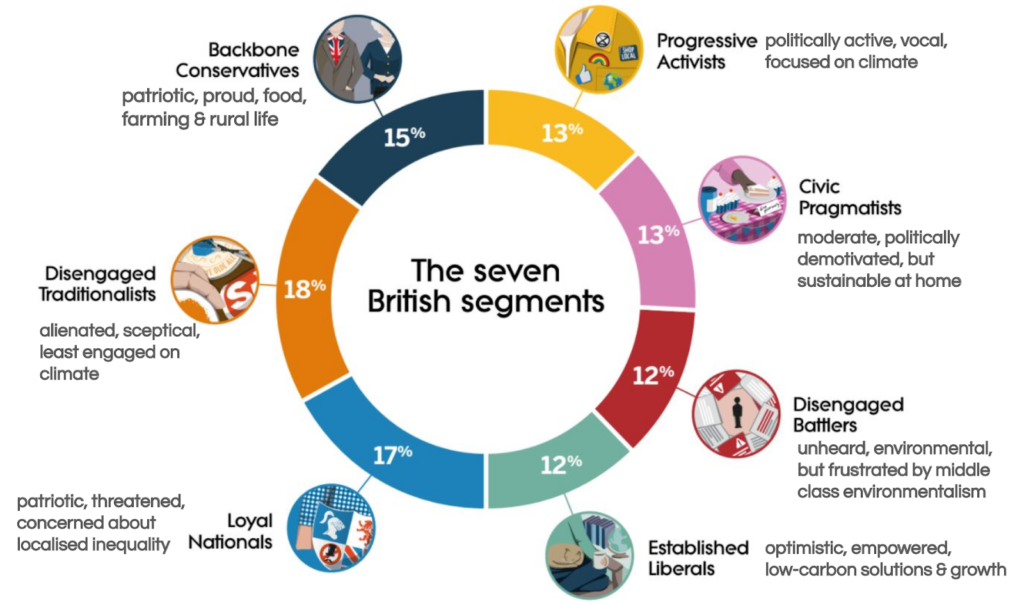
Chris Shaw headed research at Climate Outreach, a UK-based NGO, to find climate policies that resonate with sense of identity, values and worldview of differing groups in a country. (Source: Climate Outreach)
Ts: A lot of the language around climate policy is about “win-win” growth: everyone will be better off in the green transition, we’re told. It’s a universalizing discourse. But by now it is well understood that the impacts of climate change and the core responsibility of emissions are highly unequal. Why has this realization taken so long to emerge?
CS: Our scientific understanding of climate change emerged in the late-twentieth century, primarily in the institutions of the global North, which in turn promoted a globalized picture of climate change and denied the differentiated dimensions of the crisis. At its core was the idea that there is a single dangerous limit and that climate change is the same whoever and wherever you are. This is a conception that does not acknowledge climate change as a historical phenomenon. Instead, it’s one that is depoliticized, viewed purely on the basis of the science and targets.
Ts: In what ways have working-class perspectives been ignored in discussions about climate change? What does a positive vision of climate led by the working class look like?
CS: What is the most that a working-class person could hope for from a net-zero future? At present, in the vision being broadly promoted, it’s the same hard work, the same exploitation, but with a heat pump instead of a gas boiler. What do people fight and die for? They don’t fight and die for a fluorescent-lit strip mall. They don’t go and die to have central heating. Much of the discourse around net zero seeks to replicate all the comforts of middle-class life—for the middle class. That it needs the working class to come on board and do their bit to achieve it is one of many hypocrisies.
Four years ago, I went to a meeting in Brussels about climate justice. People there were shitting themselves because of the Yellow Vest protests in France. Their conclusion from the uprisings was that they needed to at least talk about climate in a way that met some of working-class concerns—but that’s all. Middle-class protests are fine—Fridays for Future, that’s great, because it’s aligned with the net-zero agenda. The “just transition” idea may have its roots in the labor movement, but here in Europe it’s become more of a liberal shibboleth, and I don’t hear working-class people talk about a just transition.
The vision presented is basically: “this world, but without the emissions.” But there is just no understanding of working class experience. It’s all, “Come on, care! Be concerned about this heat pump, get behind dropping meat from your diet one day a week, be part of this transformation.” And for what? The same as now. Nothing changed about the status quo, the structures, the norms, what it’s possible to hope for and aspire to.
This creates a space for the fascists and the right to jump in and say, “the liberals have got nothing for you, and we have; they’ve ruined it for you.”
Ts: One big socio-economic trend of the last fifty years has been the divide between those with college degrees and those with a high school education. Thanks to various management techniques and algorithms, those in the latter group are seeing a massive decline in their control and autonomy at work. Think of the example of an Amazon delivery worker who, rather than being given the freedom to deliver their packages according to their own know-how, is controlled by an algorithm that demands that these packages are delivered in the most efficient way possible. How does this question of working-class control and autonomy relate to climate and the broader threat of disempowering and deskilling people?
CS: Absolutely correct. Surveys we’ve done have asked, what is an attractive benefit of green jobs? Working-class respondents don’t rate “green jobs” as such very highly. If a green job is the same Amazon gig but with more electric vehicles, that’s of limited appeal. Nothing of any real import is changed. The deskilling, the decreasing control over one’s work—that sense of a lack of freedom provides leverage for the right to attack net-zero policies.
The left and center left have very little to say about freedom, which is a big problem. If acting on climate change means sacrificing what little freedom I have left, then what value is that to me? I hear this a lot among the working class; this idea that the few remaining freedoms are going to be taken away from them by the same credentialled class.
This is connected to the question of place. About half the American adult population still lives within fifteen miles of their parents. I know plenty of people here in the UK for whom that’s the norm. For the middle class, in contrast, it’s normal to uproot oneself and go where the work is; place doesn’t matter. But it does matter to the working class. They understand climate change very much in terms of what’s happening to the trees in my street, what’s happening to the river down the road. This doesn’t help progress on climate change, but it reveals that it’s those immediate experiences of the environment rather than global atmospheric concentrations of CO2 that affect people’s ideas about climate. There’s a big divide between this strong, long standing connection with place and those working at the UN, IPCC, World Bank, concerned with the global.
Ts: What kind of shift has taken place in climate politics over the last three or four years? Lately, every election seems to be a climate election, with governments throwing enormous amounts of money and even coercive tools of economic statecraft at the problem. How should we make sense of these developments?
CS: States have taken, in relative terms, dramatic action in the name of climate (and competition). But the politics are still fragile. I think a big part of this is that the language of climate change remains an elite, technical language. It is opaque and impenetrable to most people, and it excludes the working class. The imperative political question is: how do we make that discussion about our future accessible to, and inclusive of, a broader range of voices?
My belief is that societies cannot organize effectively to cope with the impacts of climate change without a shared understanding of the future that awaits. Currently, representations of the net-zero future don’t do that. They are a denial of the best of human nature. They shut down the possibility of imagining something different in favor of a fantasy of more of the same, minus catastrophic climate change. With a better, shared understanding of the world we’re moving toward, we can better organize ourselves to live in that world, whatever that might mean, whatever that might look like.
Ts: Your book, Liberalism and the Challenge of Climate Change, came out last year. Could you tell us how you came to write this book?
CS: People with my background don’t really belong in the world that I find myself in—a middle class, privileged world of climate campaigning. My working-class background—broken family, no history of university education, lots of manual labor jobs—has given me an outsider’s perspective. I wasn’t brought up to expect that the world would respond to my desires. I wasn’t brought up to have much sense of agency; the world does stuff to me, I don’t do stuff to the world.
My book argues that the language and ideas used to address climate change are shaped by power relations—and that this language inadvertently accelerates the problem.
I must also own up to the anger that motivated my book. I believe Cormac McCarthy said that people write instead of blowing up the world. The anger is in part a product of working-class resentment against the middle class who is complacent about the status quo, and vicious when its privilege is threatened. The anger is also about being lied to. The lie being that the liberal middle classes of the global North are the carriers of the light, the masters of our future, the saviors of humanity. But liberalism is now destroying the foundations of life.
As Cairo stared down another balance of payments crisis in the winter of 2023–24, students of the last half century of Egyptian public finance recognized a familiar ritual under way. Since the death throes of the Bretton Woods system in 1971, Egypt has come to the International Monetary Fund (IMF) for payments financing on no less than ten occasions: in 1977, 1978, 1987, 1991, 1993, 1996, 2016, twice in 2020, and in 2022. Performed by an exclusive circle of plenipotentiaries shuffling between Cairo, Washington DC, and Abu Dhabi, this ceremony echoes a broader pattern of sovereign debt lending in the global South since the 1970s. But the customary negotiations also reveal the privileged role of Egypt’s military dictatorship in US regional strategy. Conducted again between December and March, they have once again yielded a familiar result: a staff-level IMF agreement extending $8 billion in emergency loans to Egypt, its eleventh bailout, while Cairo committed to reduce government spending, privatize state-owned enterprises, and float the Egyptian pound.
The ritualistic negotiations have the appearance of a highly asymmetrical exercise. On one side are staff from the IMF who command sovereign lending power worth $1 trillion and whose blessing Egypt often needs in order to guarantee credit worthiness abroad and to mollify Arab Gulf and US partners. The IMF team is predominantly composed of young, male, western-educated macroeconomists with PhDs who rotate on short country assignments and are led, according to a 1950s-era gentleman’s agreement, by an executive board recruited from Europe and the United States.
On the other side is Egypt’s government, led by the cabinet-level officials of finance, investment, foreign affairs, and the central bank (ECB). Some of them, like Youssef Boutros Ghali, who served as Minister of Finance in the Mubarak era, the former Minister of Investment Sahar Nasr, or the current Minister of Investment Rania Al-Mashat at one time worked for Bretton Woods institutions. They represent a country of 114 million people, two-thirds of whom live on less than $6.85 a day, facing an inflation rate that reached 37 percent in 2023, where the non-oil private-sector has contracted nearly every month for the past five years, and whose top 1 percent of affluent citizens own more than nine times the national wealth of the bottom 50 percent. Egypt also suffers under a high degree of real and perceived downward mobility, immortalized in Alaa El Aswany’s novel Yacoubian Building, in which each generation to inhabit an Art Deco apartment in Cairo is of a lower social caste than its predecessor.
Egypt has been ruled for the past eleven years by the military dictatorship of Abdel Fattah El-Sisi which has incarcerated an estimated 60,000 political prisoners and ranks 136 out of 142 nations on the World Justice Project’s Rule of Law Index. It is bordered on its south by Sudan (convulsed by civil war since April 2023), on its west by a cold peace in Libya, and on its eastern Sinai border by the apartheid state of Israel, now engaged in the large-scale destruction of Gaza. It is historically a major importer of grain from the Black Sea, a supply now disrupted by the Russian war in Ukraine.
Egypt is also severely in debt; external sovereign debt currently sits at $164 billion. It has run debt-to-GDP ratios above 80 percent for most of the past decade, hitting 93 percent in 2023. In any given year, Cairo pays 50–60 percent of state revenue in payments on this debt, while 40–45 percent of its revenue comes from regressive taxes on the poor, many introduced in 2016 with IMF support. The other half of its state budget is borrowed money, which Cairo acquires from Gulf Arab donors, the IMF, and by selling its own deposit certificates and bonds at high interest. In October 2023, the sovereign credit rating of those bonds was lowered by S&P Global to a junk “B-” grading. Motivating this debt is Egypt’s chronic current account deficits, which it has run since 2008, that leave it vulnerable to speculative attacks on its foreign currency reserves. It was such an attack that compelled Cairo to negotiate once again with the IMF.
On March 6, the IMF announced that an $8 billion loan agreement had been reached and that Cairo would “move to a flexible exchange rate system.” It is a promise that Sisi, like Mubarak, has made before. If the past is any guide, Egypt will be adept at postponing reforms; indeed the past week’s exchange rate data suggests the pound has simply been devalued to a new peg. Regardless, IMF, American, and Gulf relief will likely continue. Cairo’s role in a US-backed regional security architecture makes the military dictatorship a regional giant too big to fail. The Sisi regime, like its predecessors, is keenly aware of this status and leverages it to secure the acquiescence of creditors and allies. The size of the IMF agreement—more than double the $3 billion originally on the table—recognizes this fact.
Demystifying the bargain
At the core of negotiations between Egypt and the IMF is monetary policy. Since March 2022, the Egyptian pound (LE) has lost 70 percent of its official value against the US dollar, while the gap between its official and black market rate has widened. By February 2024, a US dollar could buy LE 70 on the black market, more than twice its official exchange rate. Remittances also fell 30 percent in the first quarter of the 2023–24 fiscal year against the period prior, as migrant workers abroad held back transfers to their families in an attempt to preserve the value of their earnings. In response, the central bank has raised interest rates and devalued the pound four times over the past year and half, while Sisi’s regime has resorted to imaginative policies in order to attract hard currency and beat back speculators: raids on informal currency traders, foreign transaction limits for credit cards, and lifting the ban on foreign ownership of desert lands. Despite this, the IMF has pushed Egypt to commit to a further, long-standing demand, made since at least the 1980s, of full market liberalization of the exchange rate.
The IMF has long argued that allowing markets to set exchange rates is good for Egypt. It would break the central bank’s costly habit of spending billions of US dollars to defend its currency peg against speculators as well as eliminate a parallel black market by encouraging remittance flows to re-enter the official banking sector. These remittances are a larger source of foreign currency than tourism and foreign direct investment combined. Releasing the peg would also devalue the pound, boosting Egypt’s export revenues and placing the burdens of exchange rate adjustment on the private sector, not the central bank. Finally, it would smooth the large, abrupt shocks which have punctuated the country’s monetary history into more minute, dynamic pricing adjustments.
Since the United States abandoned the gold standard in 1971, Egypt has resisted these arguments. For one, external debts are denominated in hard currencies like dollars and euros, but government revenue is mostly in Egyptian pounds. Liberalizing the exchange rate would swiftly devalue the pound and force a massive spike in the state budget’s allocation for external debt servicing. According to Mohamed Badrawy, a parliamentarian from the regime-aligned Wafd party, for every 1 Egyptian pound decrease in value against the dollar, the cost of external debt increases by LE 83 billion. Left unchecked, it could also potentially bankrupt government entities like the Egyptian National Railways Authority, which are not included in the general public budget but do hold public debts.
Second, devaluing may likely aggravate inflation; Mada Masr reports that a decision to float the pound could lead to 45 percent inflation in 2024. Egypt runs high import bills, around 20–40 percent of its GDP in any given year. These imports—wheat, seeds, dairy, fertilizer, fuel, etc.—are often purchased by state buyers and paid for with foreign currencies like dollars and euros. State buyers and some private sector companies acquire these currencies from the banking system at official exchange rates, so devaluing the currency makes imports more costly. Imports factor into the production of consumer goods like bread, which enjoy separate consumer subsidies. These price supports are quasi-sacred lifelines to a deeply impoverished population, reduced at the risk of riots, as in 1977, or revolution, as in 2011. Sisi’s pledge three years ago to raise prices of subsidized baladi bread, for instance, remains unfulfilled. Egypt will likely be the world’s largest importer of wheat again in 2024; it does not want to pay more.
For these reasons, the IMF’s perfunctory pressure to float the pound indicates the structural constraints of a neoliberal age and the intellectual exhaustion of its developmentalist wisdom. In 1981, Egypt’s literary jester, Sonallah Ibrahim, directed his novel Al-Lajna (“The Committee”) toward this order, depicting a young protagonist in front of a board of faceless bureaucrats who ask him to perform a humiliating belly-dance and, in a final act of absurdity, cannibalism. He complies. Al-Lajna was at the time a wild allegory for Anwar Sadat’s policy, from 1974 onward, of Egyptian infitah, or “opening” to foreign investors and Coca Cola culture. Yet Sisi’s regime is not exactly the hapless victim of Ibrahim’s story.
In fact, the Egyptian government has been quite successful at securing last-minute credit and staving off exchange rate liberalization.1 Bessma Momani, (<)em(>)IMF–Egyptian Debt Negotiations(<)/em(>) (Cairo Papers in Social Science, 2003). In 1986, IMF and Egyptian officials had reached a deadlock on the exchange rate; the executive board overruled its staff in May 1987 and accepted a “gradual” reform instead of a full float. In the end, Egypt only implemented the first stage of the exchange rate unification. In 1993, it staunchly refused devaluation but got the first Extended Fund Facility (EFF) tranches disbursed anyway—negotiations later collapsed when it refused to devalue or implement reforms. The 1996 agreement conspicuously left devaluation off the table. In 2016, the central bank briefly floated the pound to secure a $12 billion release of IMF funds, only to intervene a few years later after the pound plunged in value. In 2020 and 2022, it opted for partial devaluations rather than a free float.
Time after time, Egypt comes back, hat in hand. Solemn promises are made. The IMF relents to a bailout in which austerity and devaluation proceed haltingly but never completely. The government miraculously secures new credit, dutifully pays its interest, gets some of the old debt forgiven, and rolls old loans into new ones. It’s a strange juxtaposition of persistently rickety public finances on the one hand and an adroitness at securing a last-minute Hail Mary on the other. In fact, despite its junky credit rating and rock-bottom reputation for the rule of law, Egypt is, in the typology of Michael Tomz, a “reputed stalwart.” It pays in good times and bad; the last time Egypt fully defaulted on its sovereign debt was a century and a half ago.
Egypt’s debt cycle
What explains this need for credit? Cairo needs to raise revenue for its bureaucratic and military payroll, to build public works, pay interest on pre-existing debts, maintain infrastructure, purchase weapons, issue pensions, and sustain consumer subsidies for fuel, electricity, transport, and food. For most of its history, Egypt’s domestic tax base has been too poor and under-developed for the revenue needed in a modernized state. Simply printing Egyptian pounds and giving it to the ministries may momentarily ease the solvency problem but would create inflation. It is another form of tax. Similarly, foreign-denominated imports and debts cannot be paid by simply printing Egyptian pounds unless the government credibly fixes exchange rates, which in turn requires costly foreign reserves.
For that reason, Egypt has historically borrowed foreign currency from abroad in the hope that future growth would let it pay off its debts. In the late nineteenth century, the Khedive floated huge treasury bonds to banking houses in London and Paris. External debt quintupled from 1863 to 1879. Despite lacking an annual budget, tax apparatus, or official register, the Khedive could float its debt on European bond markets by promising high returns. Bondholders, poorly regulated and poorly informed, were in turn willing to lend their money, edified by Egyptian cotton exports and news of the French-bankrolled Suez Canal, which opened in 1869 thanks to the corvée of some 1.5 million peasants.
Promises of growth proved brittle. When American cotton flooded back to global markets during Reconstruction, Egypt’s momentary cotton dominance came to an end. Its meager share of Suez revenues did not compensate. The Khedive had over-extended. In Rosa Luxemburg’s words from 1913, “the fellah had been drained of his last drop of blood. Used as a leech by European capital, the Egyptian state had accomplished its function and was no longer needed.” When the Ottoman Empire defaulted in 1875, Egypt fell with it. By May 1876, European lenders and their colonial representatives established a commission, the Caisse de la Dette Publique, to agglomerate the debt and collect Egypt’s own taxes to service it; local taxes in Cairo and Alexandria, taxes on salt and tobacco as well as all customs revenue went to the Caisse. The Khedive, notes economic historian Ali Coşkun Tunçer, feebly agreed.
The concessions initiated a process that Didac Queralt in his recent book calls “pawning national assets.” First was the Caisse. “Dual Control” followed in November 1876, establishing a special administration of the railways and the port of Alexandria under the direct control of a majority-European commission. The bad cotton harvest and the Russo-Turkish War of 1877–78 resulted in a British-led Ministry of Finance and French-led Ministry of Public Works. The Europeans consolidated and restructured the debt, and following military occupation in 1879 the new Khedive Tewfiq Pasha decreed virtually the entire administration of the country to England and France. Military occupation met three years of anti-colonial revolt, after which the British made Egypt a protectorate in 1882.
Egypt’s colonial history parallels the sovereign borrowing problems that have frustrated economic development in the neoliberal era. The persistent allure of “hot money”—credit raised by promising high interest rates to speculators that cannot be sustained when growth fails to materialize—spirals viciously into debt accumulation, as Egypt must spend increasingly large shares of national revenue to pay public debts rather than invest toward public goods. When revenues are unable to meet these obligations, the country forfeits national assets to international lenders, opening the door to foreign domination.
Although the Bretton Woods Agreement established the IMF to prevent external payment imbalances and solve liquidity constraints, variations on the nineteenth-century theme have lately returned. One example is Egypt’s transfer of the Sanafir and Tiran islands to Saudi Arabia in 2017, amid rumors of a Saudi quid pro quo to aid the struggling economy. Another instance involves acquisitions by the Emirati sovereign wealth fund ADQ and the Saudi Public Investment Fund of Egyptian farmland and major stakes in petrochemical companies last year. Even more recently, negotiations to sell Ras El Hikma—a $35 billion resort on Egypt’s north coast—to an Emirati consortium made headlines, which regime-aligned media have framed as a deal to “end the exchange rate crisis.”
Two important differences between Egypt’s pre-infitah history and the debt landscape today are innovation in private financial instruments and restriction of public alternatives. In the 1950s, President Gamal Abdel Nasser could nationalize the Suez and seize the assets of foreigners, Egyptian landowners, and the bourgeoisie because much wealth was held in farmland or factory equipment—immobile and easily confiscated. There is only one Suez Canal and cargo firms will pay the transit fees whether the canal is owned by Egypt or the French. A skilled leader like Nasser could also leverage the Cold War rivalry, playing off the Soviet Union against the United States to access foreign currency for projects like the Aswan High Dam. “Sisi has none of these advantages,” writes the sociologist Hazem Kandil. “The assets of Egypt’s businessmen in today’s global financial capitalism are much more elusive and transferable.” The desire to attract foreign investors creates strong incentives to limit tax burdens on the rich, be it on their private corporations, startups, or assets.
A second difference is the state’s trade deficit, which has grown over time. Today, imports like wheat, seeds, dairy, and fuel are paid for with foreign currencies, like dollars and euros, and are often tied to popular consumer subsidy supports. In pre-infitah Egypt, by contrast, most Egyptians were rural laborers enmeshed in peasant economies and less dependent on urban, consumer subsidies. But by the 1970s, three-quarters of an increasingly-urbanized Egyptian public relied on bread subsidies, thanks to transformations in dietary patterns and the glut of cheap US food aid. These shifts created stiff pressures on the subsidy budget and foreign exchange.
Faced with a higher import bill than its export earnings could cover, and with increasingly footloose capital, what could Cairo do? In the late 1970s, it was to Sadat’s fortune that foreign exchange receipts from oil, tourism, the restoration of Suez Canal trade, and migrant remittances from the Gulf could sustain solvency. Despite this, facing fiscal pressure, Cairo opted for an IMF loan. This Stand-by Agreement, signed in January 1977, released some $146 million but required Egypt to devalue the pound and reduce its budget deficit, which Sadat attempted to do by removing subsidies on basic consumer goods. Protests over the price increases devolved into riots on the streets of Cairo. In response, the government swiftly reimposed the price supports, and the IMF relented on the severity of its structural adjustment, signing a watered-down EFF agreement in 1978. The US also relented, rescheduling some of Egypt’s debt to ease the balance of payments—an early example of Cairo’s capacity to leverage its political instability to secure concessions.
To buy time before his own negotiations with the IMF, Sisi tapped a network of regional lenders. Since 2013, he has secured some $92 billion from Saudi Arabia and the Gulf states. But as oil prices slumped—not regaining their $100-per-barrel price until 2022—the Gulf monarchs became increasingly reluctant to give unconditional aid to Egypt in the form of central bank deposits and fuel assistance. In the early phase of his rule, Sisi also tried coaxing patriotic donations from the nation’s capitalists into development funds like Tahya Misr (“Long Live Egypt”). In another instance, Egypt launched a Suez Canal expansion in 2014 at a cost of $8.2 billion, which Sisi initially attempted to finance by exhorting the public to buy subscriptions or shares, but to no avail. Disappointing expectations further, foreign exchange revenue from the Suez Canal Authority hardly budged in the five years after opening.
With charity running dry, Cairo resorts to direct financial incentives to speculative capital. As Heba Salem has reported, the central bank put to auction short-term, high-yield debt instruments for myopic hot money investors, less concerned about the country’s overall debt servicing and economic growth than with exchange-rate risks and the political status quo. Examples include the one-year local currency treasury bills with 13.25 percent interest, auctioned in December 2021. To sweeten the carry trade, central bank governors promised to redeem foreign investors’ bonds and T-bills in dollars at the official exchange rate upon maturity—a bet which is only worthwhile if the Egyptian pound maintains its value. The central bank thus acquired an additional incentive to fix the peg, since letting the pound devalue would trigger capital flight. But hot-money investors are still easily spooked; in the first five months of 2022, Egypt witnessed some $25 billion in outflows precipitating that year’s IMF negotiations.
When panic followed this avowedly risky strategy, Egypt returned to the IMF. The deal negotiated in March is the country’s fifth in the last eight years. The IMF conditioned Egypt’s return to solvency upon commitments to implement a neoliberal package appropriate for the 2020s. This means devaluing the currency, strengthening property rights and tax incentives for foreigners, reducing trade barriers, balancing the budget through spending cuts (what the IMF now euphemistically calls “fiscal consolidation”), replacing consumer subsidy supports with cash transfer programs like Takaful and Karama, and privatizing state-owned enterprises (“reducing public-sector footprint”).
The contours of a debt cycle thus come into view: (1) under fiscal and foreign exchange pressures, Egypt opens the door wide to foreign investment; (2) falling short of the needed cash, it turns to hot money by promising high-yield loans unfavorable to itself; (3) to prevent the hot money from bolting, the central bank defends the currency peg with costly foreign reserves; but (4) the hot money bolts anyway; so (5) the government resorts to the lender of last resort, the IMF, which imposes disciplining conditionalities, such as devaluation, to restore the government to credit worthiness and encourage foreign investment. Nonetheless, (6) devaluation further constrains Egypt’s ability to provision public goods, service debt, and pay for imports, bringing it back full circle.
Among the beneficiaries of this vicious cycle are speculators who derive their income from high-yield assets. Their victims are the working and lower-middle classes, who are most acutely exposed to austerity and inflation shocks. Empirical analysis of IMF conditionalities confirms their deleterious impacts on health and equality, as economists Alexandros Kentikelenis and Thomas Stubbs have shown; the IMF’s official recognition of the value of prosocial spending measures and “policy flexibility” since the global financial crisis has been mostly cosmetic.2Alexandros Kentikelenis and Thomas Stubbs, (<)em(>)A Thousand Cuts: Social Protection in the Age of Austerity(<)/em(>) (Oxford University Press, 2023). “There is so much anger here,” said one labor union leader, Refaat Hussein, shortly after the IMF-approved currency devaluation in 2016. “The little guy is always the one who pays for these decisions. The pound is nothing to the rich.”
Generals in the boardroom
Footloose foreign capital, import dependence, foreign reserve problems, painful austerity—these are common challenges for the global South in the neoliberal era. What distinguishes Egypt? Backed by Western patrons, the Egyptian military is key to insulating the Sisi regime from lender pressure. This power to continuously refinance the nation’s sovereign debt reflects a politically expedient coup-proofing strategy to shelter clientelistic channels from scrutiny. American patronage sanctifies this arrangement as one plank in a broader regional security edifice; the US contribution takes the form of weapon sales to Gulf allies, diplomatic efforts like the Abraham Accords to normalize relations between Israel and the Arab League, and a massive subsidy to the Egyptian military dictatorship and Israeli apartheid forces—about $4.2 billion to Israel annually and $1.2 billion annually to Egypt since 2001.
There are of course domestic constituencies within the US who favor these transfers, such as the weapons industry and Israel lobby. However, if the rhetoric of Bush, Obama, Trump, and Biden is any guide, the grander regional strategy behind these aims is to arm deputies in the War on Terror and to stitch them into a reliable constellation of states that can contain Iran. For the European Union, the key term that loosens the purse and quiets the conscience is “irregular migrant.” In December 2023, Brussels granted €110 million to boost Egypt’s border and coast guard capacities, paving the way for future aid, rumored at some €9 billion.
Against these overriding security and border objectives, concerns about Egyptian rule of law, democracy, fiscal consolidation, and monetary policy take a back seat. As US Secretary of Defense at the time Chuck Hagel told Sisi weeks before his 2013 coup d’etat, “I don’t live in Cairo, you do. You do have to protect your security, protect your country.” In Trump’s blunter words, his “favorite dictator” had “gotten the terrorists out” of Egypt. When Cairo cooperates with American geopolitical objectives, the United States is happy to keep it solvent. George H. W. Bush, for instance, forgave some $7.1 billion of Egypt’s military debts in 1990 ($16.75 billion in 2024 dollars) to reward Cairo’s support for the Gulf War against Iraq.
Turning off the spigot of arms and finance is difficult. Obama briefly imposed an arms ban on Egypt but succumbed in 2015 after just two years. Arms transfers to Sisi resumed in 2017 under a catchall “national security” loophole to the Leahy Laws, which involved spinning an elaborate legal fiction that what happened in Cairo in 2013 was not a coup d’etat and should not trigger a coup restriction. Neither Biden’s pledge in 2020 to put human rights at the center of his foreign policy nor European political institutions have diminished North Atlantic states’ financing of the Sisi dictatorship.
Security concerns strengthen the Egyptian military’s hold on the economy, contributing to Egypt’s ability to both avoid default and resist more aggressive exchange-rate reform or divestment. The Egyptian Armed Forces run a vast, unaccountable, and shadowy business empire with corvée labor. Conscription is compulsory in Egypt for men between eighteen and thirty years of age, who serve one to three years with low pay. Many are sent to military-owned firms: refrigerator plants, cement and steel factories, gas stations, hospitals, event venues, and Red Sea resorts. The military also owns farms in the Delta, makes pasta, bottles water, assembles vehicles, broadcasts radio, and produces movies. Military enterprises are untaxed, unaudited by parliament or public agencies, and not listed on the stock exchange with open company profiles. Their profits are not reported in the state budget.
Sisi repeatedly says that the military sector accounts for an implausible 2 percent of the economy. But this estimate obscures the military’s true reach. Retired officers go on to be the heads of port, dam, canal, river, and metro authorities. They govern provinces and sit on the board of state-owned companies for water and sewage, land reclamation, and telecom. Army engineers are regularly employed in state-owned and private construction firms; ex-pilots go into civil aviation, while the Armed Forces often control legal rights to factors of civilian production such as land. Finally the military manages public works and procurement contracts, which it subcontracts to the private sector in a relationship of dependence. For example, a military-owned company oversaw the 2014 Suez Canal expansion, while another is building Egypt’s New Administrative Capital, forty kilometers east of Cairo. There are conspicuous signs that the military footprint has been growing since Sisi took power.
Egyptian political economists like Timothy Kaldas and watchdogs like Human Rights Watch rail against the military and push the IMF to incorporate conditionalities that reduce its economic presence or at least make it more transparent. Military business, or “Milbus,” however, is an intimate feature of the neoliberal age. Following the Cold War, the IMF and North Atlantic donor states pushed authoritarian regimes with socialist economies to liberalize markets and cut public spending, including military budgets. “To compensate the officers for budgetary losses and avoid potential coups d’état,” writes Zeinab Abul-Magd, “authoritarian regimes allowed their armies to engage in legal or illicit business activities.” She sees this logic at work not just in post-infitah Egypt, but in Pakistan, Syria, Turkey, Israel, and Iraq.3 Zeinab Abul-Magd, (<)em(>)Militarizing the Nation: The Army, Business, and Revolution in Egypt(<)/em(>) (Columbia University Press, 2017), p. 20. Egypt’s military sector consequently evolved not just as a coup-proofing technique, but as a strategy to shelter grift under the banner of “national security.”
This military dominance contributes to Egypt’s balance of payments crisis in three ways. First, military enterprises crowd out and out-compete the private sector. They enjoy cheap labor, tax breaks, reduced red tape, no-bid contracts, preferential access to credit, and soft budgetary constraints. Timothy Kaldas cites, for example, the army’s decision in 2018 to build a $1.2 billion cement factory in Beni Suef, which quickly over-saturated the market and forced a German-owned Tourah plant to halt production. Naturally, this dominance deters foreign investment in the private sector.
Second, the impunity of the officers who run this business empire encourages a “predatory state”—that is, a government dominated by parasitic interests and a business culture inclined toward rent-seeking and fraud, rather than real growth.4See Farah, Nadia Farah’s (<)em(>)Egypt’s Political Economy: Power Relations in Development(<)/em(>) (2009). Cf. James Galbrath’s (<)em(>)The Predator State (<)/em(>)(2008). For a general treatment of “predatory states” see William Reno’s chapter “Predatory States and State Transformation” in (<)em(>)The Oxford Handbook of Transformations of the State (<)/em(>)(2015). One reads of Ponzi schemes hatched by swindlers and poorly-regulated local banks in the 1980s and 2020s alike, robbing millions of their life savings. There is widespread fraud in building codes, resulting in periodic building collapse and death. In fact, the scale of corruption in Sisi’s regime was put into stark relief by Mohamed Ali, a former sub-contractor swindled by the military, who released a series of videos in September 2019 attacking Sisi and his military hustlers for wasting public funds on the rich. But most businessmen prefer to keep their heads down, hedging with the state, not against it. Consider for instance the precipitous rise of Ibrahim al-Argany, the billionaire head of a group called Sons of Sinai, whose company Hala now hustles the Gaza–Rafah bottleneck, charging exorbitant fees to arrange Palestinian departure from the war zone.
Using economic rents to buy acquiescence extends beyond Egypt’s borders, as illustrated by the recent indictment of US Democratic Senator Bob Menendez. Menendez is accused, in a colorful 2023 indictment, of accepting cash and gold bars from the Egyptian government in exchange for votes on the Senate Foreign Affairs Committee to secure continued US military funding to Cairo; the bribes were paid from revenues collected by an exclusive monopoly the Egyptian state granted to a New Jersey company to certify US halal meat exports to Egypt.
Third, the profits that accrue to military-owned enterprises are not routed into the general budget or deployed to reduce sovereign debts. There is no accounting or macroeconomic law that says the military cannot use its unspent revenues to provide civilian public goods or cut back on the deficit. But the reported average 25–30 percent of project budgets retained by the military remain with the military or are expended on weapons purchases. Between 2016 and 2020, Egypt became the world’s third largest arms importer according to the Stockholm International Peace Research Institute. Sisi’s regime now boasts a fleet of Rafale and Eurofighter Typhoon fighter jets, amphibious assault ships, naval frigates, the region’s only aircraft carrier, and an arsenal of missiles and air defense systems, inking deals with Germany, Italy, France, and the United States in the process. This level of military spending reduces budget space for public investments in health and education. Strikingly for a government already severely in debt, which receives a yearly gift of $1.3 billion on average in US military financing, Cairo still acquires its arms with borrowed money. This was the case for its multi-billion euro deals with France in 2015 and 2021.
External shocks
These features of Egypt’s political economy—a dominant military sector, high external debt, dependence on food imports, and US backing—have been present since the 1980s. What explains its recent stress? Egypt’s exposure to the wars in Ukraine, Sudan, and Gaza motivated the IMF’s speedy and generous credit extension in March. War in Ukraine has been especially impactful for Egypt’s tourism sector, which is responsible for 15 percent of GDP and is a source of precious foreign currency. Before January 2022, the millions of Ukrainians and Russians visiting the Red Sea resorts were two main sources of tourism. The Black Sea states were also Egypt’s largest import sources for wheat, crop seeds, and fuel. When Putin invaded Ukraine, the tourists left and grain reserves dwindled as state-buyers frantically sought alternative, more expensive sources. The hot-money investors soon bolted too, triggering the aforementioned capital flight of $25 billion. Fearing a foreign exchange shortage, the central bank moved in March 2022 to release the peg, sinking the pound from LE 15.6/$1 to LE 18.5/$1.
With crisis setting in, the Egyptian agricultural sector’s became unable to import crop seeds, held in limbo at the ports. The poultry industry, unable to secure imported chicken feed, found itself killing millions of chicks. Inflation rose continuously for the next two years, topping 37 percent in September 2023, while Egypt’s bonds downgraded to negative. Moreover, war in Sudan broke out in April 2023, throwing 450,000 refugees onto an already-stretched public services bureaucracy and subsidy regime and giving rise to waves of anti-immigrant sentiment in Egyptian cities and calls by the government to reconsider its support for “guests.” An estimated nine million Sudanese are internally displaced, a fact soon to register in the Mediterranean.
The early weeks of the Gaza war saw disruptions to Israeli natural gas imports from the Tamar field, which Egypt re-exports for foreign currency. Power cuts at households lengthened nationwide as a result. The subsequent Houthi blockade of the Bab Al-Mandab straits in response to Israeli ethnic cleansing in Gaza has diverted world cargo traffic from the Red Sea, reducing Egyptian state revenue through the Suez. Renewed American bombings of Yemen have not restored the confidence of the shipping industry or its London insurers. Compared to January 2023, Suez revenues are down by 40–50 percent, further diluting Cairo’s access to foreign exchange reserves.
Egypt’s military leverage
Against this underlying sensitivity to its balance of payments, Egypt’s military spending spree of the past decade can seem mysterious. Egypt is not under attack. It signed a peace deal with Israel half a century ago. The United States, Saudi Arabia, and the UAE are substantial allies. Cairo maintains deepening ties with Turkey and, since the Iran-Saudi détente in 2022, has discussed opening an embassy in Tehran. Ceasefires in Libya have held for four years, while the civil war in Sudan is in no danger of spilling over into Egypt. Belligerence against Ethiopia for a dam on the Blue Nile turned out to be mostly a war of words, while in the interior of the Sinai much of Egypt’s hardware seems incongruent with the goals of defeating a low-intensity insurgency.
A reasonable explanation is that armaments serve Sisi’s political agenda. As Khalil Al-Anani puts it, “upgrading and modernizing the Egyptian Armed Forces is a crucial element in Sisi’s attempt to maintain military support for his regime.” It supports Sisi’s image as a modernizer and fits the general’s vision for what kind of spending impresses the officer corps. To the United States, it also signals Cairo’s willingness to take on a more vigorous role in the US-backed regional framework, whether that means policing missions for Yemen, Somalia, and Libya or safeguarding naval traffic. The US is not the only advanced power to recognize this need; Sisi bought nearly $4 billion in French and German arms between 2013 and 2017 in defiance of the Obama-era freeze. But US military financing does provide important rents, which Sisi is anxious to maximize. Recall the gold bars his friends sent to Bob Menendez.
On economic restructuring, the Egyptian government has been keen to leverage its status as a regional giant too big to fall. In 1987, the IMF executive directors cited Egypt’s “size and political importance in the region” in ignoring younger staffers’ push for more aggressive reforms, as Bessma Momani reports. Rather than Egypt floating its currency, the board accepted a gradual reform of the exchange rate in its 1987 Stand-by Agreement, releasing $327 million and then requesting that the Paris Club reschedule $7 billion of Egyptian sovereign debt on terms that a US Embassy Cairo report described as “more generous than had been granted to virtually any other debtor country.”
Sisi is keenly aware of this leverage and appeals to US and European fear. “We were told by economists that we need deep austerity measures in our economy and that we should halt grand projects,” he said in January 2023. “But to that I say: I employ five to six million people, tell me, how could we shut all this down?” In other words, the projects can only be stopped at the risk of firing hundreds of thousands of young men. Or as he warned again a few weeks after the Hamas attack on October 7 and the Israeli invasion of Gaza, the region is “a ticking time bomb.” He then ruled out large-scale transfers of Gazans to the Sinai: “I must emphasize that we have not yet eradicated terrorism.” Egypt, in other words, needs ammo, not austerity or refugees. The message to donors parallels the one Sisi has perfected for a domestic audience, fearful that attempts at either revolution or neoliberal restructuring will lead to state collapse or popular misery.
A deeper reckoning
The causes of Egypt’s crisis are thus two-fold: a distinct confluence of geopolitics in Ukraine, Sudan, and Gaza over the past two years, occurring in conjunction with long-standing structural failures of the Egyptian economy that privilege speculative capital and the military. These two forces combine to aggravate the cost-of-living crisis, while the burdens of adjustment to new inflationary regimes and lender conditionalities fall on the shoulders of wage labor. The IMF’s rescue deals accentuate this situation. By propping up an intellectually bankrupt model of speculation-led growth and austerity, it sets the stage for future conflict.
The country’s perpetual currency problems also reveal a neglected contradiction in the current, US-backed security settlement in the Middle East. Defending Israel’s occupation of the Palestinian territories is a crown jewel of American foreign policy, but it destabilizes Egypt. Popular agitation against the Sisi regime for its do-nothing policy toward Palestinians remains a source of potential political crisis, while a mass forced exodus of Palestinians from Gaza into the north of Sinai looms as a real possibility. Since October 7, the war on Gaza and the Houthi blockade of the Red Sea cargo trade have disrupted a crucial source of foreign currency for Egypt. To end the war would require conditioning American aid to Israel, a red line that so far is too bright for the Biden administration. American support for Israel and its strategy of violent equilibrium thus threaten to bankrupt Egypt, bringing it back once again to the IMF.
An IMF rescue and devaluation of the Egyptian pound in turn are unlikely to substantially civilianize the public sector because the regime’s political survival rests on military management of the economy. IMF structural reforms are not prepared to grapple with the fundamentally political nature of failed Egyptian governance; the lender has not so far been able to replace a political economy of clientelism with a new, coherent coalition of developmental elites. Rather its creditor conditionalities further immiserate the Arab world’s largest population, while saving the regime from default. Egypt is at once too big to fail and too difficult to save.
This dilemma calls for a new approach to foreign aid and sovereign debt financing that prioritizes debt forgiveness, capital controls, human security over weapon transfers, as well as timely, low-interest lines of credit and conditionalities that foster political openness and a progressive tax base. Mona Ali has called for such reforms at the IMF and donor level. On the geopolitical stage, ending the war on Gaza, allowing Palestinians to return north, loosening the Israeli-imposed bottlenecks on aid, and rebuilding the Strip are important steps for restoring Egyptian solvency. The immediate effect on Egypt’s economy would be to deflate the Houthi impetus for the blockade of the Bab al Mandab strait and encourage Suez Canal traffic. Further geopolitical boosts for Egypt’s stability would be consolidating the fragile peace of Libya’s new order (its last ceasefire was four years ago), taking steps to freeze the conflict between the Rapid Support Forces and General Burhan in Sudan, and restoring Black Sea wheat trade to pre-war volumes.
A new horizon for Egypt may also be opened by a revolutionary democratic transformation of the Egyptian state, on par with the end to military dictatorships in Portugal and South Korea during the 1970s and 80s, and for which Egypt’s 2011 revolution may one day be seen as a dress rehearsal. Unlike the Gulf states, Egypt has the mechanics of parliamentary democracy and a vibrant legacy of labor and student organizing; these were the groups which inaugurated the 2011 revolution. Success would require invigorating the old student-labor-urban middle-class alliance which forced Mubarak down, and convincing a critical mass of the army and security forces to defect.
Because state and creditor interests favor the status quo, however, this kind of reckoning remains unlikely. It would require larger shifts in the global political economy or an unexpected shake-up in the balance of class forces within Egypt. The revolutionary chant yusqut yusqut hukm al-‘askar (“down with the military”) will likely remain a perennially relevant call, one hymn among many for the spiritual descendants of those progressives, who thirteen years ago bellowed from the streets of Cairo to Alexandria, Aswan to Port Said, the textile mills in Mahalla to the steel works in Helwan, their righteous demands for social justice, freedom, and bread.
Oil and gas producers in Africa, like developing countries across the globe, face a particular problem in pursuing state-led development. The resource curse, and specifically the phenomenon of “Dutch disease,” in which an exporting industry brings in foreign capital and causes the local currency to appreciate, makes exporting other local products abroad difficult. But as long as oil remains a valuable commodity, it will remain an alluring opportunity for development.
Economist Albert Hirschman notably argued that development can include both backward linkages (supplying the goods and services required for oil and gas extraction) and forward linkages (processing, refining and beneficiation activities). In recent years, there has been increased attention on local content policies (LCPs), which national governments have used to secure a degree of control over both forward and backward linkages otherwise left to the discretion of multinational firms. These policies increase the utilization of national human and material resources in the extractive sector, while domiciling within the country economic activity that previously went abroad. Far from more radical approaches such as nationalization, LCPs do express a kind of resource nationalism. As a form of industrial policy, they seek to increase national control of, and benefit from, extractive industries.
Thanks to the centrality of oil and gas to the global economy, LCPs in these industries offer significant potential for broadening development. Countries can design their LCPs to touch multiple aspects of the national economy, developing not only heavy industry but the skills and capacity needed for a variety of non-oil economic activities. In this respect, LCPs in the oil and gas sector eschew any dichotomy between “traditional industrial policy” and “global value chain-oriented industrial policy,” two strategies economists often distinguish from one another. Because the state’s power in oil and gas—vis-à-vis both petroleum rents and its ability to regulate the sector—enable it to support meaningful participation by local companies, LCPs bely the argument that today’s supply chains foreclose the old developmentalist goals of moving a national economy into higher value-added processes.
Historical oil producers Angola and Nigeria led the way in implementing LCPs in Africa in the early 2000s.1For more, see J.S. Ovadia, “The Dual Nature of Local Content in Angola’s Oil and Gas Industry: Development vs. Elite Accumulation,” (<)em(>)Journal of Contemporary African Studies(<)/em(>) 30, no. 3 (2012): 395-417; J.S. Ovadia, “Indigenization vs. Domiciliation: A Historical Approach to National Content in Nigeria’s Oil and Gas Industry,”(<)em(>)The Political Economy of Development and Underdevelopment in Africa, (<)/em(>)ed. Toyin Falola and Jessica Achberger (London: Routledge, 2013). Over the next decade, newer oil and gas producers such as Ghana and Tanzania followed.2J.S. Ovadia, “Local Content Policies and Petro-Development in Sub-Saharan Africa: A Comparative Analysis,” (<)em(>)Resources Policy(<)/em(>), 49 (2016): 20-30. Sufficient time has now passed to evaluate what this approach has achieved. Results for Angola and Nigeria have not entirely met expectations, but their achievements are nevertheless significant.
State-led development in Angola
In Angola, the state oil company Sonangol took the lead in promoting local content. In 2003, the government of José Eduardo dos Santos passed a law that classified oil-industry procurement into three categories: the first for goods and services that foreign companies could only purchase from Angolans, the second for those purchases made by foreign companies working in association with an Angolan company, and the third (less common) category for foreign companies offering services without a joint venture .
Angola had and continues to have significant potential for industrial “petro-development.” Chinese financing, which began flowing into the country in the aftermath of the Civil War (1975–2002) and was directed at reconstruction and the development of infant industries, was especially important in these efforts.3J.S. Ovadia, “State-Led Industrial Development, Structural Transformation and Elite-Led Plunder: Angola (2002-2013) as a Developmental State,” (<)em(>)Development Policy Review(<)/em(>) 36, no. 5 (2018): 587-606. Often used towards large infrastructure projects, this financing had important spillover effects in the Angolan economy and led to substantial job creation.4C. Wolf & S. Cheng, (<)em(>)Chinese Overseas Contracted Projects and Economic Diversification in Angola and Ethiopia 2000-2017(<)/em(>). IDCEA Working Paper 03, SOAS University of London, 2018; F. Wanda, C. Oya, and B. Monreal, “Building Angola: A Political Economy of Infrastructure Contractors in Post-War Angola,” (<)em(>)Journal of Southern African Studies (<)/em(>)49, no.1 (2023): 25-47; C. Oya and F. Schaefer, “Do Chinese Firms in Africa Pay Lower Wages? A Comparative Analysis of Manufacturing and Construction Firms in Angola and Ethiopia,” (<)em(>)World Development(<)/em(>) 168 (2023).
The local elite have also, more often than not, misused their country’s LCPs to benefit themselves—what I refer to as “dual nature of local content.”5 J.S. Ovadia, “The Reinvention of Elite Accumulation in Angola: Emergent Capitalism in a Rentier Economy,” (<)em(>)Cadernos de Estudos Africanos(<)/em(>) 25 (2013): 33-63; J.S. Ovadia(<)em(>), The Petro-Developmental State in Africa: Making Oil Work in Angola, Nigeria and the Gulf of Guinea(<)/em(>) (London: Hurst, 2016). While many scholars have dismissed Angola’s development efforts as the result of neopatrimonialism, any discussion of its political economy must consider the country’s experience with colonialism, war, socialism, and liberalization.6De Grassi & J.S. Ovadia, “Trajectories of Large-Scale Land Acquisition Dynamics in Angola: Diversity, Histories, and Implications for the Political Economy of Development in Africa,” (<)em(>)Land Use Policy(<)/em(>) 67 (2017): 115-125.
Nevertheless, there was significant promise for industrial development following the war, particularly in the petroleum services sector. Post-war reconstruction coincided with the global commodities boom. As new oil projects were developed in the country’s ultra-deep waters, gains were made in local content. This culminated in the Kaombo project, operated by TotalEnergies SE, the integrated French energy conglomerate. The Kaombo Floating Production, Storage, and Offloading (FPSO) vessels were completed in 2018 and 2019 respectively.
Kaombo represents a “high water mark” of local content and in-country value added in Angolan oil and gas. The project involved a larger number of semi- and unskilled workers, mostly locals employed by domestic and foreign oil-service companies in activities such as catering, security, and cleaning. At its peak during the construction phase, the project provided direct employment to over 4,000 people. This involved 50 million person-hours of direct and indirect work across the globe, including a national peak of 14 million local person-hours of work (See Table 1).7Total SA. 2016. Kaombo: The Ultra-Deepwater Experience. Paris: Total E&P Angola Block 32; Beckman, Jeremy. 2016. Moho Nord, Egina, Kaombo Approach Final Construction Phases. (<)em(>)Offshore Magazine(<)/em(>), 76(6). When oil prices began to drop in 2014, however, sustaining high levels of local content became more difficult. At the same time, cost-cutting set in as the sustainable energy transition picked up pace. As a result, the levels of local content achieved with Kaombo are unlikely to be seen again.
Table 1: Local Hours Worked in Major Projects by Total
Project
Year
Local Hours
Dalia
2006
2.5 million
Pazflor
2011
4.0 million
Clov
2014
11 million
Kaombo
2016
14 million
Source: Total E&P Angola
Manufacturing and fabrication activities for Kaombo are still significant in laying the foundation for an expansion of heavy industry. Kaombo involved 84,000 tons of structures built by Angolan yards, including much of the sub-sea infrastructure, FPSO manifolds, and more. In order to achieve this level of local content, Total relied on nine Angolan oil-service yards that it had been involved in establishing (Table 2). These yards, located at various industrial centers, are now the backbone of the Angolan oil-service industry.
10 collectors, 35 jumpers, 21 permanent guide base structures
Technip
1999
Luanda
10” and 16” pipes
AngloFlex
2002
Lobito
Umbilicals
SPS Contractors (formerly FMC)
2004
Luanda
21 wellheads and Xmas trees
Paenal
2010
Porto Amboim
2 FPSO modules and integration
HMC
2013
Porto Amboim
Risers, coiling, piping
Source: Total E&P Angola
There are various obstacles to measuring the long-term impact on Angola’s industrial development of the foreign investments by Total and other international oil companies during the commodity boom. It is difficult to define and measure local content, as much of the data is considered proprietary by the foreign companies involved. Moreover, once oil prices dropped in 2014, the scope for petro-development shrank considerably.
Angola’s potential for state-led development extended beyond the petroleum sector in the 2000s and 2010s, as the country experienced high annual growth rates in manufacturing from 2002 to 2012. Studying the country’s building-construction and beverages sectors, Christina Wolf identified significant new investment—mainly from Angolan firms—due to tax reforms and the tariff structure put in place to incentivize investment.8C. Wolf, “China and Latecomer Industrialization Processes in Sub-Saharan Africa: A Case of Combined and Uneven Development,” (<)em(>)World Review of Political Economy(<)/em(>) 7, no. 2 (2016): 249-284; C. Wolf “Industrialization in Times of China: Domestic-Market Formation in Angola,” (<)em(>)African Affairs(<)/em(>) 116, no. 464 (2017): 435-461. The Angolan state also built schools, hospitals, water and sanitation infrastructure as well as large-scale, state-led housing delivery.9S. Croese, “State-Led Housing Delivery As An Instrument of Developmental Patrimonialism: The Case of Post-War Angola,” (<)em(>)African Affairs(<)/em(>) 116, no. 462 (2017): 80-100. But with the decline in world oil prices and the dual nature of local content, the long-term impact of Angola’s developmental approach remains uncertain, and it may not become apparent for years or even decades.
State-led development in Nigeria
As in Angola, Nigeria’s state oil company, NNPC, began implementing LCPs in the early 2000s. The Nigerian Oil and Gas Industry Content Development Act (NCA), legislated in 2010, shaped regulation to develop backward linkages through Nigerian content. The result has been a transformation of the industry. A new agency, the Nigerian Content Development and Monitoring Board (NCDMB) was created to increase local content. In 2017, the NCDMB set a ten-year goal of achieving a 70-percent share of local content, aiming to create 300,000 direct jobs and retain in-country $14 billion of the oil and gas industry’s estimated $20 billion annual spend by 2027. From about 5 percent in the early 2000s, local content under the NCDMB rose to an impressive 54 percent in 2022 (though it appeared to level off during 2023).
Such pronouncements should be met with some skepticism; verifiable data on Nigerian content is difficult to find. In one survey of 209 oil service firms in the Niger Delta, Adedeji, Sidique, Rahman, and Law found LCPs had “a positive and significant impact on increasing local value creation vis-à-vis increased local firms’ participation and backward linkages development.”10A.N. Adedeji, S.F. Sidique, A.A. Rahman, & S.H. Law, “The Role of Local Content Policy in Local Value Creation in Nigeria’s Oil Industry: A Structural Equation Modeling (SEM) Approach,” (<)em(>)Resources Policy(<)/em(>) 49 (2016): 61-73.
Anecdotally, several indigenous oil service companies have developed since 2010 and now regularly supply goods and services that were previously only available from foreign firms. A small selection of Nigerian firms that have grown in prominence in recent years is presented in Table 3. A 2017 report from UNCTAD concluded that, “The evidence on capacity building shows that policies and institutions relation to local content in the oil sector allowed the development of a few leading domestic companies that are able to compete internationally in the African oil sector.” Through its Project 100, the NCDMB aims to nurture 100 such wholly indigenous firms through access to planning, market opportunities, data, and events.
Table 3: Selected Nigerian Oil Service Companies11J. Okojokwu-Idu, Nigerian Content: Sailing Beyond Borders. Majorwaves Energy Report. January 4th, 2023. (<)a href='https://www.majorwavesenergyreport.com/development-of-nigerian-content-beyond-the-borders/'(>)https://www.majorwavesenergyreport.com/development-of-nigerian-content-beyond-the-borders/(<)/a(>).
Marine cable company that manufactures cabling in- country and is supplying Train 7 of NLNG
As in Angola, state-led development in Nigeria goes beyond oil and gas. Under President Olusegun Obasanjo, the government launched a Backward Integration Policy (BIP) in the early 2000s with the aim of supporting local companies in sectors like cement and sugar processing that could exploit Nigeria’s limestone and sugarcane resources. Policies involved import quotas, concessions on tariffs or levies, tax exemption on certain investments, government consumption and investment, and infrastructure development.12C. Wolf, (<)em(>)Demand-Growth in Support of Structural Change: Evidence from Nigeria’s Formal Manufacturing Sector(<)/em(>). Working Paper 2218, Post-Keynesian Economics Society, 2022; A. Akinyoade and C. Uche, “Development Built on Crony Capitalism? The Case of Dangote Cement,” (<)em(>)Business History(<)/em(>) 60, no. 6 (2018): 833-858. Businessman Alko Dangote—Africa’s richest man—was one of the principal beneficiaries of the BIP, but beyond that, the program did help to stimulate his and others’ investment in productive capacity, rather than financial speculation.13R. Itaman and C. Wolf, “Peripheral Financialization and Monopoly Capitalism in Nigeria: The Case of the Dangote Business Group,” (<)em(>)Cambridge Journal of Economics(<)/em(>), 46, no.5 (2022): 1045-1072; M.E. Odijie and A.O. Onofua, “Political Origin and Persistence of Industrial Policy in Africa,” (<)em(>)Globalizations(<)/em(>) 17, no.6 (2020): 974-989.
There has been some debate over whether Nigeria should be considered a developmental state that initiates industrial upgrading or a predatory state that operates solely on a neopatrimonial basis. Economist Zainab Usman has concluded that the answer must lie somewhere in the middle, wherein episodic or selective reforms can be understood as outcomes of an “intermediate” state.14Z. Usman, “The Successes and Failures of Economic Reform in Nigeria’s Post-Military Political Settlement,” (<)em(>)African Affairs(<)/em(>) 119, no.474 (2020): 1-38. Many authors continue to regard Nigeria, particularly its ventures in oil and agriculture, through the lens of the developmental state paradigm. But while criticisms of slow progress and initiatives derailed by elite predation are valid, no developmental state fully matches the ideal type. The developmental state paradigm thus remains useful for understanding both success and failure, and in the case of Nigeria its long-term potential is undoubtedly significant.15On using the developmental state paradigm to understand both success and failure, see J.T. Nem Singh and J.S. Ovadia, “The Theory and Practice of Building Developmental States in the Global South,” (<)em(>)Third World Quarterly(<)/em(>) 39, no. 6 (2018): 1033-1055.
A structural transformation?
Though there is impressive potential for LCPs in oil and gas development, poor implementation and volatility in commodity prices have undermined progress. Angola’s attempts at state-led development faltered for a number of reasons, not least of which the ways in which the accumulation strategies of the Angolan elite resulted in the privatization in 2016 of many large agro-industrial farms financed and constructed by China.16That said, it is simplistic to blame only the Angolan elite without understanding the broader political-economy context in which they operated. See Ovadia and Aharon de Grassi, “Trajectories of large-scale land acquisition dynamics in Angola: Diversity, histories, and implications for the political economy of development in Africa,” (<)em(>)Land Use Policy(<)/em(>) 67 (September 2017): 115-125 https://www.sciencedirect.com/science/article/abs/pii/S0264837716308651
While Nigeria has adopted LCPs that on the whole are less precise and enforceable, the country is making progress in increasing their domestic benefit from oil and gas. In the long run, it may be better able to translate this progress into broader structural transformation—due to the size and significance of its oil production and reserves and the economy more generally. Countries can realize success with industrial policy rooted in the petroleum sectors in spite of the machinations of predatory elites.
As with import-substitution industrialization, the long-term benefits of LCPs for structural transformation in both Angola and Nigeria may not be clear for decades. Interventions that build human skills, know-how, and industrial capacity, therefore, should not be prematurely deemed to have failed. Angola and Nigeria show that states are neither wholly developmental nor wholly predatory. State-led development remains the only approach to late industrialization that has ever succeeded in developing a productive national bourgeoisie and achieving structural transformation. Given the well-known problem of the resource curse, LCPs and the pursuit of strategies broadly understood under the rubric of “resource nationalism” are essential for the possibility of resource-based development in Africa.
Gustavo Petro’s presidency marks a turning point in Colombia’s democratic history. Not only is Petro the first leftist to govern the country, but he has also made achieving peace a central objective of his progressive agenda. The Colombian armed conflict has been the most violent in Latin America in the twentieth and twenty-first centuries: it has left over 450,000 dead, 50,000 kidnapped, and 8 million displaced. Beginning in the mid-1960s with roots dating back to the 1950s, it is also the region’s longest running conflict. Dozens of guerrilla groups, dissidents, and factions have emerged within this landscape, alongside paramilitary structures, drug cartels, and state-led violent actors.
By refusing to comply with the conditions of the 2016 peace accords, Petro’s predecessor Iván Duque (2018–2022) severely weakened the agreement reached between former President Juan Manuel Santos and the Revolutionary Armed Forces of Colombia-People’s Army (las Fuerzas Armadas Revolucionarias de Colombia-Ejército del Pueblo, FARC-EP). Petro in turn has made a commitment to comprehensive peace with the National Liberation Army (Ejército de Liberación Nacional, ELN)—currently the largest guerrilla group active in the country—as well as FARC-EP dissidents who emerged after 2016 and far-right paramilitary groups which have remained active following the 2005 disarmament agreement. The current negotiations are unfolding amid intensifying violence and deteriorating security conditions, a result of both increasing levels of coca production and the presence of more than fifty armed organizations in the country.
Today, the ELN is stronger than ever: it has more armed resources and a much larger territorial presence than it did seven years ago. In 2010, the ELN had approximately 1,800 members, while current estimates suggest that today, 3,500 to 4,000 members are adhering to an intermittent ceasefire with the government, which was agreed upon in August 2023. This is not the first time that the ELN—which emerged as a Guevarist guerrilla force in 1964—has negotiated with the Colombian state. Peace negotiations with various armed organizations have been major objectives for most administrations since the early 1980s. These efforts, however, have been hindered by a state that lacks the capacity to administer the territory contained within its borders. The profits of illicit economies, including illegal mining and drug trafficking, have fueled the near constant violence in the country’s periphery.
President Petro’s recent peace process is exceptional in two ways. First, it is novel that a negotiation agenda has built on the advances of a previous peace process—in this case, Juan Manuel Santos’s 2016 peace accord with the FARC-EP guerrilla army. Second, unlike past processes, the government is proposing simultaneous negotiations with distinct and oppositional groups, including left-wing guerrillas and right-wing paramilitaries, arguing that a peaceful resolution requires engaging with all violent actors at the same time. In the government’s eyes, preventing all actors from continuing to spawn new dissident groups will thwart the repeated cycles of violence that have plagued the nation in recent decades. The process has already seen major setbacks, with the ELN suspending talks just last week, only to announce days later that they would resume ahead of negotiations scheduled for April.
The stakes are high: the success of Petro’s “maximalist” peace agenda would lead to a significant reduction in violence and increase the state’s legitimacy and democratic processes—especially with respect to the government’s commitment to integrating dissident armed groups. Importantly, reaching a peaceful resolution with the ELN would validate Petro’s progressive approach to the conflict. Unlike past administrations that viewed the armed conflict as solely a military struggle, the Petro government sees it as a response to structural inequities reflected in land distribution and the absence of economic opportunities. In a country shaken by violence for much of the last century, the ambitious promise of peace has the potential to shape Petro’s legacy.
Failed negotiations
Successive Colombian governments have struggled to contain armed conflict. After the end of the Rojas Pinilla dictatorship (1953–1957), the state operated according to the principles of the National Front (Frente Nacional)—a bipartisan agreement alternating power between the Liberal and Conservative parties.1Some of the Front’s proposals regarding the distribution of power and the administrative structure of the State remained unchanged for two more presidential terms: those of the Liberal Alfonso López Michelsen (1974-1978) and the Conservative Julio César Turbay Ayala (1978-1982). Dominant until 1982, the National Front governments aimed to lay the foundations of the modern Colombian state, investing in infrastructure, basic social policies, and industrialization. Up until the late 1970s, the incipient problem of the armed conflict was not a priority, and repeated governments failed to address the structural conditions that fueled violence in the countryside. Land reform remained evasive, and the distribution of wealth was characterized by stark inequality.
The first formal attempt to negotiate with guerrilla groups occurred in 1984 under the Belisario Betancur and involved both the FARC-EP and the M-19, an urban guerrilla group active until 1991. Since then, most negotiation processes have faltered in their efforts to clearly define the societal and democratic transformations necessary for peace between the guerrillas and the state.
Inspired by a radical form of agrarianism, the FARC-EP believed it was possible to seize power through revolutionary means; after 1982, this objective was more viable due to the weakness of the Colombian state. The ELN, with firm Marxist-Leninist convictions, was skeptical of any calls for dialogue, refusing to participate in negotiations throughout the 1980s and ‘90s. The ELN argued that any negotiation necessitated an overhaul of Colombia’s deeply extractive economic and social model, and such changes would likely be impossible in a peace process that upheld the legitimacy of the Colombian state.
Both the FARC-EP and the ELN guerrillas accumulated resources and expanded their territorial control after the mid-1980s. By the 2000s, FARC-EP had reached 18,000 combatants and was present in a third of the country; the ELN was composed of 5,000 members, mostly concentrated in particular strongholds in Antioquia, Bolívar, and the Pacific coast. Much of this territorial growth was linked to profit flows from illicit economies associated with kidnapping and extortion—the drug trade in the case of the FARC-EP, and smuggling and illegal mining in the case of the ELN. By the late 1990s, the drug business totaled $1.2 billion, and kidnapping became the main source of income for the ELN. Meanwhile, the state had little presence in regions under guerrilla control. More than 300 municipalities lacked even a single police officer, and Colombia ranked among the top three Latin American countries with the highest levels of inequality.
The Santos shift
Under President Álvaro Uribe (2002–2010), the government’s Democratic Security Policy rested on a straightforward premise: peace in Colombia would only follow from the military defeat of the guerrillas. Nearly 4 percent of Colombia’s GDP was invested in security and defense, funneled into expanding military structures, purchasing equipment, and increasing the number of police and military personnel by over 30 percent, from 313,000 to 440,000. Paramilitaries, on the other hand, were largely spared from state-led military campaigns. Over 30,000 paramilitaries benefited from the controversial Justice and Peace Law, and the government offered the United Self-Defense Forces of Colombia (Autodefensas Unidas de Colombia, AUC), a major far-right paramilitary group, a legal framework for demobilization. Uribe’s policies halved both the number of fighters and territorial presence of the FARC-EP and the ELN. Still, although the guerrillas were strategically defeated, they remained resilient in the country’s border regions, which transformed into bastions of entrenched conflict after 2010.
While initially continuing Uribe’s confrontational policy, Juan Manuel Santos soon changed course, seeking to promote peace dialogues with the FARC-EP and the ELN. While the negotiations did not involve a ceasefire, in the years prior to reaching a peace deal with the state the FARC-EP significantly deescalated, demonstrating a willingness to put down arms. In 2012, the FARC-EP carried out 824 armed actions in 190 municipalities. By 2015, the number of actions dropped by 85 percent, while 2016 marked the first year in decades in which no Colombian security personnel was killed as a result of a guerrilla action.
The 2016 FARC-EP agreement outlined a transitional justice framework that offered lighter sentences for the guerrillas and special jurisdiction in exchange for the fighters’ commitments to truth and justice processes, reparations, and non-repetition. The agreement also committed the government to strong political protections in former FARC-controlled territories. These promises were largely unkept, with over 360 FARC-EP combatants and 1,800 social leaders killed in recent years, in part a result of the power vacuum that emerged following the deal. Finally, a tripartite international verification and monitoring mechanism formed by the guerrillas, the Colombian government, and the United Nations carried out a disarmament process that collected approximately 1.2 rifles for each demobilized guerrilla fighter.
While negotiations with the FARC-EP progressed, the Santos government explored parallel dialogues with the ELN, announcing the start of an official peace negotiation on March 30, 2016. The agenda had six central items: 1) societal participation for former members, 2) democracy for peace, 3) victim justice, 4) transformations for peace, 5) security and disarmament, and finally, 6) political rights. The two most powerful structures of the ELN—the Western War Front (Frente de Guerra Occidental, FGOC) in Chocó and the Eastern War Front (Frente de Guerra Oriental, FGO) in Arauca—never demonstrated a clear position on the dialogues. Despite ELN representatives pursuing a commitment to peace on the negotiation table, the FGOC and FGO continued armed actions, harassment campaigns, and kidnappings.
Negotiations officially commenced in February 2017, but beyond the negotiating table, confrontations in Chocó and Arauca would intensify by September. After the election of right-wing president Iván Duque in 2018, multiple outbreaks of violence during a brief ceasefire paralyzed ongoing dialogues.2After a ceasefire in effect since early September, there was a notable resurgence of armed activity in Arauca, Norte de Santander, Nariño, and Antioquia. A triggering set of actions were the three attacks that took place at the end of that month in Barranquilla and Soledad (Atlántico) and in Santa Rosa del Sur (Bolívar); this resulted in a total of eight police officers dead and more than forty injured, prompting Juan Manuel Santos to suspend the dialogue. In response to this event, the ELN carried out sixteen more terrorist actions between February 10 and 13 in Antioquia, Cesar, Nariño, Norte de Santander, Arauca, and Cauca. The process came to a deadly close with the ELN’s January 2019 attack against a police cadet school in southern Bogotá, which left twenty-three dead and ninety injured. Despite Santos’ major breakthrough with the FARC-EP accords, peace after 2016 continued to be elusive.
The arrival of Gustavo Petro
Under Duque, prospects for dialogue with the ELN were severely limited. The frosty relations between the government and the guerrillas—alongside the state’s failure to comply with much of the FARC-EP agreement—led to a profound deterioration in the country’s security conditions. With the FARC-EP’s disarmament, the ELN was able to consolidate power and strengthen its position in places where it already had a strong foothold. It secured quasi-hegemony in several territories (see map 1), including Arauca, the Catatumbo region, the southern part of Bolívar, the central and northern parts of Chocó, and specific locations in Antioquia, Cauca, and Nariño.
Numerous dissident groups made up of former FARC members also proliferated across the country, claiming to be the legitimate heirs of the demilitarized guerrilla and entering into violent confrontations with the ELN. Other armed groups also remained active, including the Gulf Clan, the largest heir of the demobilized paramilitaries. In total, the number of armed groups opposing each other and mobilizing against the state rose to about fifty.
Gustavo Petro, who began his presidential term in August 2022, arrived on a scene marked by extreme violence and territorial conflict between multiple groups, all of whom had a distinct relationship with each other, the land, local communities, and the state. In light of these circumstances, Petro called for “Paz Total” or “Total Peace” (Public Order Law 2272 of 2022) as part of his National Development Plan (Law 2294 of 2023), which considers violence from the armed conflict a priority. This approach contrasts with Iván Duque, whose campaign objected to many of the 2016 peace agreement’s most important components, such as special jurisdiction for former guerrilla members. Duque’s resistance impeded the implementation of the peace deal; the Kroc institution found that comprehensive compliance with the agreement barely reached 2 percent under his administration. Under these conditions, Petro’s task is to regain trust in the government’s promises and commit to state-backed investment in development, protection, and socioeconomic transformation in the country’s periphery.
Several obstacles remain ahead for the Colombian state. During previous negotiation processes with the ELN, maximalist agendas for peace were vague and generalist. One of Petro’s main challenges will be to translate the ELN’s broad demands for social and economic transformation into specific agreements that can be adequately monitored. The current negotiations also lack an agreement on a progressive disarmament scheme. This was one of the most successful elements of the FARC-EP peace deal, though it did mean the guerrillas lost their main leverage to demand full state compliance with the agreement.
Since the mid-1980s, most peace processes in Colombia have not involved a ceasefire between warring parties. The few cases where ceasefires were agreed upon—the 1984 agreement between La Uribe and the FARC-EP, as well as the Corinto deal with M-19—ultimately resulted in failure. This recent occasion established ceasefire as a goal from the outset. Though it was named as a priority for both the government and the guerrillas, it took three rounds of negotiations to reach the first real commitment to reducing hostilities. The first ceasefire was announced from August 3, 2023 until early 2024, extending for six months and marking a complete stop of armed actions, which would be closely monitored. So far, there has been a de-escalation in the ELN’s tactics, with the exception of a guerrilla killing committed in August 2023 in San Vicente del Chucurí. Petro’s negotiation team also has a broader and more diverse composition than previous teams, aiding in certain aspects of the negotiations. The team has greater gender parity, ethnic diversity, and includes political figures such as Senator Iván Cepeda and José Félix Lafaurie, the president of the Association of Colombian Ranchers (Federación Nacional de Ganaderos, Fedegan).
In 2016, negotiations collapsed largely as a result of the ELN’s decentralized and federal composition; those present at the negotiating table did not control those in the FGO or FGOC. Though the ELN has central command bodies, the group does not have a vertical decision-making process, marking a stark contrast with the FARC-EP. The ELN engages in horizontal dialogue with the war fronts to come to its decisions. Because of this, ensuring compliance with agreements is difficult to guarantee and often leads to conflict within factions. The lack of unity among the fronts has torpedoed past negotiation attempts. The success of the current efforts, with Petro’s progressive yet nonetheless maximalist approach, remains to be seen.
Achieving “Paz Total”
The ELN has become significantly more powerful since 2017. In addition to gaining territory in the peripheries, the group has almost entirely consolidated several areas once under the control of the FARC-EP. The number of ELN fighters is estimated to have doubled in just seven years, surpassing 4,000 in 2023. The group has also strengthened its binational status, attaining a more noticeable presence in the Venezuelan states of Zulia, Apure, Táchira, and Amazonas.
In the context of the ELN’s strengthened position, the progress of Total Peace will depend on several aspects. First, the government’s dialogue with the ELN can only progress if it secures some degree of consensus among the various fronts, including the FGOC and the FGO. Second, it’s unclear whether the ceasefire will strengthen public trust in the negotiations, particularly among communities that have suffered the effects of the armed conflict. Finally, the advancement of negotiations has the potential to mitigate internal conflicts among armed groups—the ELN, FARC-EP dissidents, and far-right remnants of post-paramilitarism—each of which have their own dynamics centered around illegal economies.
The negotiations are ongoing, and the sixth cycle of dialogues (each lasting twenty days) between the guerrilla group and the government has already ended. Meanwhile, the ceasefire has been extended until August 2024, and the ELN has agreed to suspend extortionate kidnappings and the recruitment of minors. For Petro’s government, among all the negotiations being pursued within the framework of Total Peace, the negotiation with the ELN is the most advanced and holds the greatest promise of success. It’s crucial that the government is able to reach a final agreement, even if negotiations with other insurgent groups crumble.
The success of the dialogues would satisfy Petro’s campaign promise for peace. On the other hand, failure would provide a significant victory to Petro’s right-wing opponents, who advocate for the return of a militaristic approach in confronting guerrilla groups and oppose government investment in social protection and economic transformation in exchange for disarmament. Thus, the consolidation of left political power in Colombia could hinge on the fate of these negotiations.
Even if Petro manages to sign a peace agreement with the ELN, he would still need to demonstrate that the guerrilla group’s exit from the battleground will reduce overall violence, kidnappings, and drug trafficking, instead of creating a power vacuum for other armed groups to fill. Violence has already shifted to major cities, and many fear a repeat of the FARC-EP peace deal, in which the disarmament of one major armed group inadvertently strengthened another. In any case, a peace deal with the ELN would entail the reintegration of 5,850 fighters into civilian life, according to military intelligence estimates. After decades of militancy and drug trafficking in remote areas of the country, a reintegration effort of this scale will involve strengthening the role of civil society.
Because the ELN is a confederation of regional groups—each representing specific issues in their localities—the negotiations present an opportunity for the government to deliver the territorial transformations that communities have long demanded. These changes, however, entail long-term investments in civilian infrastructure and access to basic provisions in order to correct for decades of neglect from the state. Such an immense task—extending far beyond the stipulations brokered at the negotiating table—appears difficult to achieve in the two and a half years that remain of Petro’s term.
This essay was translated from Spanish for Phenomenal World by Eduardo Gutiérrez.
In December 2023, Brazil began presiding over the G20. The one-year presidency, which will culminate in the annual summit being hosted in Rio de Janeiro in November 2024, is the third of four terms led from the global South—following Indonesia in 2022 and India in 2023, and preceding the already decided South African presidency in 2025. When India’s Narendra Modi formally handed over the presidency to Brazil last November, Lula announced three priorities to “place the reduction of inequalities at the center of the international agenda: (i) social inclusion and the fight against hunger (ii) energy transition and sustainable development in its three aspects (social, economic and environmental) and (iii) reform of global governance institutions.” The proposals were well received internationally. From now until the November summit, the task is building concrete proposals and agreements that can fulfill these aims.
Though the Brazilian government’s proposals are progressive, the G20’s multilateral dialogue continues within the context of international institutions that long predate it—reflecting the balance of global economic power in the middle of the twentieth century. Forged after World War II, institutions such as the International Monetary Fund and the World Bank now undergird an international governance system that does not represent the tremendous changes that have occurred in the world economy since the 1970s. Dominated by countries whose economies represent a shrinking share of world production and trade, these institutions reproduce asymmetries of power over the subjects of multilateral diplomacy—which are today indispensable for mitigating global climate change and extending social protections over the world’s economically and socially vulnerable populations.
The increased weight of the global South among countries making up the G20 indicates a changing balance of forces within the group—and shows how the moment is conducive for a shift in strategy. The group’s last summit in New Delhi illustrated the enhanced importance of the global South. Under the Indian presidency, two major events marked a shift towards multipolarity: the absence of a unilateral position on the war in Ukraine and, more importantly, the inclusion of the African Union (AU) as a permanent member of the group.
Figure 1: Members of the G20 after the 2023 Summit
Source: G20. Own formulation.
The increased weight and, consequently, the increased political power of the global South within the G20 favors a new global agenda for the twenty-first century. Assuming the rotating presidency for the first time, the Brazilian government has a great opportunity to promote coordination among middle-income countries to pursue common goals.
Though political diversity within the global South means a more formal diplomatic strategy for structuring an economic bloc might remain elusive, the Brazilian government’s listed priorities identify common interests that can strengthen joint action.
The global South at the G20
With the recent incorporation of the African Union, the G20 map has changed substantially, with a far greater share of the globe now represented in deliberations. Considering geopolitical—as well as geographic and economic—criteria, we distinguish the G20’s global North members as Germany, Australia, Canada, the United States of America, France, Italy, Japan, the United Kingdom, the Republic of Korea, and the European Union. Those of the global South are South Africa, Saudi Arabia, Argentina, Brazil, China, India, Indonesia, Mexico, Russia, Turkey and the African Union.
Grouping the G20’s member countries according to this division illustrates the changes of the last few decades. Shares of global GDP are a widely criterion for international economic analysis: since the beginning of the twenty-first century, there has been a rapid transformation in the weight of the two groups of countries. The latest data from 2022 show that we are living at the precise moment when the global South is overtaking the North.
Figure 2:Share in global GDP (in purchasing power parity)
Source: World Bank. Own formulation.
With the growth of the world economy between 1990 and 2022, the global North G7 countries’ combined share of world GDP fell by one fifth—from 57 percent to 37 percent (figure 3). The global South’s rising share of world GDP makes the G20, rather than the G7, a forum for global governance of undeniable importance.
Figure 3: G7 share of G20 GDP (in purchasing power parity)
Source: World Bank. Own formulation.
Although the Chinese economy significantly leads the global South’s upward trajectory, that alone does not suffice to explain it. By isolating the two largest economies on the planet (the USA and China), Figure 4 shows that the contribution of the other countries of the South to the real GDP growth of the G20 has, since the beginning of the twenty-first century, been almost invariably greater than that of the other countries from the North.
Figure 4: Contribution to G20 real GDP growth (%)
Source: World Development Indicators, World Bank. Own formulation.
When we analyze industrial production, the transformation is also quite significant. Although there are substantial differences in the participation of each of the global South countries in global value chains, in aggregate quantitative terms the evolution of the group of countries is notable. At the time of the creation of the G20 in 1999, the participation of global South countries in the group’s total industrial production was around 10 percent. From 2005 onwards this share began to grow rapidly, reaching almost 50 percent in 2021 (figure 5). In the coming years, despite the “reshoring” movement promoted by the USA, the global South is likely to surpass the North, according to this criterion.
Figure 5: Industrial production (% value added in relation to the G20 total)
Source: World Bank. Own formulation.
From the point of view of international trade, the participation of countries in the global South is also increasing. When the G20 was created, the South’s share of total exports was approximately 13 percent. In 2021 it was more than 30 percent (figure 6). The increase in exports reflects the growth in the production of industrial goods, as demonstrated above, but also the great relevance of global South countries in the production and export of agricultural and mineral goods. Figure 7 shows the importance of the South in the production of some of the most relevant foodstuffs for the diet of the majority of the world’s population. The global South has long been a leader in the production of rice (China and India) and sugarcane (Brazil, India, and China), but in the last three decades countries from the South also expanded production of other foodstuffs where production was traditionally concentrated in the North of the G20.
Wheat and meat production in the global South, for example, surpassed that of the North in the 1990s and currently represents around 60 percent of the total produced by the G20. The South began dominating soybean production at the beginning of the twenty-first century, with its current share around 60 percent (with emphasis on Brazil and Argentina). In corn production, the USA is still the most important single producer, but in our analysis, dividing participating countries into two blocs, the global South has become more relevant than the North (mainly due to Chinese and Brazilian production) even in corn.
Figure 6: Share of the global South in total G20 exports (%)
Source: World Bank. Own Formulation.
Figure 7: Food production, selected foodstuffs (% in relation to the G20 total)
Source: Food and Agriculture Organization of the United Nations (FAO). Own formulation.
On the all-important question of electricity production among the G20, the countries of the global South already overtook the North in 2013, and currently exceed the latter’s production by more than 40 percent. Even more relevant than the quantity produced is the diversity of sources. Figure 8 shows that the global South has equivalent or greater production in sources considered clean (such as hydroelectric, wind, and solar energy), but that the volume of energy production through the burning of mineral coal is still extremely large—mainly due to China and India.
These data demonstrate the impossibility of thinking about the energy transition at the global level without the inclusion of the South. On the one hand, this underscores the importance of countries in the South committing to emissions reductions, and on the other, it calls for serious collaboration and commitment from the North to the South—including tech transfers and agreements that ensure the transition is made quickly and without reinforcing structural inequalities. There are also important heterogeneities among countries in the global South, making the energy transition more challenging for some than others. Within the scope of the G20, it is crucial, therefore, that the environmental agenda is formulated by taking into account the main drivers of increase (and potential reduction) in carbon emissions for each country.
Figure 8: Electricity production, by source, G20 (TWh)
Source: Statistical Review of World Energy 2023 – Energy Institute. Own formulation.
The flip side of the coin
The increased importance of the global South in the G20, revealed by economic metrics related to production and trade, is not reflected in the functioning of the international monetary and financial systems. For the international foreign exchange markets as a whole, the volume of transactions involving the US dollar represented 90 percent in 1989 and 88 percent in 2022.1BIS Triennial Central Bank Survey (for 1989 and 2022), https://www.bis.org/statistics/rpfx22.htm.
The dollar’s resilience contrasts with the loss of the US economy’s relative importance to world production. In the same period, the only currency issued by the global South that has seen a noteworthy rise is the Chinese renminbi, which has risen from 0 percent of transactions in 1989 to 7 percent in 2022. Considering that China’s GDP currently accounts for around 15 percent of global GDP (in purchasing power parity), this remains a huge discrepancy. Currencies from large economies in the global South, such as India (2 percent) and Brazil (1 percent), are absolutely marginal on the international scene.
This asymmetry in the international monetary and financial systems has major global macroeconomic impacts, generating what Valérie Giscard D’Estain in an earlier era of currency politics described as an “exorbitant privilege” for the country issuing the key currency and, for countries issuing peripheral currencies, what we have called a “compulsory burden,”2Ricardo Carneiro and Bruno De Conti, “Exorbitant privilege and compulsory duty: the two faces of the financialised IMS,” (<)em(>)Cambridge Journal of Economics(<)/em(>) 46, no. 4(2022): 735–752. as the marginality of their legal tender in world markets means they often face greater volatility in their exchange rates, higher interest rates on their borrowing, and consequently less autonomy in economic policy.3Daniela Magalhães Prates, “Crises Financeiras dos Países ‘Emergentes’: Uma Interpretação Heterodoxa,” (tese de doutoramento, Universidade Estadual de Campinas, 2002). Monetary asymmetry is also, of course, a source of geopolitical power. With nations dependent on dollar earnings in trade and financial markets, the US uses its currency—and the international monetary and financial systems based on it—as weapons of war.4Ernani Teixeira Torres Filho, “A bomba dólar: paz, moeda e coerção,” (Texto para discussão IE/UFRJ, n. 29, 2019).
Alongside the hegemony of the US dollar, the main multilateral financial institutions maintain governance rules that verge on the anachronistic. The weight of the vote and veto power held by the USA in the IMF, for example, ignores the vast geopolitical and economic changes that have occurred in the world since 1945, and reinforces inequalities between countries. The creation of the Special Drawing Rights in the late 1960s, while a shift toward the recognition of an emerging post-World War II world, means little when control over the issuing institution remains so tightly held by the USA.
Beyond economy, people
Alongside the analysis of economic indicators, it is pertinent to look at the demographic data of the G20 member countries. The population portion of the global South was already vastly superior to that of the North by 2022, and the entry of the African Union into the group in 2023 made this picture even more unbalanced. Figure 9 shows that more than 80 percent of the G20 population (including the national federation members) is in the countries of the South. According to United Nations (UN) estimates, the populations of the global North and South outside the AU will remain relatively stable or will undergo modest growth over the next three decades, while the AU population is expected to increase by around one billion people, raising the demographic participation of the Global South in the G20 to around 86 percent of the total.
Figure 9: Total population, members of the G20 (billions of people)
Source: ONU – World Population Prospects 2022. Own formulation.
If we only consider the population under twenty years of age, the discrepancy is even greater. Figure 10 shows that, with the inclusion of the AU, the global South currently holds almost 90 percent of the young population of the G20—a situation that is likely to continue over the coming decades.
Figure 10: Population under 20 years old, G20 (billions of people)
Source: ONU – World Population Prospects 2022. Own formulation.
These economic and demographic metrics reveal the great and growing importance of countries from the global South in the G20. These trends have unquestionable geopolitical effects, indicating the increase in the power of the South and favoring its action as a bloc in the pursuit of common interests.
South-South agendas
The increase in weight and the consequent increase in the bargaining power of the global South in the G20 reveals that we are living in an opportune moment to press for a new structure of global governance that more concretely represents the economic and geopolitical transformations of recent decades. The global South’s effort to expand its voice in international arenas is not new, but the current situation allows the Brazilian presidency to leverage the demands of this group of countries.
An important factor is the exponential expansion of Chinese geopolitical power. If the countries of the global North do not give space to the other countries of the South, they will favor a continuing rapprochement with China. The expansion of BRICS to include six new countries (Saudi Arabia, Iran, Ethiopia, Egypt, Argentina, and the United Arab Emirates), beginning in 2023, for instance, may represent the growing importance of international coordination forums outside the G20.
Brazil’s domestic context also shapes this important moment in world politics. After six years as an international pariah among nations, Brazil is returning to its role representing the possibility of social democratic development on the world stage with the reelection of Luís Inácio Lula da Silva. In the first months of his third term, Lula repositioned himself as a key world leader, especially on issues related to peace, the fight against hunger, and the climate crisis. To pursue these goals in the world economy, it is important that the Brazilian G20 presidency vigorously defends proposals for debt relief or forgiveness for low-income countries—especially in a context of fiscal adjustment widely encouraged by the international monetary and financial systems.
The G20 has already demonstrated a capacity for such fiscal liberalism. In 2020, seeking to minimize the impacts of the pandemic and public debts on the growth trajectories of low-income countries, the G20 established the Debt Service Suspension Initiative (DSSI). From May 2020 to December 2021, the initiative suspended US$12.9 billion in debt service payments for participating countries,5World Bank, World Development Indicators (2023), https://datatopics.worldbank.org/world-development-indicators/. extending social spending to the socially vulnerable in a moment of global economic turmoil. The value, however, was just over a quarter of the total announced at launch.6Bretton Woods Project, “(<)a href='https://www.brettonwoodsproject.org/2022/04/ineffective-debt-service-suspension-initiative-ends-as-world-faces-worst-debt-crisis-in-decades/'(>)Ineffective G20 Debt Service Suspension Initiative ends as world faces worst debt crisis in decades(<)/a(>),” April 6, 2022, https://www.brettonwoodsproject.org/2022/04/ineffective-debt-service-suspension-initiative-ends-as-world-faces-worst-debt-crisis-in-decades/. In 2022, the program was replaced by the Common Framework for Debt Treatment Beyond the DSSI, currently in effect. Both programs proved to be slow, exclusionary of middle-income countries, and unable to attract the full participation of creditors.7Marina Zucker-Marques, Ulrich Volz, and Kevin P. Gallagher, (<)em(>)Debt Relief By Multilateral Lenders. Why, How and How much?(<)/em(>) (Boston, London, Berlin: Boston University Global Development Policy Center; Centre for Sustainable Finance, SOAS, University of London; Heinrich-Böll-Stiftung, 2023). There is room to move forward with a better and more comprehensive project to renegotiate or forgive debts for countries in the global South.
The issue of external debt and the consequent lack of fiscal space are linked to another crucial problem: the rising costs of climate financing. Over-indebted countries will need to increase spending on the green transition if the G20 is to achieve its common goals. The international community’s reluctance in proposing alternatives to the debt of low- and middle-income countries makes it impossible for countries most vulnerable to climate change to invest in mitigation and adaptation.8Zucker-Marques, Volz, Gallagher, “The debt and climate crises are escalating—it is time to tackle both,” in (<)em(>)Debt Relief By Multilateral Lenders.(<)/em(>) The fact that the Brazilian government is today an international net creditor only increases the legitimacy of this claim.
The global politics of national fiscal rules reveal asymmetries in the international monetary and financial systems that the Brazilian G20 presidency can begin to address. The resistance of countries from the global North to reforms is still very strong, but the recognition of the dysfunctionalities of the current system legitimizes the demands of the South. Some changes will not come from deliberative multilateral bodies, but rather from dramatic and unpredictable economic and geopolitical transformations. Nevertheless, the multilateral institutions at Bretton Woods are important tools, and should be subjec tto dialogue and pressure at G20 meetings.
Additionally, the Brazilian initiative to create a Global Alliance Against Hunger and Poverty could have broad global repercussions—if it culminates in a concrete proposal that includes, above all, a financing structure and coordination between the various government bodies. With political will and an effective institutional design, it is possible to mitigate the sordid reality of almost 800 million people starving in a world that produces sufficient amounts of food to feed them. Such design can be based on success stories from the global South itself—like that of China, with its policy of targeted poverty alleviation, and that of Brazil, with its Zero Hunger Policy.
Finally, the issue of sustainability—in its economic, social, and environmental iterations—must be given priority, as it cross-cuts all of the questions of financing and coordination broached by Brazil’s G20 agenda. Financing the green transition, guaranteeing conditions for non-exploitation of preserved environmental areas, and the differentiated burden of carbon-emission reductions for countries in the global South and North are central.
Brazil here faces an impasse shared by other countries from the global South and North: a world in which the energy transition is taking place quite slowly presents continual economic opportunities for one of the world’s largest oil producers to continue oil exploration in areas such as the Equatorial Margin. It also offers new forms of geopolitical power (see the movement to join OPEC+). Amid the severity of the current environmental crisis, the current government should remain firm in defending effective environmental policies. Given the centrality of the green transition on the G20 agenda, and the fact that Brazil will also host COP30 in 2025, the moment is opportune to open channels of dialogue, partnerships, and financing to maintain these environmental commitments.
These are some examples of how the priority axes defined by the Brazilian presidency of the G20 can articulate the growing importance of the global South in the bloc and influence effective changes in the resolutions of the 2024 summit. There are no national solutions to global problems. The pandemic clearly demonstrated the failure of current global governance structures in coordinating collective solutions. The unseemly race to purchase vaccines, when rich countries guaranteed quantities of doses far exceeding their needs while most of the global South had not even guaranteed the first dose for their population, clearly illustrated the need for transformations.
Likewise, issues related to structural inequalities or the climate crisis will not be resolved if the wealthy countries persist in the same patterns of an evidently flawed system. If the G20 is unable to challenge these structures, there’s no point for it to survive as a relevant forum. For every ten young people in the G20, nine are in the global South. If the group’s agenda pays more attention to one young person from the global North than nine from the South, the forum will have failed. In this sense, Brazil’s presidency of the G20 can play a historic role in reorganizing global governance. To do so, it will have to be cautious in relation to the agendas imposed on it by traditional multilateral institutions, prioritizing the needs of the global South and favoring coordination between these countries, in order to act as a bloc in the defense of common interests.
This essay was translated from Portuguese for Phenomenal World by Georgia Kirilov.
Every few years, a crisis in the Red Sea makes global headlines. In 2014, the Yemeni Civil War spilled into the Red Sea after the Houthis captured the capital Sana‘a and dissolved the parliament. As a warning, the Houthis allegedly conducted two missile strikes on US Navy ships, prompting a swift but limited retaliation from a US warship. In 2021, a malfunctioning commercial vessel was left stranded in the Suez Canal for six days, obstructing the trade of an estimated $9 billion in commercial goods passing through the Red Sea each day. The scale of the economic impact was so severe that the Egyptian government, which profits from tolls on Suez transport, initially demanded close to a billion-dollar settlement from the Japanese owner of the vessel.
Since October of 2023, the Houthi organization, the de facto governing authority in Yemen backed by Iran, has launched a barrage of attacks on several commercial ships in response to the war in Gaza and US support for Israel. The goal of these attacks has been to undermine US military presence in the area as well as to restrict the passage of Israeli commercial ships.
In light of the Houthis’ unprecedented military capability, the US has organized a coalition to secure Red Sea trade. The political implications of these naval operations are momentous. India, for example, has taken the opportunity to flex its own naval might, deploying warships east of the Red Sea in response to its rising concerns about its exports, 50 percent of which travel through the Bab-El-Mandeb Strait.
This most recent escalation invites a deeper reflection on the history of a small but profoundly important body of water—a history which traverses several centuries and crucially takes place on both sides of the sea, recounting persistent rivalries of great and middle empires. In particular, we can look to Egypt and Ethiopia’s battle for dominance in the Red Sea to contemplate current crises. Their rivalry embroils powers like the United States, Saudi Arabia, and China, extends to the wars in Palestine and Israel, and implicates past and present national claims in the Horn of Africa. While the actors may have fluctuated over centuries, the singular significance of this water passageway to the global political economy has endured.
Geographies of power
It is difficult to overplay the Red Sea’s economic importance. At the northern edge of the sea, the Egyptian-owned Suez Canal connects it with the Mediterranean. By extension, the Bab-El-Mandeb at its southern edge serves as the gateway between Europe and Asia. In normal times, up to 15 percent of all global trade passes through the Red Sea, though recent conflicts have cut this volume by nearly half. The current crises in the region have disrupted the supply chain of critical commercial goods, including grains, oil, and natural gas. Given these high economic stakes, it is no surprise that established and emerging powers alike have sought to project naval power in the region.
Well before the latest series of crises, the Red Sea served as a battleground for states seeking a higher position within the global order. Much of the focus of these new power contentions has been on the Horn of Africa, lying at the crossroads of the Red Sea, the Gulf of Aden, and the Indian Ocean. Traditionally, the Horn was dominated by the influence of Egypt, the United Kingdom, and France. Beginning in 1896, the latter utilized Djibouti as a strategic hub for its colonial endeavors along the coast, known as French Somaliland. The Djibouti base enabled France to monitor maritime trade routes from the Red Sea to the Indian Ocean and facilitated the expansion of its military operations in the 1930s.
Power within the Red Sea has shifted throughout the period of US hegemony and then with the emerging multipolar order of the twenty-first century. In 2001, the United States took ownership of the Camp Lemonnier base under the guise of the War on Terror. With its own pretext of combating piracy, China established its first overseas naval base in Djibouti in 2017. The same year, Turkey established its largest overseas military base in Somalia. The Gulf Powers have also been eager to spread their influence west of the Suez; after failing to garner concessions from Djibouti, both Saudi Arabia and the United Arab Emirates (UAE) secured agreements for military installations in Eritrea, another coastal state in the Horn.
This diplomatic interest has, since 2018, eroded the traditional geopolitical divide between the Horn of Africa and the Middle East. The Gulf monarchies were quick to assert their influence west of the Suez, investing billions of dollars and brokering groundbreaking peace agreements between Eritrea and Ethiopia. Beyond economic relations, the UAE and Turkey also provided significant security assistance to Ethiopia and Somalia. In response to the complex political transitions in Sudan and Ethiopia, the United Nations created the role of special envoy to the Horn of Africa in 2018, recognizing the limitations of the regional body previously responsible for fostering peace, the Intergovernmental Authority on Development (IGAD). The United States and the European Union, observing this deepening involvement of Gulf states, appointed their own envoys to the Horn of Africa in 2021. This move was largely seen as an effort to counterbalance the growing Gulf influence and to ensure Western interests were adequately represented. China appointed its special envoy to the region in April 2023, underscoring a broader strategy accompanying its infrastructure investments in the region and its reliance on oil imports from Africa and the Middle East.
While the major powers of the world have been vying for prominence on both sides of the Red Sea, the Horn of Africa itself has played host to new internal struggles among the lesser powers. In January 2024, Ethiopia brokered a deal to gain access to twelve miles of land for a naval base in the coastal city of Berbera, Somalia, on the Gulf of Aden. The agreement, however, was not with Mogadishu but with Somaliland—Somalia’s breakaway semi-autonomous northern region. As part of the bargain, Ethiopia reportedly granted Somaliland shares in Ethiopia Airlines and agreed to table a process toward a future recognition of Somaliland’s independence. Unsurprisingly, Somalia voiced stringent objections, threatening retaliation if Ethiopia moves forward with the deal. With media attention focused on Yemen’s Houthis to the north, little has been said about these pregnant developments along the Gulf of Aden’s southern shore.
Renewed tensions among the lesser powers present difficult questions for the stronger powers. The UAE, with a $3 billion stronghold of investments in Ethiopia, has stayed mostly silent on Addis Ababa becoming a coastal power—likely recognizing the enormous advantage to the federation of a partner in the Horn of Africa. Turkey, like the UAE, has significant economic investments in Ethiopia. But with a far more significant military stake in Somalia, Ankara affirmed its support for the country’s territorial integrity while hinting at the possibility of playing a mediator role. The United States, which has long supported greater autonomy for Somaliland, nevertheless criticized Ethiopia’s deal, perhaps over fears of a seismic regional change in which it plays no part. Egypt has indicated a readiness to intervene militarily if Ethiopia moves forward. Compounding tensions between the US and Iran, then, are renewed tensions between Egypt and Ethiopia. The result may be an all-out regional war.
A river and a sea
From a historical standpoint, neither Egypt’s threat to Ethiopia nor Ethiopia’s muted attempt at Red Sea relevance is altogether surprising. In fact, this long-standing rivalry extends beyond the Red Sea to another shared body of water: the Nile. Egypt’s national identity has been inextricably linked with the Nile Valley since antiquity. The Nile flows into Egypt from two main tributaries in Uganda and Ethiopia, the latter supplying 85 percent of the river’s total waters. While Ethiopian folklore has long romanticized the beauty and potential of the river, the Egyptian sense of life and identity has characterized the social nature of the Nile through the ages. The age-old motif that “Egypt is the Nile and the Nile is Egypt” emphasized the Nile waters’ capacity to convert the “desert to garden.”1Gemmill, Paul F. “Egypt Is the Nile.” (<)em(>)Economic Geography(<)/em(>) 4, no. 3 (1928): 295–312. https://doi.org/10.2307/140298 In modernity, the river granted Egypt with numerous competitive advantages in cotton production and agriculture, owing to deposits of rich mineral resources carried downstream from the Ethiopian highlands.2 Demerew, K. “From Red Sea to the Nile: Water, Power, and Politics in Northeast Africa.” (<)em(>)Third World Quarterly(<)/em(>) 42(12) (2021): 2883-2901. https://ideas.repec.org/a/taf/ctwqxx/v42y2021i12p2883-2901.html. The construction of the Aswan High Dam in 1970 cemented Egypt’s sense of ownership over the Nile. The dam created the artificial Lake Nasser, which thereafter was imagined as the origin of the river and the source of its many benefits in sustaining fertile agrarian lands downstream.3Erlich, Haggai. “Identity and Church: Ethiopian—Egyptian Dialogue, 1924–59.” (<)em(>)International Journal of Middle East Studies (<)/em(>)32, no. 1 (2000): 23–46. http://www.jstor.org/stable/259534. Today, agriculture in the Nile basin accounts for 11.7 percent of Egypt’s total GDP and 26 percent of the employed labor force.4Soffer, A. “The Impact of the Suez Canal on Egypt’s Geography and Economy, 1867–2019 (150 Years Since Its Opening).” In (<)em(>)The Suez Canal: Past Lessons and Future Challenges(<)/em(>), edited by Lutmar, C., Rubinovitz, Z., (Palgrave Macmillan, 2023).
In antiquity, Ethiopia’s influence stretched not only from the Nile basin to the Red Sea, but across the waters to present-day Yemen. In the sixth century, King Kaleb of Ethiopia’s Axumite Empire sailed across the sea with 120,000 men to depose the Jewish King of Himyar, Yusuf As’ar Yath’ar, who had massacred hundreds of Christians in the city of Najran.5Bowersock, G.W. (<)em(>)The Throne of Adulis: Red Sea Wars on the Eve of Islam(<)/em(>). Oxford University Press, 2013. After defeating Yusuf, Kaleb installed a vassal to rule in present-day Yemen, returned to his kingdom, and retired into monastery life. But the conquest of Jewish Himyar weakened the Christian kingdom, which soon confronted the Persian empire in a new war in Himyar—a Persian presence that would persist amid the rise of Islam.6Ibid.
Ethiopia’s ability to project power across the Red Sea and conquer southern Arabia helped perpetuate its own image as a great power during the Axumite era.7Woubshet, Dagmawi, Salamishah Tillet, and Elizabeth Wolde Giorgis. “The Romance of Ethiopia: A Critical Introduction.” (<)em(>)Callaloo(<)/em(>) 33, no. 1 (2010): 8–14. (<)a href='http://www.jstor.org.ezproxy.lib.usf.edu/stable/40732783'(>)http://www.jstor.org.ezproxy.lib.usf.edu/stable/40732783(<)/a(>). However, Axum declined after losing the Arabian territories to Persia around 578 AD. Thereafter, the rise of the Umayyad Caliphate in the seventh century dealt an irreversible blow to Ethiopia’s command of the Red Sea. The Arab empire assumed naval control over the Red Sea and established it as a vital artery for commerce and military expansion. Within two centuries, the crux of Red Sea power had transferred from Ethiopia to Persia and finally to the new Arab empire. After the fall of the Umayyad caliphate, control of the region passed to the Abbasids, whose empire stretched from Baghdad to Damascus. The Abbasids were challenged by the Shia Fatimids, who took control of Egypt in the tenth century. Thereafter, control of Egypt emerged as a proxy for Red Sea dominance. By this point, the Red Sea was not just a major waterway for trade but also a major passageway for religious pilgrimage to Mecca and Medina. As Egypt passed from the Fatimids to the Mamluks and then to the Ottomans, each of these powers, in turn, asserted their power over the sea. The Ottomans utilized the Red Sea most effectively in the seventeenth century, preventing rival European naval powers such as Portugal from gaining ground in the region.
Even after Axum’s collapse, future Ethiopian rulers would continue to consider Red Sea power as a projection of strength and prestige.8Demerew, “From Red Sea to the Nile,” 2883-2901. However, domination by the Arab and then the Ottoman empires would forestall Ethiopia’s return to the coast. Ottoman-controlled Egypt would finally face off with Ethiopia in the nineteenth century. Egypt was then under the ambitious rule of Khedive Isma‘il Pasha, who envisioned an expansive empire that spanned the entire Nile Valley, reigning over both the river and the Red Sea. After conquering much of Sudan, Isma‘il invaded Ethiopia from the east in 1875, launching his campaign from the Egyptian-controlled port city of Massawa in present-day Eritrea. Contrary to Egyptian expectations, the invasion was met with significant resistance. The overwhelming numbers of the Ethiopian army, led by Emperor Yohannes IV, decisively defeated Isma‘il’s forces, their victory owing in no small part to the rugged terrain of the Ethiopian Highlands.
After defeating Isma‘il, the Ethiopian Empire attempted to reestablish a presence on the Eritrean coast. This ambition, however, was short lived, as the Italian colonial mission which landed in East Africa in 1885 would effectively push the empire away from the sea. Still, the southern port of Assab continued to present immense economic potential for Ethiopia, since it was far closer to Ethiopia’s major cities than to Eritrea’s. In recognition of this, Italy had even offered 30,000 square meters of Assab land for Ethiopia to use for 130 years in 1917.9Ahmad, Abdussamad H. “Trade Relations of Northern Ethiopia with Italian Eritrea 1903–1935,” (<)em(>)Africa: Rivista Trimestrale Di Studi E Documentazione Dell’Istituto Italiano per L’Africa E L’Oriente(<)/em(>) 52, no. 3 (1997): 416–30. (<)a href='http://www.jstor.org.ezproxy.lib.usf.edu/stable/40761155'(>)http://www.jstor.org.ezproxy.lib.usf.edu/stable/40761155(<)/a(>). In 1935, however, Italy sought to expand its colonial empire into Ethiopia. This second attempt was initially more successful than the first, but Italy was once again expelled from Ethiopia at the heels of an allied victory in the Second World War.
National ambitions
The twentieth century forced the modern states of Egypt and Ethiopia to renegotiate their own national identities vis-à-vis the two major water bodies upon which their preceding empires were established. Egypt’s contemporary assertion over the Red Sea came with its independence from Great Britain and the assumption of ownership over the Suez Canal. The Suez presented tremendous economic opportunities for easing trade; prior to the Canal, most goods traveling from countries along the Mediterranean to those along the Indian Ocean were transported either on camels or through circumnavigating the southern tip of the African continent.10Kendie, Daniel. “An Aspect of the Geo-Politics of the Red Sea,” (<)em(>)Northeast African Studies(<)/em(>) 12, no. 2/3 (1990): 117–31.(<)a href='http://www.jstor.org.ezproxy.lib.usf.edu/stable/43660318'(>)http://www.jstor.org.ezproxy.lib.usf.edu/stable/43660318(<)/a(>). Although the Suez was constructed by a French company, Britain acquired a 44 percent stake in the passageway in 1875 amidst the economic woes of Isma‘il Pasha. Britain expanded its control through the course of the First World War, and gradually completed a treaty with Egypt that granted full control to Britain.
The Suez, incidentally, became crucial during the Second World War. Upon gaining independence in 1956, Egypt nationalized the canal, which at the time was jointly owned by French and British companies. Although Egypt temporarily lost control of the canal amid military confrontations with Israel, Britain, and France, its ownership of the Suez was formally recognized by the UN in 1957. Later, Egypt’s blockade of Israeli ships passing through the Suez became a main point of contention during the Six Day War. It was not until the end of the Cold War and the global acceleration of trade that Egypt was able to fully exploit the Suez and, by extension, its influence over the Red Sea.
Meanwhile, with the defeat of the Italians and the Ethiopian Crown restored, the empire finally regained its presence on the Red Sea. By 1970, Ethiopia had the third largest Red Sea coastline, after Egypt and Saudi Arabia.11Ibid.This coastline, however, was far from secure. Eritrea, then a coastal province of Ethiopia, had constructed a distinct political identity through the course of Italian administration. With the departure of the Italians and the weakening of the modern Ethiopian empire, Eritrea began articulating nationalist aspirations of its own in the 1970s, with strong support from Egypt and Saudi Arabia.12Ibid.
As these patrons of Eritrean independence show, it was the context of the Arab-Israeli conflict that shaped the Red Sea politics of the 1970s. The Arab League states were keen to emphasize the Red Sea as an Arab sphere of influence—accusing Ethiopia of leasing Red Sea islands to the Israeli military, the presidents of both Egypt and Syria stated unequivocally that the Red Sea is an “Arab lake.”13Ibid. In the leadup to the Yom Kippur War of 1973, blockading Israeli shipments required a near-complete Arabization of the Red Sea and coordination of policy among members of the Arab League.14Ibid. Fearing that Eritrean nationalism was driven by Arab instigators, who historically used the Red Sea as a base to invade the Abyssinian hinterland, the Ethiopian Crown balked at conceding any autonomy to the coastal province.15 Sherman, Richard. “The Rise of Eritrean Nationalism”. (<)em(>)Northeast African Studies(<)/em(>) 2/3, no. 3/1 (1981): 121–29. http://www.jstor.org.ezproxy.lib.usf.edu/stable/43660060.
Given these tensions, the Ethiopian empire was intent on maintaining its sole access to the sea via Eritrea. A United Nations communiqué highlights Ethiopia’s self-perception during this period as a “proud, powerful nation” by virtue of its control of the seas.16Lewis, Paul. “End Fighting, U.N. Council Tells Ethiopia and Eritrea.”(<)em(>)New York Times Archives(<)/em(>) (February 28, 1999).(<)br(>)https://archive.nytimes.com/www.nytimes.com/library/world/africa/022899un-ethiopia-eritrea.html. Nevertheless, Ethiopia lost its coastline in 1993 with the independence of Eritrea after a decades-long civil war. Egypt and Saudi Arabia emerged as the main beneficiaries of Eritrean independence, now able to assert their influence unhindered as the two countries with the largest Red Sea coastlines.
Back to the present
The histories of Red Sea rivalry form an essential backdrop to contemporary tensions. For the past decade, Ethiopia’s construction on its portion of the Nile river of the Grand Ethiopian Renaissance Dam (GERD), Africa’s largest hydroelectric power plant, has provoked a war of words with Egypt. Breaking ground amid Egypt’s 2011 revolution, the GERD challenged Egypt’s longstanding hegemony in the Nile. The GERD threatens to drastically reduce Egypt’s 85 percent allotment of Nile waters—set by UK-brokered agreements in which Ethiopia took no part—placing Egypt’s water security at the mercy of Ethiopia.17Demerew, K. “Realist Perspectives on Nile Politics: Conflict and Cooperation Between Ethiopia and Egypt.” (<)em(>)African Security(<)/em(>) 15(3) (2022): (213-236).
This recent rebalancing of power relations with Ethiopia is, for Egypt, unacceptable. A major escalation came with the leaked recording of a secret meeting in which members of the Morsi-led government discussed military action against the GERD. Another was the result of Egyptian air force drills responding to Ethiopia’s unilateral filling of the dam.18 Ibid. With the GERD now nearing completion, however, an Egyptian-led military strike over the issue is unlikely. In the absence of even a minimal agreement for coordinating joint water use, it is expected that Egypt will continue to seek other opportunities to undermine or weaken Ethiopia’s position.
The diplomatic fallout from the Somaliland deal presents Egypt with an opportunity to assert itself over its regional rival. In this sense, Egypt’s threat of military intervention is credible. Unlike a military escalation over the GERD, in which Egypt would be seen as the clear aggressor, an intervention in defense of Somaliland, a weaker independence movement, presents a more feasible opportunity for Egypt to restore its power balance with Ethiopia. As the putative loser of the Nile conflict, Egypt will go to great lengths to prevent its historic rival from re-establishing a presence on the Red Sea. In this respect, both the Nile and the Red Sea have been instrumental to the foreign policies of these regional powers.
Today’s Red Sea trade exclusively passes through the Suez Canal, accounting for 14 percent of Egyptian government revenue.19Soffer, A. “The Impact of the Suez Canal on Egypt’s Geography and Economy.” For Egypt, then, the economic implications of Red Sea instability are critical, placing it once again in a vulnerable position before larger geopolitical forces. Furthermore, Ethiopia’s diplomatic triumph in the Nile dispute and its efforts to reassert a Red Sea presence signify a profound strategic dilemma for Egypt, a country intrinsically tied to the Nile and the Suez Canal. The UAE’s gamble on Ethiopia’s resurgence contrasts with its more measured positioning in the Gulf and the broader Middle East. Turkey’s influence in the region is nowhere near that of its Ottoman predecessor, but its security and economic commitments in the Horn have rivaled those of the UAE.
Iran’s backing of the Houthis is a strategic move to unsettle the status quo, weakening Israel while challenging the dominance of Saudi Arabia and the US in the Red Sea. This maneuver carries echoes of the past: Persia’s challenge against Ethiopian influence in Arabia through the sixth century conquest of Yemen; the tenth-century Shia-Sunni contention between the Fatimids and the Abbasids; as well as the post-World War II Arab blockades of Israel via the Red Sea. The current turmoil has reengaged the United States in Middle Eastern politics and drawn naval interest from China and India. But rivalries to the west of the Suez are now more volatile than those in the Gulf. In the Horn of Africa and the Red Sea, the roots of present-day statecraft run deep.
Since late 2021, the Turkish economy has been shattering conventional economic expectations. With deeply negative real interest rates, high inflation, a large and persistent current account deficit, an external debt stock exceeding 50 percent of GDP, and a central bank with net foreign exchange reserves estimated around -$50 billion, the economy has seemed permanently poised for crisis.
Just this past year, Turkey’s Central Bank raised interest rates from a low of 8.5 percent in June to as high as 42.5 percent in December. The sudden increase represented a dramatic reversal of course from previous policy. Throughout much of 2022, negative real interest rates had generated a flight away from the Turkish lira, resulting in rapid depreciation of the currency. Given the high level of imported inputs in production, the loss in the value of the Turkish lira meant increased production costs, which were quickly passed onto prices. Inflation spiraled out of control and by August 2022 hit 80 percent.
Despite the central bank’s policy tightening, Turkish inflation is still running above 60 percent. This is at a time when the unemployment rate is close to 10 percent, with more than half of employed workers earning roughly the minimum wage—itself brought below the poverty line as inflation has rapidly eroded purchasing power.
Behind the latest crisis, however, lie two decades of policy that have left Turkey with an increasingly narrow policy space, its economy depending on foreign capital inflows and imported inputs.1This article is partly based on Orhangazi, Ö. and Erinç Yeldan, A. (2023), Turkey in Turbulence: Heterodoxy or a New Chapter in Neoliberal Peripheral Development?. Development and Change, 54: 1197-1225. (<)a href='https://onlinelibrary.wiley.com/doi/10.1111/dech.12792'(>)https://onlinelibrary.wiley.com/doi/10.1111/dech.12792(<)/a(>) The result has been a mountain of fragilities, including a large and persistent current account deficit and a high external debt stock.
The IMF success story
During the late 1990s, Turkey suffered from increasing economic instability and persistently high inflation. The IMF-directed disinflation program implemented in 2000 prompted one of the most severe crises in the country’s history. In early 2001, sudden and rapid capital outflows led to a currency crisis, which quickly turned into a banking and financial crisis. In response, the IMF imposed strict austerity measures, including high interest rates, primary budget surpluses, and a slew of privatizations. This coincided with increasing global liquidity and declining interest rates worldwide, which meant that international finance saw its opportunity in Turkey’s newly introduced higher rates. With the IMF’s imposed privatizations, international investors snapped up cheap acquisitions. Coming to power in 2002, Erdoğan followed the IMF program to the letter and foreign capital began flowing in; by 2006, the ratio of foreign capital inflows to GDP reached 11.3 percent, a historical record.
The 2008 financial crisis did little to disrupt the pattern. Though capital markets momentarily dried up, quantitative easing in the US, Europe, and Japan eased global liquidity conditions. Once more, Turkey attracted large capital inflows, mostly in portfolio investment and private foreign debt. From 2010 onwards, economic growth continued, with wide current account deficits and increasing private sector external debt.
Cracks in the model
It wasn’t until the Fed’s switch to quantitative tightening in the mid-2010s that the underlying fragilities in the Turkish economy were revealed. Turkey was classified among the so-called “fragile five” by Morgan Stanley, together with Indonesia, Brazil, India, and South Africa—all with large current account deficits and high external debt levels. To deal with the deficits, capital inflows would be needed, which would in turn require higher interest rates. Higher interest rates would mean slowed economic growth; keeping them fixed, on the other hand, would generate depreciation pressures on the Turkish lira. Turkey was faced with a classic dilemma: raise the interest rate to keep the exchange rate stable but tolerate slower growth—maybe even a recession—or keep the interest rates low but tolerate the currency’s depreciation—maybe even a currency crisis.
A series of elections from 2015 to 2019 compounded the crisis: with rising political instability, Erdoğan’s governments prioritized economic growth over long-term economic strength. For example, in 2017, it used its Credit Guarantee Fund, a facility initially designed to support small and medium enterprises, to support credit expansion. With economic growth, however, came large current account deficits. Once capital inflows slowed, depreciation pressures on the Turkish lira increased. The tower came tumbling down in 2018, with a currency crisis followed by interest rate hikes and a recession.
It was evident that the good old days of high economic growth, low inflation, low interest rates, and low exchange rates were over; they had always depended on massive foreign capital inflows. But in the aftermath of the pandemic, the global economic environment had changed. Not only have the global conditions that supported these inflows changed, but the fragilities that these inflows generated over time were now threatening growth and stability. In 2020, another round of interest rate cuts, this time to support the economy during the pandemic, would bring the country to the brink of a balance of payments crisis in the fall of 2020 as capital outflows continued. It also turned out that the central bank had used most of its foreign currency reserves to stabilize the exchange rates while keeping interest rates low. In fall 2020, another round of interest rate increases began stabilizing the foreign exchange markets.
Interest rate experiment
As structural weaknesses rose to the surface, high interest rates could no longer attract adequate amounts of foreign capital. In 2021, domestic firms struggled as export markets demanded further currency depreciation.
Just as global interest rates began their upward climb, Erdoğan initiated his low-interest rate experiment. Key to this was Erdoğan’s decision to replace the finance minister and the governor of the central bank overnight with non-orthodox figures who supported lower rates.
The government argued that lower interest rates would boost productive investment and that currency depreciation would trigger import substitution, thus ridding Turkey of its chronic current account deficits. In fact, currency depreciation quickly spiraled out of control. When the new round of interest rate cuts began in the fall of 2021, an accelerating flight away from the Turkish lira and lira-denominated assets emerged, sending the currency into freefall.
This resulted in an increased demand for foreign currency. With Turkey’s high dependence on imports, the depreciation increased domestic price levels and inflation skyrocketed. Some depreciation had been desired, but the government had not expected the free fall that eventuated. When people began rapidly selling their Turkish lira denominated assets to buy foreign currency, the government introduced “exchange rate protected deposit accounts” in a bid to tame the demand for foreign currency by guaranteeing domestic residents a return equal to the rate of depreciation in domestic currency. These accounts denominated in Turkish lira carried the promise of the government and the central bank that if the depreciation rate were to exceed the interest rate, the account holders would be compensated for the difference by the central bank or the Treasury. This was supported through indirect central bank interventions that aimed to manage a more orderly depreciation of the currency. The government and the central bank used borrowed foreign exchange reserves to meet this demand, while introducing “exchange rate protected deposit accounts” for domestic residents to prevent further dollarization of savings. The use of borrowed reserves to intervene in the currency market by the central bank resulted in negative net reserves and made it increasingly difficult to carry on the low interest rate policy.
The rapid rise of inflation sent the real interest rates plummeting to record lows. While “exchange rate protected deposit accounts” successfully curtailed domestic residents’ foreign currency demand, capital controls on lira-foreign currency swaps between domestic banks and the London market, first implemented in the aftermath of the 2018 currency crisis, prevented currency speculation. Yet, widening current account deficits in 2022 made this policy course increasingly challenging to sustain. In the absence of sufficient foreign capital inflows, the central bank was using borrowed reserves (both from domestic banks and foreign central banks) to prevent another currency shock. With presidential elections scheduled for 2023, the government had been unwilling to give up the expansionary impact of negative real interest rates—only to change course once the elections were won.
As high inflation persisted, wage increases lagged and, in most cases, did not compensate for declining real wages. All the while, firms adjusted their prices and even increased profits. High inflation and low interest rates not only allowed the firms an opportunity for debt-financed investment but also resulted in debt-financed speculation, especially in real estate. The result was an unprecedented decline in the labor share of income.
Austerity loading
While the government may have had some success in maintaining growth in the economy whilst keeping employment levels relatively high, the tumbling value of the Turkish lira plus high inflation rates have meant immiseration for many.
Broader lessons can be gleaned from the Turkish case, particularly with regard to the limited policy space available for developing and emerging economies that are highly integrated to the global economy through open trade and financial flows: namely, having an independent monetary policy is not possible without capital controls. This brief period of expansionary monetary policy was only feasible thanks to selective capital controls (preventing swap agreements between domestic banks and London to minimize currency speculation), heavy central bank interventions in the foreign exchange market, and new financial products such as “exchange rate protected deposit accounts” curbing domestic residents’ demand for foreign currency.
Even then, this experiment ground to a halt in June 2023 when Erdoğan opted to appoint a new finance minister and a new central bank governor to appease the powerhouses of international finance capital. It is now becoming increasingly apparent that, once again, the burden of adjustment will be put on labor as wage increases lag behind inflation and high interest rates and austerity policies are likely to increase unemployment.
The South Korean economy is widely seen as the paragon of the East Asian miracle, characterized by its rapid economic growth and a fairly equal income distribution. The country continued its upward growth trajectory even in the aftermath of the 1997 financial crisis, emerging as a global leader in manufacturing semiconductors, automotive, and batteries. But the South Korean economic outlook has proven far less hopeful since the dawn of the twenty-first century. Income inequality began to rise in the early 2000s, and Korea now is home to the lowest birth rates and highest suicide rates in the developed world. In 2017, President Moon Jae-In attempted to change course, introducing a progressive income-led growth strategy. Through more active state intervention, the policy focused on increasing household consumption and promoting aggregate demand. Five years into its government, however, the administration lost its leadership and was replaced by the current conservative government of Yoon Suk Yeol. Keynesian wage-led growth has been replaced with trickle-down economics, with poor prospects for growth and redistribution. What went wrong? Examining the trials and tribulations of South Korea’s experiments with income-led growth reveals important implications for fiscal policy and the enduring influence of austerity.
Reversing the miracle
In 1997, foreign capital flowed rapidly out of East Asia, beginning from Southeast Asian countries that had high foreign debt and vulnerable economic fundamentals. Korea was no exception: its corporate sector had made substantial debt-financed investments, and its economy had lots of foreign short-term debt. Across the West, the crisis was explained as the result of crony capitalism and political interference in market processes. Grossly overlooked were the reckless financial openings and government retreat from economic management since the 1990s.
Accepting a $57 billion bailout from the International Monetary Fund (IMF), the Korean government adhered to the predominant reading. The East Asian growth miracle was the culprit. In response, the government implemented neoliberal, market-led economic reforms, including corporate restructuring to reduce debt ratios, financial restructuring involving substantial public funds, and labor market flexibilization measures. Progressives expressed serious concerns that post-crisis restructuring would bring an end to the previously successful growth model, leading to economic stagnation and worsening income inequality.
These predictions were partially verified. After 1997, investment growth and the economic growth rate declined. The economy as a whole, however, continued to grow, thanks to the resilience of major business groups known as the Chaebol, and effective government promotion of information and technology (IT) industries.
The global economy also played a crucial role in sustaining Korea’s economic growth during the early 2000s. Currency depreciation combined with a global economic boom led to surging exports between 1999 and 2000. When China was admitted into the World Trade Organization (WTO), the export share of GDP in South Korea rose from 28.6 percent in 2002, to 47.6 percent in 2008—primarily led by Chinese imports of intermediate and capital goods. This trend intensified after the Global Financial Crisis, as massive Chinese stimulus measures drove the Korean export share of GDP to its peak in 2011 at 54.1 percent. Despite such turbulence, South Korea held a current account surplus in the mid-2010s and managed to achieve export-dependent economic growth.
But important changes were taking place under the surface. In particular, the share of domestic consumption contributing to economic growth declined throughout the 2000s. In the mid-2010s, the share of private consumption was less than 50 percent of GDP, significantly lower than that of other advanced countries. This growth pattern was associated with rising income inequality and wage depression. The Gini coefficient of disposable income rose, and the wage share of workers fell significantly in the 2000s, though there was some improvement after 2010. Notably, the relative poverty rate reached 17.6 percent, and the share of low-wage workers receiving less than two thirds of the median wage stood at 23.5 percent in 2016. By contrast, the rich fared well, with the top 10 percent income share at about 43 percent of GDP in 2016, second only to the US.
In the face of stagnation and inequality, Koreans called for “economic democratization”—the distribution of income from the Chaebol companies to vulnerable workers in small and medium enterprises. In response, the conservative Park government of 2012 introduced a universal pension system for the elderly, partially embracing the reform agenda but implementing tax cuts and deregulation. Ultimately, Park was embroiled in a corruption scandal and impeached amid a wave of public protests and political resistance.
The income-led growth strategy
Moon Jae-In came to power in 2017, criticizing former conservative governments for adopting trickle-down economics and prioritizing export-led growth. The new government-proposed economic paradigm was a Korean version of wage-led growth, promoted limited government redistribution, and boosted aggregate demand by increasing wages and household incomes. This approach was broadly consistent with inclusive growth promoted by international organizations after the global financial crisis. As part of its reform efforts, the government raised the minimum wage by 16.4 percent in 2018 and 10.8 percent in 2019, and offered incentives to small companies that hired minimum wage workers. It also raised the Earned Income Tax Credit (EITC) and offered subsidies for social insurance premiums for self-employed workers, who constituted 25 percent of the total labor force. Furthermore, the government expanded social welfare by raising the elderly pension benefit, introducing child benefits, and expanding unemployment insurance. Finally, it reduced the costs of medical care, child care, and housing, increasing the budget for these sectors by more than 10 percent in 2018 and 2019. Total public social expenditure as a percent of GDP rose from 10.1 percent in 2017 to 12.3 percent in 2019.
The first year of the Moon government saw significant setbacks: only one-third of the number of jobs were created in 2018 compared with 2017, and income inequality was found by the Household Income and Expenditure Survey (HIES) to rise rapidly. Faced with overwhelming criticism, the Moon government loosened its commitment to income-led growth and changed the presidential economic advisor.
Not all of the criticisms, however, were justified. For example, the HIES which found rising inequality underwent a change in sample and population group in 2018 and experienced limitations in accurately capturing changes in inequality using quarterly data. The more credible Survey of Household Finances and Living Conditions (SHFL), which provides official income distribution statistics with results published much later than the HIES, showed that income equality has clearly fallen since 2018. The Gini coefficient of disposable income of households fell from 0.354 in 2017 to 0.339 in 2019, and 0.333 in 2021, and the relative poverty rate fell too. The share of low-wage workers fell from 22.3 percent in 2017 to 17 percent in 2019, alongside a significant reduction in wage inequality. The adjusted wage share also rose from 68.1 percent in 2017 to 72.2 percent in 2019. Income-led growth did, after all, succeed in raising incomes of workers and households.
Limitations
While wages in South Korea were rising, wealth inequality and concentration worsened thanks to a rapid increase in real estate market prices. The price of apartments in Seoul nearly doubled between 2017 and 2021, increasing the Gini coefficient of net wealth from 0.584 in 2017 to 0.603 in 2021. The very high real estate prices compared to income are particularly noteworthy, significantly higher than that in other advanced countries. For example, the ratio of total net national wealth to net national income was 9.5 in 2017, rising to 11.9 in 2021 due to the rapid increase in housing prices.
At the same time, meaningful growth failed to materialize. The GDP growth rate fell from 3.2 percent in 2017 to 2.9 percent and 2.2 percent in 2018 and 2019, respectively. The total fixed investment growth was -2.2 percent in 2018 and -2.1 percent in 2019 because of the fall in both equipment and construction investment. A decline in equipment investment was closely associated with the change in exports to the global market. Korean exports increased by 15.8 percent in 2017 but only by 5.4 percent in 2018 and -10.4 percent in 2019. The semiconductor industry’s exports surged by 64.7 percent in 2017 but its growth fell to 27.5 percent in 2018 and -28 percent in 2019, leading to a significant reduction in investment growth. The growth of equipment investment in the consumer electronics and petrochemical industry also increased rapidly in 2017 but declined in 2018 and 2019. Government statistics report that the growth of the index of machinery and equipment investment was 20 percent in 2017 but fell to -5.3 percent in 2018 and -10.2 percent in 2019. This was mainly driven by the fall in investment in special industrial machinery and equipment, including the equipment used in semiconductor production. While private consumption growth had become the largest contributing factor to economic growth in 2018, it was not powerful enough to offset the decline in industrial investment.
Where did Moon’s policies go wrong? First, the government failed to implement an effective tax on real estate in 2017. By the time it did so, the real estate bubble had already generated widespread complaints about the higher tax burden. Second, the Moon government neglected to articulate and implement a clear fiscal policy. It reduced the budget for Social Overhead Capital (SOC) by 14 percent and decreased construction investment by about 1 percent in 2018. Fiscal stimulus was important for mitigating the potential shock of income-led growth policies, such as the rapid increase in the minimum wage. While tax revenues left the budget with its highest budget surplus since 2007, no supplementary budget spending was planned, resulting in de facto austerity.
The inactive stance on fiscal policy reflected the strong influence of conservative government officials and a persisting ideology of austerity. While the gross public debt as a percentage of GDP was less than 40 percent in 2018, concerns about fiscal deficits and rising government debt persisted in Korea. The president and his advisors in the presidential office appeared not to have strong political will and capacity to pursue active spending. This contradicted even the mainstream Keynesian macroeconomic argument to support fiscal stimulus when the economy is in stagnation and the interest rate is low. The fiscal policy of the Moon government thus fell desperately short of its Keynesian aims.
Last, but not least, the Moon government experienced the impacts of a changing global economy. Escalating tensions between the US and China significantly decreased trade growth in 2019, reducing export growth to -10 percent in 2019 in dollar terms. With unfavorable global economic conditions, the challenges to growth were nearly insurmountable.
Future paths
Reservations about fiscal spending persisted throughout the Covid-19 pandemic. While wealthy governments spent an average of 11.7 percent of GDP on pandemic mitigation between early 2020 and mid-2021, Korea’s spending stood at just 6.4 percent. Consequently, self-employed workers in Korea faced severe economic hardships and the already high level of household debt increased from 98 percent of GDP in 2019 to 108 percent in 2021. This, in turn, was met by public disapproval of the government, particularly among the self-employed.
Elections in 2022 saw conservative candidate Yoon Suk Yeol win the presidency by a tiny margin. The government’s return to trickle-down economics was marked by tax cuts for large companies and the wealthy alongside fiscal consolidation. In 2023, tax revenues are anticipated to fall short of expectations by 15 percent due to stagnation and cuts. The government has introduced an exceptionally restrictive budget for 2024, significantly reducing spending on R&D and social programs. In stark contrast to its narrative of successful growth, today South Korea turns away from state intervention just as economies across the world begin to embrace industrial policy.
The international economic environment has also worsened, with US export regulation in the semiconductor industry poised to harm Korean production. Thanks to the development of its own intermediate and capital goods industry, China has also recently reduced imports from Korea—declining by 16 percent in 2019, mainly due to the fall in exports of intermediate goods. By August of 2023, exports to China fell by 25 percent compared to the same period in 2022. Between the stagnation and economic upgrading of the Chinese economy, Korean exports are in a bind.
With this as the backdrop, the growth rate in Korea is expected to be a mere 1.4 percent in 2023 according to the IMF. If South Korea is to reverse course, it must reap the lessons from both its export-led and income-led growth turns. Chief among these is that increased consumption must be coupled with a more active role of the government in promoting social welfare and public investment. The reduction of income inequality by enhanced government redistribution is necessary to boost domestic consumption. Fiscal spending to address challenges related to the population is crucial, considering the extremely low birth rate of 0.78 in 2022 and the highly elderly poverty rate of 38 percent in 2021. Finally, active public investment and industrial policy must be called on to develop green industries and address climate change.
In August 2023, a week after winning Argentina’s primary elections, now-President Javier Milei publicly stated that the Argentine peso was “worth less than excrement.” Over the next two days, the dollar-peso parallel exchange rate climbed almost 20 percent, intensifying the already rapid devaluation of the currency. Such extreme proclamations were common for Milei, who as a candidate combined libertarianism with global right-wing extremism and placed proposals to abolish the central bank and dollarize the national economy at the center of his campaign.
Milei’s rise must be understood within the context of Argentina’s extraordinary inflation in the past two years. In 2022, the annual consumer price inflation was 72.4 percent, placing Argentina among the five countries in the world with the highest inflation.1Data from the World Bank, available at https://www.worldbank.org/en/research/brief/inflation-database. In 2023, the situation became dire—the year-to-year CPI increased to an astounding 142.7 percent in the last measure from the Argentinean National Bureau of Statistics.
A similar trend can be observed in the dollar-peso exchange rate, which went from $173 in December 2022 to $357 in November 2023.2Data from the Argentinean Central Bank (BCRA), available at https://www.bcra.gob.ar/Pdfs/PublicacionesEstadisticas/com3500.xls. The fall of the peso in the parallel exchange rate is even more pronounced. In December 2023, both the financial exchange rate and the informal exchange rate were around $1,000, representing an increase of more than 185 percent from December 2022.
The weakness of the peso and spiraling inflation spurred popular support for Milei’s dollarization proposal. The instability of the economy, however, is linked to a fundamental external problem in the Argentine economy. The challenges of Argentina’s external accounts are not due to faltering commercial or economic competitiveness. Rather, they can be attributed to the nation’s longstanding financial constraints, a byproduct of Argentina’s role in the global economic hierarchy.
Argentina’s external accounts
Several studies locate the roots of Argentina’s financial liberalization in 1976, when the military regime overthrew Martínez de Perón and commanded control of the government. In 1977, the regime implemented a financial reform that included the liberalization of interest rates, free credit allocation, and an easing of the restrictions to enter the financial market. This reform accompanied greater openness to capital and goods markets.
The fall of the military government in 1983 and the return to democracy saw Raúl Alfonsín elected as president. In a period characterized by the Latin American debt crisis and a lack of external financing for the region, Alfonsín’s economic policy was focused on solving the external debt problem; his administration largely kept the military government’s financial reforms in place.3Basualdo, E. (2001). Sistema político y modelo de acumulación en la Argentina. Universidad Nacional de Quilmes. Buenos Aires, Argentina. By the end of Alfonsín’s administration in 1989, the economy was in the throes of hyperinflation and stagnation.
It was in this context that in 1990—under the recommendations of the Washington Consensus—the state reinforced the neoliberal policies of deregulation and liberalization. After renegotiating external debt through the Brady Plan, Argentina recovered access to the international markets, using this access to sustain the one peso-one dollar parity. During the ensuing decade, the magnitude of capital flows to and from Argentina began to rapidly grow. The average annual gross capital flows from and to Argentina were $29.9 billion between 1990 and 1999, a growth of more than 800 percent compared to the previous decade. Portfolio investment—speculative in nature with a short-term horizon—became more prominent in the flows to Argentina during this period.4 Juncos, I. (2021). La dimensión internacional de la financierización subordinada: El caso argentino. Revista De Economía Política De Buenos Aires, (22), 47-72. In 1999, capital started to flee Argentina, a result of international financial conditions after several financial crises wreaked havoc on emerging countries around the world. This reversal of capital flows forced Argentina to break the one peso-one dollar convertibility in January 2002, with the peso devaluating more than 300 percent in eighteen months.
From 2003 to 2015, Argentina’s accumulation mode shifted to one centered by production and distribution. During these twelve years, the average annual growth rate of the economy remained around 5 percent, with growth fueled by an expansion in production of goods, specifically industrial goods. Internal demand also rose, testifying to the recovery of real wages after the default and the devaluation of the peso in 2001–2002. Importantly, this period saw the renegotiation of external debt to achieve reductions in principal and interest. But a shift occurred in 2008 with the onset of the global financial crisis. From 2003–2007, Argentina expanded investment, exports, and fiscal, and commercial surplus. From 2008–2015, the financial crisis caused capital accumulation to decelerate, the effects of which can be seen in the reemergence of the external debt constraint in recent years.5 Manzanelli, P. D., & Basualdo, E. M. (2016). Régimen de acumulación durante el ciclo de gobiernos kirchneristas: Un balance preliminar a través de las nuevas evidencias empíricas de las cuentas nacionales. Realidad Económica, (304), 6-40; Cantamutto, F. J., Schorr, M., & Wainer, A. G. (2016). El sector externo de la economía argentina durante los gobiernos del kirchnerismo (2003-2015). Realidad Económica, (304), 41-73.
In 2015, President Mauricio Macri—the former Mayor of Buenos Aires who won as the head of the “Alianza Cambiemos,” a conservative, center-right coalition—reintroduced deregulation policies and proceeded to liberalize the external accounts office. In the first year following the liberalization, between 2016 and 2017, net inflows from direct and portfolio investment plus loans to public and private sector totaled more than $40 billion. However, a major portion of these inflows were speculative short-term capital. In March 2018, the global financial conditions tightened through an upward shift in US interest rates and these inflows abruptly stopped—the net flows turned negative, and Argentina had to request IMF assistance. By 2019, Argentina had a massive external debt (mostly denominated in foreign currency) and received the largest IMF loan in history.6In June 2018, the IMF approved a three-year Stand-By Arrangement (SBA) for Argentina amounting to US$50 billion (about 1,110 percent of Argentina’s quota in the IMF). See: https://www.imf.org/en/News/Articles/2018/06/20/pr18245-argentina-imf-executive-board-approves-us50-billion-stand-by-arrangement. The government introduced capital controls—a last resort measure that while successful in stopping the ongoing devaluation of the peso, only in effect after the peso had already depreciated 40 percent between July and October 2019. By the time Macri left office in 2019, following a failed reelection bid, the country was on a path to crisis.
The exchange balance
The country’s scarcity of foreign currency since 2019 has laid the groundwork for the current dilemma. In 2021 and 2022, Argentina accumulated a surplus in the current account of almost $10 billion,7Data from Cepal. but international reserves only grew by $1.6 billion.8Data from the Argentinean Central Bank (BCRA). The gap can be attributed to the difference between the official exchange rate and the parallel exchange rate. With capital controls in place, the official real exchange rate appreciated, and the economy saw a huge injection of money from pandemic-era social protection measures. But disequilibrium arose in the parallel exchange rate, and as a result, major exporters engaged in tax avoidance to escape to the official exchange rate market. Debt and interest payments from public and private sector loans and bonds, as well as the remission of utilities, also drained foreign currency from international reserves.
To convey these developments in detail, we draw on the “exchange balance” of the Argentinean Central Bank (BCRA). The chart below shows the evolution of purchases and sales of foreign currency carried out by private entities through the exchange market and the operations carried out directly by the Central Bank. The chart disaggregates the main items comprising the current, capital, and exchange financial accounts.
Main components of the exchange balance of Argentina, 2021-2022. In Millions of US dollars.
Source: Own elaboration with BCRA data.
The figure above demonstrates that even during periods with favorable trade of goods and services, financial components of the external accounts drain the trade surplus. Although the nation saw a trade surplus of more than $22 billion between 2021 and 2022, the BCRA international reserves only grew by $6.8 billion during those years. Even more, the $6.8 billion increase can be almost entirely explained by the growth of the international reserves in 2022, a year when Argentina received net loans from different multilateral organisms.
Two financial components stand out in this analysis of the commercial surplus: net interest payments, and private loans and bonds. The net interest payments include government and private sector payments. Private loans and bonds represent the net indebtedness of the private sector. These findings demonstrate that the huge debts of the private and public sector from 2015 to 2019 still influence the external account through interest and capital payments.
The private sector was responsible for the bulk of capital payments during this time, despite the fact that between 2020 and 2022, the BCRA implemented different measures to limit the impact of private sector capital payments on international reserves. This included requiring firms to refinance at least 60 percent of debt maturities for a minimum average term of two years, and compelling firms to use their own foreign currency (liquid external assets deposited abroad) before being allowed to buy foreign currency in the official exchange rate market to pay debts. The BCRA also restricted the payment of debt from one company to another related company.
This precarious balance plunged into a full-on crisis in 2023, after a severe drought descended upon wide swaths of the country. Commodity exports—particularly soybeans—fell dramatically, with ripple effects across the economy. In the first ten months of 2023, Argentina exported $56.5 billion compared to $75.2 billion in the same period of 2022. The fall in exports significantly reduced the trade surplus, making it difficult for the BCRA to contain the exchange rate and maintain international reserves. The chart below displays the main components of the exchange balance for 2023.
Main components of the exchange balance of Argentina, January-October 2023. In Millions of US dollars.
Source: Own elaboration with BCRA data.
The financial situation of 2023 closely resembles 2021-2022 with regards to net interest payments and private loans and bonds. The sum of both net interest payments and private loans and bonds in the first ten months of 2023 led to $11.4 billion drag in the Argentinean external accounts, a similar amount to 2021 ($10 billion) and 2022 ($11.95 billion). Still, between January and October of last year, the BCRA lost more than $20 billion in international reserves due to the shrinking balance of trade (which fell to $5.7 billion) after the decline in exports. The trade balance fell by $16 billion in a single year, from 2022 to 2023. Another factor contributing to falling reserves: between January and October, Argentina saw net outflows of capital from multilateral organizations, a stipulation of the EFF program negotiated by the IMF and Argentine government in March 2022.
The financial constraint
Our findings demonstrate that Argentina’s structural problem is financial, not commercial. Huge debts owed by the private and public sector, interest, and capital payments drain the trade surplus, while capital inflows tend to be short-term, speculative, and therefore volatile. This has important implications for corrective economic policy going forward. While exports are significant, solely focusing on restoring the trade balance by increasing exports will fail to resolve the financial component of the external debt.
Argentina’s external financial constraint can be linked to the transformations in global finance that have taken place since the fall of Bretton Woods. As the financialization literature has long argued, unprecedented growth in capital flows has increased their influence in the external accounts of peripheral countries over the past several decades.9Kaltenbrunner, A., & Painceira, J. P. (2018). Financierización en América Latina: implicancias de la integración financiera subordinada. Estudios sobre finenciarización en América Latina, 33-61. In this sense, the vulnerability of the peso can be framed in what post-Keynesian literature calls the “currency hierarchy.”10Bortz, P. G., & Kaltenbrunner, A. (2018). The international dimension of financialization in developing and emerging economies. Development and change, 49(2), 375-393; De Conti, B., Biancarelli, A., & Rossi, P. (2013). Currency hierarchy, liquidity preference and exchange rates: A Keynesian/minskyan approach. Congrès de l’Association Française d’Économie Politique, Université Montesquieu Bordeaux IV, 1-22; De Paula, L. F., Fritz, B., & Prates, D. M. (2017). Keynes at the periphery: Currency hierarchy and challenges for economic policy in emerging economies. Journal of Post Keynesian Economics, 40(2), 183-202. Currencies at the bottom of the hierarchy are used as “investment currencies,” while the currencies at the top are “reserve currencies.” As a consequence, capital flows to the countries whose national currencies are at the bottom of the hierarchy—a category containing most of Latin America—are more volatile, procyclical, and dependent on international financial conditions. Reducing the external vulnerabilities of peripheral countries would require reforming the dollar-based international monetary system.
At the same time, peripheral countries differ depending on distinct structural characteristics of their economies, such as the level of financial openness and the stocks of international reserves.11Carneiro, R., & De Conti, B. (2022). Exorbitant privilege and compulsory duty: The two faces of the financialised IMS. Cambridge Journal of Economics, 46(4), 735-752. Argentina—characterized by a high degree of liberalization in external accounts and dwindling international reserves—must then adjust its domestic economic policies accordingly, implementing internal financial reforms that allow it to accumulate international reserves and strengthen the peso. Such internal shifts could occur alongside global monetary reform, saving nations like Argentina from deepening financial and social crises. With this aim, Argentina could reintroduce exchange control policies adopted by Nestor Kirschner’s administration between 2003 and 2010, such as a minimum-stay requirement for foreign capital inflows, while still maintaining the competitiveness of the exchange rate. Although domestic assets are necessary for the success of these policies, Argentina’s elite actors have tended to safeguard their earnings abroad. Domestic financial reform must therefore also include restrictions on the capital classes of peripheral countries, including a limit on foreign currency held as savings or transferred abroad by firms. Of course, enacting such measures would entail a challenging political project, especially in the aftermath of Argentina’s triumphant right-wing reaction.
 World