Category Archive: Analysis

  1. After Brent

    Comments Off on After Brent

    On November 26, 2025, the United Kingdom did something no major fossil-fuel producer has done before: it chose to voluntarily and unilaterally stop looking for more oil and gas. The Labour government announced it would issue no new North Sea exploration licences, effectively drawing a line under the long-term future of a hydrocarbon basin that has pivotally shaped Britain’s economy and politics for more than half a century. In May 2026, the UK government put this ban into law through its Energy Independence Bill.

    The decision is necessary for the UK to meet both its domestic and international climate commitments. But the history of UK energy transitions issues a sharp warning: such decisions made without adequate industrial planning have, historically, transferred their adverse social and economic costs onto workers and communities. This is precisely what is happening again. Unless the policy can deliver concretely and immediately—in the form of jobs, investment, and cheaper energy—pressure will grow on the Labour government to abandon the ban on North Sea licensing and retreat from other net-zero commitments. Even before energy prices began to rise under the constraint of reduced supplies from the Persian Gulf, that process may already have begun.

    In the foreword of the November 2025 North Sea Future Plan, Energy Secretary Ed Miliband promised a “global blueprint for a fair, managed and prosperous transition,” backed by a more interventionist state deliberately building the new energy system as it phases out the old. This marked a quiet but potentially radical shift in intent, from the government standing as a passive bystander to a declining hydrocarbon basin towards the government actively engineering an industry’s exit and transformation, guided by the imperative of mitigating climate change. 

    So far, however, Miliband and the government he serves have shown themselves to be capable only of putting out fires in selected political and industrial emergencies. The challenge facing the current British government is not without precedent. During the 1960s, the state managed a relatively successful transition of workers from a terminally contracting coal industry into emergent assembly-goods sectors. In the 1970s, Harold Wilson and James Callaghan’s Labour governments operated an Offshore Supplies Office (OSO) that directed private capital into British oil-services yards—some of them former shipyards and collieries—as the North Sea came online. What set these precedents apart from the destruction and violence of the 1980s was the state’s capacity and willingness to steward investment and workers into emergent industries. What has changed since is not the technical feasibility of such intervention, but the political will to exercise it. Recovering that will, and deploying it with urgency, coordination and coherence, is the central challenge facing the UK today, as well as other states seeking prosperity beyond—and ultimately after—the extraction of fossil fuels. 

    The rise of Brent

    The UK’s North Sea is one of the most mature and explored hydrocarbon basins on earth. Production peaked around the turn of the new millennium at 4.5 million barrels of oil equivalent per day, falling to around 1.4 million barrels a day in 2023—a decrease of 69 percent. The decline is irreversible: in projections for a maximum production scenario, where new licences are granted and investment continues, production still falls by around 7 percent a year until 2050. In 2025, offshore exploration fell to zero for the first time since the 1960s. Jobs reliant on North Sea production have halved, from 441,000 in 2013 to 214,000 in 2023, and the contraction appears to be accelerating. 

    The extended Energy Profits Levy (EPL), which now sits at 38 percent and pushes the total tax rate on North Sea producers to 78 percent, has triggered an unprecedented wave of consolidation and retreat. In the past twelve months alone, major operators have merged to pool assets defensively rather than for growth. The EPL was initially introduced under the Conservatives, following the oil price spike after Russia invaded Ukraine in 2022, but it has remained in force under Labour and attracted the growing ire of industry and its political allies. 

    In the meantime, production continues to contract as leading companies downsize, merge, and even exit. Harbour Energy, originally an energy brokerage, has acquired the production facilities of Waldorf. Shell and Equinor, the state-owned Norwegian energy company, are combining their UK holdings into a joint venture, NEO. The new venture will also subsume the North Sea operations of Repsol, the Spanish-headquartered energy company privatized during the 1990s, comprising upon completion a quarter of North Sea production. Shell’s divestment from the North Sea is particularly significant, as one of Britain’s two oil majors will no longer be present in the hydrocarbon basin, bringing down the curtain on more than fifty years of drilling. 

    Government policy is still lagging behind this reality. With over 500 wells already past their decommissioning deadlines and more than one thousand due for abandonment between 2026 and 2030, the North Sea is entering a phase where dismantling the old infrastructure is becoming the dominant activity in the basin. Decommissioning costs have skyrocketed, reaching a record £2.4 billion in 2024 and exceeding new investment for the first time. These costs are expected to reach £3 billion annually by 2028. 

    The implications of all this are felt most keenly in Scotland, where almost the entire British North Sea fossil fuel industry is based. Employment in the industry is concentrated in Aberdeenshire in North East Scotland, as well as in the Highlands and in the Northern Isles. Petroleum has long been a major battleground in the constitutional arguments of the Scottish National Party, which, following the discoveries of the early 1970s, championed an oil-fuelled vision for independence and which has governed Scotland’s devolved government since 2007. Following the release of Scottish energy proposals in 2023 which presumed an end to licensing, there appeared to be a shift away from these previous presumptions in Scottish policymaking of maximum economic recovery from the North Sea. But more recently, SNP politicians have sought to dissociate themselves from oil and gas job losses by joining the campaign against Whitehall’s EPL. In May 2025, Stephen Flynn, the SNP’s Westminster leader and MP for Aberdeen South, claimed that “the Labour Government’s fiscal regime puts energy security in jeopardy,” causing “mass redundancies.”

    ​​An end to future fossil fuel exploration will ripple southwards from Scotland, impacting public sentiment towards the energy transition and reshaping political debate in Westminster and beyond. The Labour Party’s move in the North Sea is therefore a strategic gamble: that it can confront the legacies of deindustrialisation while offering a credible path forward. Whether that gamble pays off depends entirely on whether the government can move from reactive crisis management to something that resembles a plan.

    A declining hydrocarbon basin

    The broad pattern in the ownership of North Sea assets has been one of change: oil majors such as BP, Shell and Total have been exiting, replaced by smaller independent companies. Often backed by private equity and geared towards sweating ageing assets while they still can, these firms aim to sell on assets before decommissioning costs bite. Of the 314 operational licenses, almost 30 percent are owned by ventures currently or previously-backed by private equity firms—with the UK government shouldering the majority of decommissioning costs. 

    These trends are exemplified by the fate of the Forties, perhaps the most famous oil field in the North Sea. Discovered by BP in 1970, triggering the beginning of the North Sea oil rush, the Forties remains in operation today. But ownership has long since passed to Apache, a Delaware-headquartered independent that has downgraded their expectations of Forties’ lifespan and plans to close it before the end of the decade. Apache blamed Ed Miliband for this planned closure, arguing that windfall taxes made the continued operation financially unviable. Apache’s strategy, however, fits a much longer pattern of private retrenchment. 

    The Forties is also a crucial node in North Sea infrastructure. The Forties Pipeline System, sold by BP to privately-owned petrochemicals company INEOS in 2017, still carries almost one third of North Sea production and links fields to the Kinneil terminal at the Grangemouth complex, where INEOS had earlier purchased BP’s petrochemicals plant and refinery. The pipeline’s future remains deeply uncertain. The Brent field, in production from 1976 to 2021 and once among the basin’s most well-known (its name still denotes the region’s reference price), connects to market via a pipeline system now owned by Abu Dhabi state-owned Taqa Bratani, who bought it from Shell in 2009. These are not incidental details. They illustrate the complex tapestry of the basin’s highly integrated infrastructure, in which the closure of one asset determines the fate of others.

    Current approaches to winding down production have not adequately considered these network effects. If left to the whims of private equity, an incoherent sequencing of decommissioning North Sea assets could cause significant disruptions—to commodity flows, wider British industry, investor sentiment and appetite, as well as employment—with sizable political implications. Harbour Energy alone has cut approximately 600 jobs since 2023—roughly half its workforce— including 100 offshore jobs in December 2025. Contraction is particularly visible in support and ancillary sectors: the 2020 closure of Scatsta airport on Shetland increased consolidation of helicopter crews. Similar trends are visible in the hollowing out of Aberdeen’s labour market. Aberdeen is one of the few local authorities in Scotland to have fewer jobs now than in 2010. When leading oil services firm Petrofac entered administration in autumn 2025, its 2,000 Aberdeen workers were briefly at risk before an acquisition by American firm CB&I secured their jobs. 

    Petrofac is emblematic of the broader political-economy challenges. The UK’s Serious Fraud Office opened investigations into the company in 2017 that are ongoing and have already resulted in one conviction for bribery, with more trials pending. The investigations illustrate the corruption risks posed by the current shifting pattern of ownership amid unplanned decommissioning and asset-stripping. The complex interdependencies of North Sea infrastructure make clear the critical importance of state intervention, but also the challenges of forming sustained state-employer partnerships in an increasingly dire sector. 
    Nor are alternative projects likely to emerge on the initiative of entrepreneurs alone. Just seven out of 87 oil and gas operators within the basin plan to invest capital into renewable energy technologies by 2030. Industries intrinsic to the Labour government’s ambition to become a Clean Energy Superpower—offshore servicing, geology, maintenance and repair—have been hit hard by this pullback of private capital and will continue to be so. The window for a managed exit from the fossil fuel industry is rapidly narrowing.

    Rescuing ownership

    The human cost of this managed retreat is being distributed with brutal unevenness. The refinery complex at Grangemouth, for example, has become widely held in Scotland as a failed litmus test of government commitments to a just transition. Richard Hardy is the National Secretary of the Prospect union in Scotland and Ireland, and was President of the Scottish Trades Union Congress from April 2025 to April 2026. In January, he told the Scottish Affairs Committee at Westminster that the Grangemouth closure amounted to a “shining example of how not to do anything.”

    When the closure of Grangemouth refinery was confirmed in late April 2025, workers were notified by Petroineos—a joint venture between the British INEOS and the Chinese state-owned PetroChina—via email. It reportedly took Scottish First Minister John Swinney two and a half months to secure a 30-minute Teams call with Sir Jim Ratcliffe, INEOS’s chief executive, to discuss safeguarding jobs at the refinery. More than 2,800 jobs dependent on the refinery are under threat. The closure and replacement with a fuels import terminal reduced the core workforce from 500 refinery workers to just 100, with far greater losses rippling through the supply chain. According to trade unions, the displaced workers have already begun taking jobs in the North Sea, which are themselves precarious, or found employment abroad in more prosperous basins. 

    The workforce had demonstrated a willingness to transition. Unite, the main union at the plant, developed a plan for sustainable aviation fuel (SAF) production. Instead, the UK and Scottish governments collaborated with Petroineos to produce the Project Willow report—a prospectus of possible future greener manufacturing options without timetable or plan for production. In July 2025, the Labour Party leadership temporarily removed the whip from Scottish Labour MP Brian Leishman, who represents the Alloa and Grangemouth constituency, after he repeatedly criticized the government’s approach with the owners. In making his criticisms, Leishman had been holding his party to promises made by Scottish Labour leader Anas Sarwar during the 2024 general election campaign. The lesson for any such future attempts to challenge the prerogatives of existing ownership is clear. 

    Grangemouth is not an isolated case. In November 2025, ExxonMobil unexpectedly announced the closure of its Fife Ethylene Plant at Mossmorran, across the bay from Edinburgh. Contracted workers were reportedly locked out of the site overnight, with permanent staff unaware of redundancy conditions before the news broke. Closure followed in early February 2026, faster than anticipated, ending more than forty years of petrochemicals manufacturing at what had been one of Europe’s largest cracking facilities. Earlier in 2025, the government was forced to rapidly take over British Steel’s plant at Scunthorpe in Lincolnshire to prevent its imminent closure. Already, in late 2024, Indian multinational Tata shuttered the penultimate blast furnaces at Port Talbot in South Wales. These closures—in different sectors but following the same logic—are the accumulating face of deindustrialization that the government has not yet found a way to abate.

    In December 2025, following the Mossmorran closure, the Labour government announced a £120 million bailout for INEOS chemical operations to preserve Britain’s last ethylene production site and safeguard the strategically pivotal ethylene pipeline system. These are urgent steps for preserving the industrial base. But they compound dependency on actors who have closed plants in the recent past, provoked major conflicts with their workers, and remain committed to retaining and expanding fossil fuel production. While intervention at Scunthorpe demonstrates that a more assertive state is not only possible but necessary, so far that assertiveness has been reserved for firefighting rather than planning.

    The future of energy

    Will an end to the old be accompanied by the ushering in of the new? Labour’s Clean Power 2030 Mission aims to almost completely decarbonize the UK grid within five years. GB Energy, a publicly-owned energy company symbolically headquartered in Aberdeen, could reestablish the state as an active participant within the electric power system. A new National Wealth Fund, with a capital limit of £7 billion, is expected to stimulate £70 billion in private investment to transform Britain into a Clean Energy Superpower.

    The prospect of these institutions delivering is doubtful. While GB Energy was promised £8.3 billion before the next general election in 2029, it is actually receiving a capitalisation of just £100 million for its first two years of operations. More recently, £2.5 billion of the initially promised funding has been reallocated from GB Energy’s budget to small modular nuclear reactors. This is not a serious level of funding to reach forecast investment targets—or even to leverage private sector activity through the dominant approach of derisking. For the state to achieve its own targets, it needs to be a powerful presence deploying public capital to direct and discipline private investment.

    The UK’s offshore wind sector has seen meteoric growth over the past decade, second only to China. But employment in the UK’s renewable industry is predominantly concentrated in the construction phase, as wind farms require less labor-intensive maintenance and operations than oil and gas facilities. The industrial footprint mismatch is stark. While oil and gas purportedly supported 214,000 jobs in 2023, the renewables sector offers a fraction of that despite its rapid growth. It is also geographically dispersed outside traditional energy communities. Scotland’s renewables industry directly employed approximately 8,450 workers in the early 2020s, for example. By contrast, Denmark—with a similar-sized population and comparable share of renewables within total generation—supports 44,000 jobs, of which 33,000 are in wind alone. 

    The British government is in part providing the demand for this growth: Danish wind giant, Orsted, secured 70 percent of the projects in the most recent UK government Contracts for Difference (CfD) auction, benefiting from consistent backing by the Danish Export Credit Agency. Orsted’s subsequent withdrawal from the massive Hornsea 4 project, citing increased risk and cost of capital, signals the limits of this outsourced approach. Critically, the UK is currently among the world’s largest net-importers of renewable wind technology, with similar patterns in solar panels and energy storage. Its ability to become a Clean Energy Superpower is therefore entirely reliant on global supply chains and private capital. Grangemouth refinery workers articulated this frustration plainly in 2024. They want to use their skills to transition but face redundancy and possibly emigration to obtain comparable jobs in the Middle East, Asia, or Australia. Nine out of ten supply chain companies are now looking overseas due to lack of UK work.

    Even before Trump’s tariffs and heightened trade wars, the wait for key technologies such as transformers is around four years for businesses in the UK. An industrial strategy worthy of the name would treat this as a strategic vulnerability to be addressed, not a given to be worked around. Instead of giving GB Energy the funds required to establish a foothold in the energy system, however, the government has chosen to back carbon capture and storage (CCS). Almost £22 billion in government commitments over the next 25 years is to be invested in CCS clusters in Teesside and North Wales. The project promises to remove more than 8.5 million tonnes of CO2 per year —roughly 2 percent of the UK’s 2022 annual emissions—and represents a doubling down on an industry known for its scandalous over-promising. Prime Minister Keir Starmer has denounced those noting the record of CCS investments as “drum-banging, finger-wagging net zero extremists.”

    The ghost of coal

    Resistance to ending new licences for oil and gas in the North Sea is both explicitly and implicitly shaped by Britain’s recent history of deindustrialisation. When coal, steel, and shipbuilding were dismantled and destroyed in the 1980s and 1990s, the energy transition was brutal and unjust, wounding communities across Britain’s industrial heartlands. Despite the promises of consecutive governments, regional inequality has only worsened. Britain now stands among Europe’s most geographically unequal countries.

    It is little wonder that some of the UK’s biggest trade unions have accused the government of turning oil and gas workers into “the coal miners of our generation.” Although communities dependent on oil and gas extraction are smaller and more geographically diffuse than historic coal communities, the precarity they face is significant. The persistent reference to coal miners— across the political debate and throughout the British media—is revealing. The ghost of coal continues to torment industrial relations and weigh on climate, energy, and industrial policy well into the 2020s.

    These fears have been politically mobilized. Nigel Farage’s far-right party, Reform, has repeatedly stated its intent to scrap net zero, though there are diverging sentiments at the regional level. In Scotland, the SNP has in recent years shifted back towards supporting a longer life for the North Sea, criticising windfall taxes and the employment effects of an end to licensing. This is, in part, responding to pressure from Reform, particularly in the oil-dependent North East of Scotland. Reform’s Scottish leader, former Tory Lord Malcolm Offord, stressed that his party “would rather end subsidies for offshore wind and other forms of renewable energy” in order to concentrate on “extracting the most from the UK’s remaining fossil fuel reserves”. In the Holyrood debate over the future of Mossmorran, both Conservative MSPs and SNP First Minister John Swinney condemned the EPL, with Swinney presenting the tax—originally introduced under the Tories—as a snub to Scottish workers.

    The Labour government itself faces growing internal tensions. Former Labour Prime Minister Tony Blair, who remains perplexingly influential to this day, has recently insisted that any policy program hinged on phasing out fossil fuels was a “pursuit of symbolic purity” doomed to fail. The risk to the government of a protracted industrial crisis could not be clearer as century-old political allegiances dissolve in the acid of deindustrialization. Labour stagnated in the recent Scottish Parliament elections, winning just seventeen seats and tying with Reform, a further retreat from 2021 when the party set its then-record lows in vote share and seats. In Wales, the electorate pushed Labour into third place, a historic event ending more than a century of the party’s political hegemony in the geographic stronghold. In England, both the Greens and Reform prospered to Labour’s left and right, respectively.

    This is not an inevitable political and economic trajectory. And there is a history more hopeful than the destruction of the 1980s. During the 1960s, the British state managed a relatively successful transition of workers from contracting coalfields into emergent assembly-goods sectors—automobiles, commercial vehicles, household appliances. The number of miners in Britain declined from around 700,000 in the late 1950s to fewer than 300,000 in the early 1970s, but this shedding of jobs in one sector was accompanied by the creation of new industrial employment in the same communities. Hoover employed thousands in Merthyr Tydfil, South Wales, and Cambuslang in Lanarkshire, a coal and steel settlement on the edges of Glasgow. Caterpillar, the tractor and bulldozer manufacturer, operated plants in Birtley in County Durham and at Tannochside in Lanarkshire, a site which repurposed land cleared of derelict miners’ housing. Rootes was obliged to build a large car factory at Linwood outside Paisley, employing former Clydeside shipbuilders, Glasgow locomotive engineers, and Lanarkshire miners. 

    In the 1960s and 1970s, Labour governments used the state’s capacity to compel capital to locate private investment in regions marked for manufacturing expansion. The British state stewarded investment into emergent industries where disinvestment appeared inevitable, and coordinated the transition between them. This makes these earlier decades stand apart from what followed under Tory rule and New Labour in the 1980s, 1990s and 2000s. Cumulatively, these changes created a more balanced and equitable labor market, including new centers of manufacturing and white-collar work for women in areas where such jobs had previously been scarce.

    The North Sea petroleum complex was itself a creation of the planning state of British social democracy. During the 1970s, the Labour governments of Harold Wilson and James Callaghan operated an Offshore Supplies Office (OSO) alongside the nationalized British National Oil Corporation. The OSO applied pressure on oil majors to place orders at British yards—including converted shipyards on the Tyne and the Clyde, and at Burntisland in Fife. In Fife, itself a contracting coalfield, a large oil rig fabrication yard was built at Methil on the former site of Wellesley colliery. This precedent demonstrates that the state capacity to direct private capital and coordinate industrial transition exists within living memory.

    Political credibility

    In Ed Miliband’s Department for Energy Security and Net Zero, there comes across through commitments to planning a coordination a clear nostalgia for Harold Wilson’s 1960s phrase, the “white heat of technology.” What has resulted, however, is not more than back-footed responses to decisions already made by oil majors and privatized electricity companies. Moving beyond this nostalgia-coated window dressing will require concrete steps. 

    The UK has used Contracts for Difference successfully to drive renewable energy deployment; the same mechanism could incorporate domestic content requirements to rebuild supply chains at home. An OSO equivalent for renewables, directing inward investors to locate manufacturing and maintenance operations in North Sea communities, would apply tried-and-true statecraft to new industries. Licensing agreements should be used to broker guarantees for employment numbers and labor standards subject to bargaining with unions. GB Energy needs to be funded at a level commensurate with its stated ambition: not £100 million for two years, but the billions required to take equity stakes in supply chains and anchor value in the UK. And the government must engage seriously with union transition plans of the kind Unite developed at Grangemouth, rather than substituting reports of possibilities for actual commitments to produce.

    The political stakes could not be higher. Arguments around energy security, maximum production of fossil fuels, and tax receipts will be mobilized by incumbents digging in their heels, as they have done before. Answering them requires proving results: demonstrating that an expanded industrial base oriented towards renewables is delivering prosperity and economic security. Scunthorpe emphasizes the potential for state intervention to preserve strategic capacity. But Grangemouth and Port Talbot remain the dominant face of Britain’s manufacturing jobs crisis, encouraging oil and gas workers to cling to what they have.

    Without a shift in industrial policy and investment to create the value chains and supportive ecosystems around replacement industries, those industries will not deliver the secure and skilled jobs to match what is being lost. In turn, to achieve these steps, the commitment of considerable public resources will be required—but so too will an important assertion of control, coherence, and sovereignty over the UK’s industrial future.

    Otherwise, the transition currently unfurling is likely to be experienced as it has been so far: as an extension of decades of redundancy and restructuring at the expense of workers, their communities, and the climate. The ghost of coal is not just a metaphor, but a political warning about what happens when a government gets the direction of policy right and the execution catastrophically wrong. There is still just about time to avoid repeating that mistake. But not much.

  2. The Economic Consequences of the War

    Comments Off on The Economic Consequences of the War

    As negotiations and a so-called tenuous ceasefire place the war on Iran in a holding pattern of destruction and misery, it can seem misguided to focus on the economic effects for societies far from the conflict. But the prospects of halting further escalation may hinge on the interests affected by the widening radius of economic devastation—including the ruling classes in the capitalist core.

    The current wave of imperial aggression has elicited little opposition from these corners, in part one of its effects has been to further redistribute wealth upward. When the oil trade is disrupted, many oil giants increase their leverage, able to raise their profit margins as buyers scramble to buy any available barrel. This is what Isabella Weber and Evan Wasner, borrowing a concept from Abba Lerner, have described as “sellers’ inflation.” As they have shown, the distributive impacts of the 2022 energy crisis triggered by the war in Ukraine worked to the benefit of the United States, as US headquartered companies responded for about a third of the total net income made by publicly listed oil and gas companies in that year.

    The winners were those at the very top: more than half of the 2022 oil profits were appropriated by the richest 1 percent of individuals, while the bottom half of society managed to capture just 1 percent of the total. An obscene imbalance: 50 percent to the top 1 percent, 1 percent to the bottom 50 percent. In a series of recent pieces written with Gregor Semieniuk, Weber has been making the case that, in the absence of a radically different policy response, the current war in Iran is bound to yield similar results.

    Since oil is a systemically significant sector, its price affects that of many other goods and services. Any change quickly influences the overall rate of inflation and pushes central banks to act. The conventional tool of monetary authorities—an increase in interest rates—will do little to address the energy crisis. It merely shifts the burden of adjustment towards the working classes, increasing unemployment to soften demand and try to mitigate the rise in the price level.

    In regions of the global periphery like Latin America, interest rates tend to rise even further, as countries scramble to defend their currencies from the drying up of global liquidity. In these economies, the impact of monetary policy on unemployment is often less pronounced, but higher interest rates still bear a class character: they boost the rentier share of income, transferring more and more revenues collected by regressive tax systems towards the rich, while deepening the debt bondage of the vast majority. Throughout the North and the South, then, oil shocks lead to upward redistribution of income and wealth, both directly via oil profits, and indirectly via the effects of monetary policy.

    Could alternative policies, beyond the inflation targeting regime, remake this calculus, shielding those at the bottom and shifting burden to the top? Were such measures put in place, wars may no longer promise such easy profits and financial returns, and the forces that have been driving them could perhaps be weakened.

    This column will briefly discuss the theoretical reasoning behind conventional monetary policy which tends to offer the same solution to any price shock. It will then examine the reaction of central banks to the 2022 energy crisis, both in rich countries and in Latin American countries with consolidated inflation targeting regimes (Brazil, Chile, Colombia, Mexico, and Peru, according to CEPAL’s classification). This will help to shed light on our present situation, illuminating what could happen over the coming months if states double down on the same strategy.

    Wage inflation

    Mainstream economic theory has provided ammunition for an anti-worker monetary policy for more than half a century by focusing on a particular interpretation of inflation encapsulated in the “Phillips curve.” In the 1958 article that began this discussion, the economist A. W. Phillips was not concerned with price inflation, but rather with the relationship between unemployment and changes in wages. His analysis centered on the very plausible argument that low unemployment strengthens workers’ bargaining power, creating conditions for wage increases. “When the demand for labour is high and there are very few unemployed,” he wrote, “we should expect employers to bid wage rates up quite rapidly, each firm and each industry being continually tempted to offer a little above the prevailing rates to attract the most suitable labour from other firms and industries.”

    In 1960, when Paul Samuelson and Robert Solow named a curve after Phillips, they made a crucial alteration to his analysis. The relationship they interrogated was not the one between unemployment and wage inflation, but rather between unemployment and inflation as a general rise in the price level. The underlying assumption was that, whenever tight labor markets pushed nominal wages up, firms would simply translate these higher costs into higher prices. In this model, workers’ power to appropriate a larger share of income was effectively contained by the market power of firms. And, critically, inflation was seen as fundamentally driven by wage inflation.

    To make matters clearer, it is useful to compare this view with a contrasting one put forward by Richard Goodwin in 1967. In his model, Goodwin assumed the original Phillips empirical relationship (between unemployment and wages), abstracted from price changes. As a result, the model shows that during booms, when the industrial reserve army of labor is depleted, workers squeeze profits. The ensuing crisis restores the surplus population and, with it, profits. Business cycles, in this reading, are cycles of profitability and unemployment.

    In contemporary capitalist economies, abstracting entirely from inflation—as Goodwin did—is misleading, as distributive struggles are partially reflected in changes in prices. But Samuelson and Solow’s Phillips Curve went too far in the other direction, assuming away the possibility of workers increasing their real wages—thus abstracting from cyclical profit squeezes. In so doing, they laid the groundwork for the argument that it is not harmful to workers for anti-inflation policy to operate through the labor market, as their attempt to push for higher wages must be futile, with nominal wage increases fully compensated by inflation.

    Samuelson and Solow were writing at a time when macroeconomists believed their main challenge was to guarantee full employment. The shadow of the 1930s mass unemployment and its political consequences—fascism first and foremost—still loomed large. With their Phillips Curve, they suggested that full employment was achievable but may come at a cost in terms of inflation. Policymakers, they said, had a ‘‘menu of choice:’’ low unemployment with higher inflation, or low inflation with higher unemployment.

    In the late 1960s, Milton Friedman and Edmund Phelps challenged this view, claiming that once governments started taking advantage of the menu, inflation expectations would be adjusted, and inflation itself would climb higher. Their work marked the abandonment of full employment as a goal of macroeconomic management. From then on, the aim of keeping unemployment close to its “natural rate,” as Friedman called it, became increasingly widespread. Some unemployment was seen as unavoidable—or, at least, not subject to macroeconomic policy. To lower its “natural rate,” governments would need to resort to other measures, mainly slashing labor rights. The policy shift was dramatic. Price stability, rather than full employment, was the focus of economic policy, and employment policy meant structural reforms to labor market institutions.

    The Friedmanian turn in monetary policy consolidated a narrow view of inflation, inherited from Samuelson and Solow, according to which it is simply driven by wage inflation. The inflation targeting that became hegemonic in the 2000s—that is, the policy regime in which central banks change interest rates to try to meet a pre-defined target for the inflation rate—adopted precisely this theory. From this perspective, every time inflation increases, even if it’s driven by, say, an oil shock from abroad, the only possible solution is to increase unemployment to reduce wage inflation, and thus bring inflation back to the target.

    In a recent influential analysis, Olivier Blanchard and Ben Bernanke asserted that “pandemic-era inflation was due primarily to supply disruptions and sharp increases in the prices of food and energy.” Yet the policy implications they draw seem curiously unaffected by this: “returning price inflation to target may require a period of modestly higher unemployment.” Though they do not interpret the recent inflation as the proverbial nail of excess demand, they cannot help but argue that the solution is the hammer of unemployment-inducing rate hikes.

    If inflation was usually caused by tight labor markets, inflation targeting would work well enough on its own terms. But with inflation much more clearly resulting from supply shocks—geopolitical or climate-related—the limits of traditional inflation theory are more apparent, and the need for alternative theory and policy more pressing. One could start by examining the four different drivers of inflation, as Lance Taylor and Nelson Barbosa-Filho have suggested: wage costs, profits, import prices, and indirect taxes.

    Once inflation is seen in this light, we can imagine a variety of policies to address oil crises or other price shocks: from taxing windfall profits to nationalising the energy sector, from targeted price controls to planned decarbonisation. The question then becomes political: how will the higher cost of oil be shared between workers, oil-consuming industries, oil companies, and the government? There is no easy answer. Yet a carefully designed policy mix could plausibly attenuate the impact of shocks on the most vulnerable at the same time as it increases the long-term resilience of the economy and addresses the climate crisis.

    Blaming the victim

    In 2022, how did rich countries deal with the energy shock triggered by the Russian invasion of Ukraine and the subsequent sanctions on Russia? Faced with higher inflation as a result of Covid-induced supply disruptions, central banks initially tried to wait it out in the hope of a quick reversal; they knew that their usual tool—interest rates—was poorly suited to the task at hand. And they feared that raising interest rates amid the fragile post-pandemic recovery could trigger a sudden decline in asset prices that threatened financial instability. Indeed, after more than a decade of purchasing assets in large quantities to prevent deflation when interest rates had hit the so-called zero-lower bound, central banks were now overseeing yet another asset bubble and compelled to act as market makers of last resort.

    At this point, however, a powerful deflationary bloc mobilized inflation hawks to push monetary authorities into action. They argued that a slow reaction from central banks could unmoor inflation expectations, which had been firmly anchored by decades of carefully following the inflation-targeting script. Once that anchor was lost, prices and wages would spiral upwards in a rerun of the stagflation of the 1970s, and control of inflation would be lost. Beyond managing expectations, they claimed, tight monetary policy was needed to contain the second-round effects of the oil price shock, preventing its diffusion throughout the economy.

    These technical arguments generally ignored the ineffectiveness of the interest rate as a tool. Surely higher rates in New York, London, and Frankfurt would not bring the war in Ukraine to an end, and would thus fail to address the ultimate source of inflation. Nor would they have a significant effect on energy demand that could moderate the increase in prices. So insisting on restrictive money policy as a response to a supply shock essentially meant managing the average: as the oil and gas prices were not expected to fall, bringing inflation back to the target required that the prices of other goods and services were cut in real terms.

    This cut was supposed to be accomplished through the medium of the labor market, as discussed above. Increasing unemployment and reducing the bargaining power of workers, who would shoulder the burden while profit margins remained shielded. It was rare for this disinflation strategy to be openly acknowledged, since its effects are so naturally unpopular, but there were exceptions. In 2022, Andrew Bailey, governor of the Bank of England, declared that workers needed to contribute to the disinflation effort by moderating their wage demands. Without “restraint in pay bargaining,” he said, inflation “will get out of control.” Blaming the victim?

    To be sure, governments did not leave the job exclusively to central banks. In many countries, a set of measures was introduced to soften the blow. The United Kingdom and the European Union imposed energy price caps, with Westminster funding them partly through windfall profits on oil firms. But the inflation hawks prevailed, and these policies were largely offset by the usual interest rate hike.

    By mid-2023, a little more than a year into the war in Ukraine, the policy rate in the US and the UK climbed from just over zero to 5 percent. In the eurozone, the policy rate peaked at 4 percent—a figure without precedent since the introduction of the common currency. The effects on the labor market were predictable: in the US, the unemployment rate trended up from 2023 onwards, while in the UK it continued the upwards trajectory that had started in the preceding year. Central bankers once again made Friedman and Phelps proud.

    Rentiers’ paradise

    This abrupt monetary contraction inaugurated a downward phase in the global financial cycle. At moments like this, as Adam Tooze argued at the time, monetary policy reflects a bandwagon effect: “Once the Fed moves and the dollar strengthens, other countries either raise their interest rates or face a sharp devaluation, which further stokes inflation.” This time, however, we witnessed nothing short of “the most comprehensive tightening of monetary policy the world has seen.”

    The Latin American inflation targeters moved decisively. In Peru and Chile, policy rates that were below 1 percent in the aftermath of Covid jumped up to, respectively, 7.75 percent and 11.25 percent by 2023. In Brazil and Colombia, the post-Covid trough had been a bit higher at, respectively, 2 percent and 1.75 percent, while the tightening took rates above 13 percent by 2023. In Mexico, the increase was from 4 percent to 11.25 percent. At one level the strategy seemed to work, albeit at a huge fiscal and distributive cost. While the dollar appreciated globally in 2022, reaching a “20-year high,” the Brazilian real, the Mexican peso, and Peruvian sol bucked the trend, becoming stronger relative to the dollar. In Chile and Colombia, the currency depreciated but less so than in many other peripheral economies. Having avoided massive depreciations, these Latin American economies reaped the benefits in terms of their inflation rates. Between 2021 and 2022, the average inflation rate fell in Brazil, rose only moderately in Mexico and Peru, and reached double digits only in Chile and Colombia.

    In the rich countries, higher policy rates are expected to disincentivize borrowing by firms and consumers, reducing demand and weakening the labor market. In the periphery, meanwhile, structurally higher interest rates, segmented credit markets, and the relatively more restricted role played by borrowing mean that this transmission channel is weaker. Monetary policy hopes to impact inflation mainly through the exchange rate, managing inflows and outflows of capital. In fact, disinflation, as estimated by CEPAL, took place in both Brazil and Mexico without output deceleration between 2022 and 2024. In Colombia and Chile, by contrast, depreciation pushed demand downward, reducing inflation in the usual way. (Peru was the exception in this case, avoiding depreciation but facing an output deceleration.)

    Is it therefore possible to say that, in the case of Brazil and Mexico, monetary policy did not displace the negative effects of the shock onto workers? Not really. The upward redistribution in this case was not driven by capitalists taking advantage of the weak labor market but by rentiers boosting their income through their holdings of government bonds and the expropriation of indebted workers. (In peripheral economies, the labor market tends to be structurally weaker than in core economies, given the more significant share of precarious work contracts and widespread informality. The point is simply that monetary tightening in 2022–2023 did not make the labor market significantly weaker than it was in 2021.)

    An increase in interest rates is usually assumed to have a negative impact on the assets of those holding public debt, as it reduces the market value of existing bonds with pre-fixed rates. However, in the Brazilian case, not only does a significant share of public bonds have floating rates, which means they are positively impacted by monetary tightening; the structural maintenance of extraordinarily high interest rates also creates abundant opportunities for the rich to capture higher and higher shares of the tax revenues. Thus, in financially subordinated economies, when monetary policy managed to defend the value of the currency in the aftermath of the 2022 shock, workers were both directly and indirectly expropriated by the rentier class, even as the labor market was preserved. These Latin American economies can only develop less deleterious methods to deal with price shocks if they manage their capital accounts in a way that reduces their vulnerability to the global financial cycle.

    Hormuz and the rich

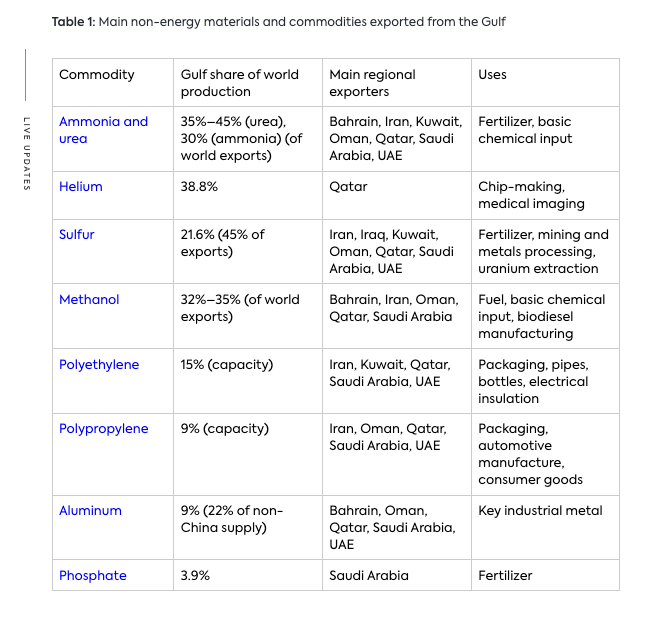
    Will 2026 resemble 2022 when it comes to inflation and redistribution? The magnitude of the shock from the blockades of the Strait of Hormuz appears to be larger than the one caused by the war in Ukraine. The extent of its impact depends on how long the blockades last and how policymakers respond to the unfolding disruption. In terms of headline prices of systemically significant goods, the comparison is unavoidable: as soon as the attacks started in March, the price of oil leapt above 100 dollars, just as it did in 2022. And it is not just oil: major disruption has also affected the supply of natural gas, fertilizers, helium, sulphur and many other commodities.

    Rising prices will once more pose the question of whether conventional inflation targeting is up to the task. If central banks decide that it is, they will likely put a stop to the ongoing monetary easing that began in 2024, once again shift the burden onto workers while failing to deal with the immediate emergency or its ultimate origins. 

    In Latin America, much depends on foreign exchange markets. Even economies like Brazil and Mexico that could benefit from higher prices earned from their oil exports would still be disrupted if the shock results in a reversal of the global financial cycle. So far, the Brazilian and Colombian currencies have appreciated, but the Peruvian one has depreciated slightly. Exchange rate turbulence and more significant depreciations have been confined to Chile and Mexico. If Northern central banks opt for contraction, depreciation pressures will likely spread throughout the region, and central banks will hike interest rates, channeling hard won tax revenues towards the rentiers—while the poor foot the bill of another distant war.

  3. Dawn of the Electric World Order

    Comments Off on Dawn of the Electric World Order

    Programming Note: Kate and Tim are out with a brand new Polycrisis podcast that maps out how the transition to clean energy is upending the world order. Season one and a bonus season on shockwaves from the Iran war are available wherever you get your podcasts.

    Oil and gas—the foundation of global systems of energy and production—are no longer reliably available where and when they are needed at bearable prices. Two wars in four years have triggered a permanent risk regime shift. No matter how uneven and uncertain the immediate reaction from markets and governments, the lesson of the present energy shock is unavoidable: the geopolitical conditions that once stabilized the carbon-based logistics of the modern world can no longer be guaranteed, and electrification offers a structural exit from instability.

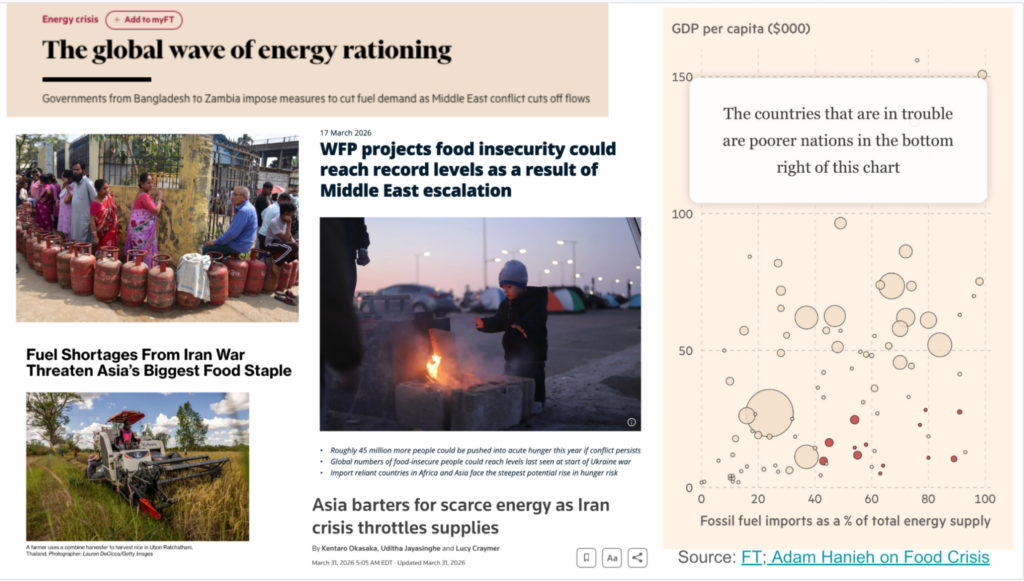
    After two months of war and supply chain disruption, the situation is becoming desperate in much of Asia and Africa, and roiling across Europe and the Americas. Many oil and gas importing countries are now being forced to triage: how much LNG goes to power generation versus fertilizer plants? Bidding wars will leave those without deep pockets paying in increased hunger, lost wages, and shrinking economies. It’s not just oil being affected by the war. From cooking gas to fertilizers to sulphur to helium, the war has yet again exposed the material underpinnings of the global economy and its web of interdependence.

    Crises of this breadth and magnitude transform societies, firms, and governments. Societies boil under the strain of shortages, rationing, and hunger; economic distress cascades and political orders melt. After 2022’s inflationary shock, dozens of governments fell in a wave of anti-incumbency at the ballot box. Underlining the scale of the 2026 energy shock, IEA head Faith Birol said “More oil has been lost… than during the twin shocks of the 1970s that triggered recessions and fuel rationing around the world.” What will this crisis bring?

    “A superior alternative”

    What makes this shock different from the 1970s and 2022? As analysts at Ember put it: “this is the first energy shock with a superior alternative.”

    In the more benign pre-shock landscape, mass electrification, solar and wind energy generation, and battery storage were already becoming competitive with fossil fuels. Electric vehicles accounted for about a quarter of all new car sales. Heat pumps and induction cooktops were growing in popularity. This combination of clean energy, storage, and electrification allow for countries to cut their dependence on a constant flow of imported fuels.

    Solar is the cheapest source of electricity in history and has soared by a record 30% in 2025. Electric vehicles and hybrids are outselling combustion cars in many countries. (Ember)

    Even in 2022, when the Russian invasion of Ukraine put pressure on global oil and gas markets, electric vehicles and solar panels were less cheap than they are today. The rate of EV sales tripled between 2022 and 2025 and in the same period grid-scale storage grew almost tenfold to 270GW. Spain, Australia, and the UK have recently begun to see the peak prices of grid electricity subdued even in periods of huge demand surge, because renewable power and batteries are increasingly substituting for expensive gas-powered peaker plants. For any buyer not blocked by trade wars, renewable energy and storage technologies are mature, cheap, and accessible.

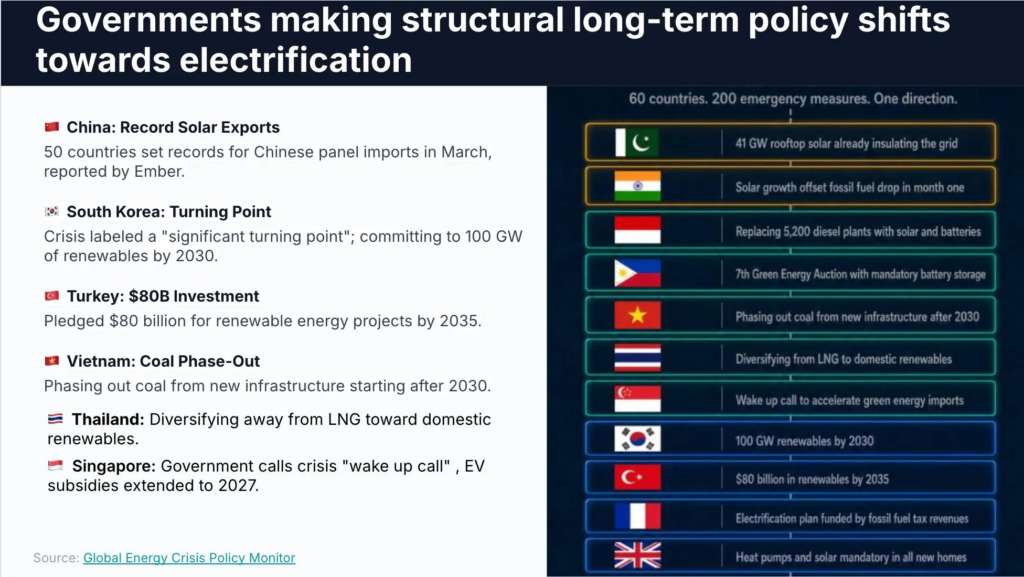
    Once a climate project, electrification is now a geopolitical insurance policy. Seventy-five percent of the world’s population lives in net fossil fuel importing countries and collectively spends $1.7 trillion a year importing fuels. Many of those governments facing a loss of confidence in global oil and gas markets are expanding clean energy and electrification projects. In April, France announced $10 billion in subsidies for EVs and heat pumps. The month prior, Spain introduced measures to further speed up electrification, renewable generation, and storage. Vietnam is about to ban petrol motorbikes in downtown Hanoi and Ho Chi Minh City; the country’s giant conglomerate Vin is abandoning a planned LNG terminal in favor of a renewable project. Nigeria’s solar imports from China in March were more than five times the level of a year earlier. The list is endless.

    Resilience and capacity

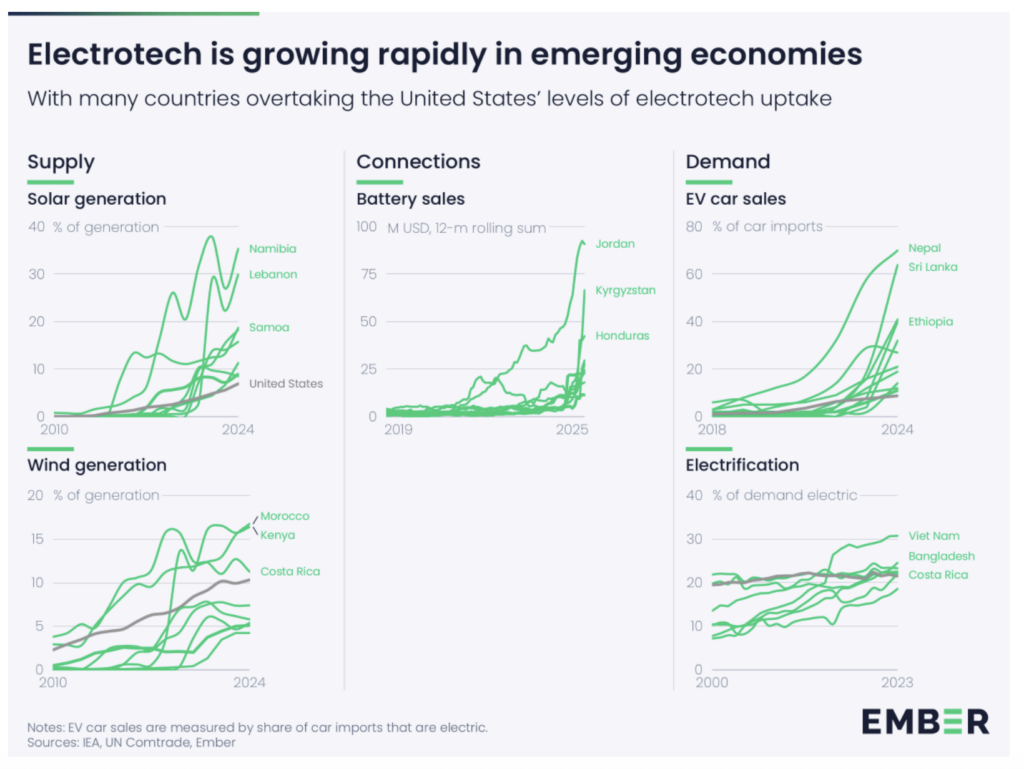
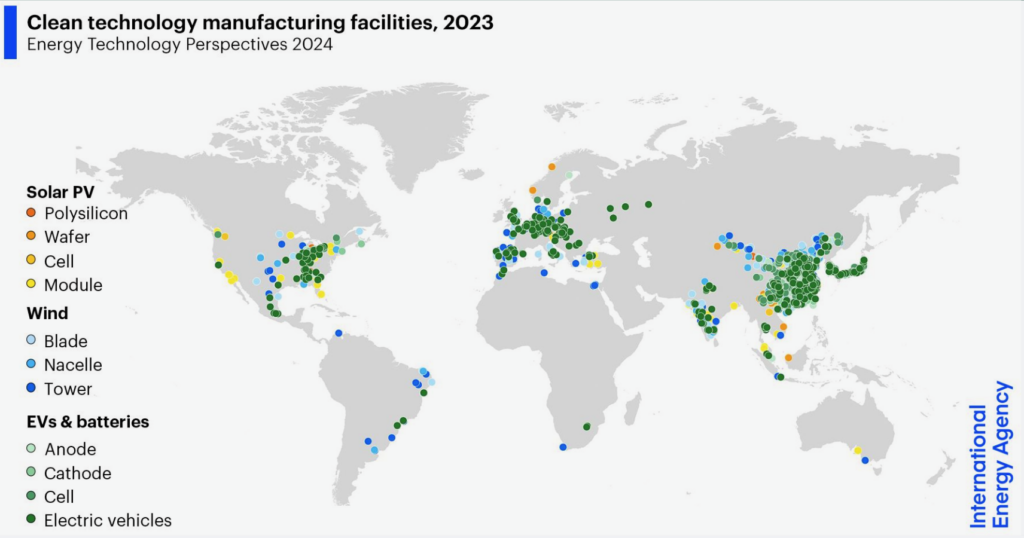
    The new option of a “superior alternative” in energy security exists largely due to China, whose industrial policy and manufacturing prowess have made electrification cheaper, better, and more abundant. China’s factories today supply most of the solar panels sold around the world, most of the battery cells, and almost three-quarters of EVs.

    China’s electrification drive was never primarily a climate story. It was a strategic imperative driven by energy security and industrial ambition. Beijing was spooked by the oil risks exposed after the 2003 Iraq War. The model was simple: build the clean industrial base at home to reduce reliance on imported fossil fuels, and then export that resilience.

    The strategy produced the “electrotech” order of the 2020s. During the pandemic, China moved away from its debt-fueled infrastructure and property growth model to focus on the “new three”: batteries, solar photovoltaics, and EVs. The problem in the mid-2020s was not electrotech overcapacity, but a lack of coordinated global demand. The Hormuz shock has violently solved that under-demand problem.

    The global green industrial manufacturing buildout of the last few years was led by China, and then joined by many countries. Globally, the IEA estimates sales or demand is less than half the production capacity of electrotech factories. (International Energy Agency)

    Manufacturing factories for solar PV, wind, and batteries in China are only running at around half their capacity, meaning they can easily meet the surging global electrotech demand with the war. And manufacturing capacity has grown outside of China, too: Chinese electrotech firms have invested more than $210 billion in foreign solar, battery, and EV production facilities overseas since 2022. Since October, China has been selling more solar cells and other intermediate components than finished solar panels—as many countries want to make, and not just buy, panels.

    Shock and awe

    Big energy supply shocks spur fast energy transitions. More than climate conscious policy, financial upheaval, technological advances, or climate change-driven natural disasters, shocks to the energy system drive change in the energy system. Geopolitical catastrophe—war, blockades, embargoes—creates the supply-side shocks necessary for big changes in the energy complex to unfold.

    The result of the Hormuz shock—now cascading through fertilizer, food, and critical industrial inputs like sulfur and helium—will be demand destruction for fossil fuel energy. Long-term reductions in demand will be joined by permanent substitution for the supply of energy from other sources. And this destruction will be largely state-led: most countries will cut their dependence on oil and gas if they can, although their available choices for doing so will vary.

    States that already have momentum towards electrification will accelerate it. Spain has already benefited from a big solar and wind energy buildout over the last decade, with renewables providing more than 40 percent of its power. Madrid now views its cheap clean electricity as a way to attract energy-intensive industries away from gas-dependent European countries whose electricity prices have spiked yet again “Berlin and Paris,” argued Marc Lopez Plana in Agenda Publica, are now “viewing Spain as a competitor in the race to become the continent’s industrial core.”

    Others will proceed in a more piecemeal way towards electrification and a more renewables-intensive system, even if they can only realize some of the benefits.

    Meanwhile, states with powerful fossil fuel lobbies, or those that lack fiscal space, may see consumer-led energy transitions, while the state bears the legacy of stranded assets. This is the Pakistan scenario: the country spent several billion dollars a month importing LNG for its power generation, and suffered blackouts after the 2022 Ukraine invasion, while its LNG cargoes were being diverted to high-paying European customers. Households and businesses rapidly deployed their own solar panels and batteries at a staggering pace to produce the world’s fastest solar boom, effectively matching the country’s grid capacity. This has insulated parts of the population, to a degree, from the recent price spikes; it’s estimated to have saved 12 billion in LNG imports between 2022 and 2026 and save an additional $7 billion this year. But financial obligations remain a heavy burden in the form of take-or-pay contracts for coal and gas power generators that remain under-utilized and for servicing the debt used to build the facilities.

    Consumers buying solar panels, induction cooktops, EVs, and heat pumps can have significant effects on oil and gas demand. Understanding the new risk calculus, consumers act as self-insurers—whether against blackouts or higher utility bills. In the UK, Octopus Energy reported heat pump orders doubling in a single month; EV and solar orders are rising worldwide. This is the hyperagency of consumers, outpacing policy or public investment and transforming energy systems. For most African countries, and some in Asia, the total capacity of privately owned diesel generator sets exceeds the installed grid power capacity. These are now being swapped for solar plus batteries. Policy makers need to recognize the world-shaping power of this demand, and harness it to upgrade grids and expand electrification.

    Counterpoints

    There are scenarios that could slow or constrain the shift—but each in turn has particular counterpressures that point towards an irreversible change. Inflationary pressures and reduced fiscal space can raise the cost of capital and hamper investment in clean energy. Asia’s reliance on coal—thus far providing only a small part of the response to the crisis—could grow. Regional wars could escalate into a world war; clean energy supply chains could break down. And extreme climate events can create yet more problems, especially for food; a large El Nino system looks increasingly likely. New emergencies will elicit new responses, not all of which are certain to point away from carbon.

    For most countries, the new system has to be built while the old one is still operating. The difficult “mid-transition” issues will persist. For developing countries especially, financing costs and fiscal restraint will create drag. The disruption of other critical commodities such as fertilizers could add further strain on the current account of countries. 

    After the Ukraine invasion sent oil and gas prices soaring, there were predictions that Europe’s energy mix would become more fossil fuel-based, not less. But those predictions didn’t come true: renewable energy grew faster instead, and power from wind alone exceeded that generated by natural gas in 2024. Sales of European heat pumps doubled as residential heating was electrified by governments and consumers wanting to replace Russian gas.

    Swimming against the tide, the US government is seeking to project global dominance of oil and LNG supply—proclaiming its hydrocarbons “geopolitically secure.” Will buyers get in line? While US sales of oil and LNG to Europe soared since the start of the war in Ukraine, few countries in 2026 are looking to increase their reliance on imports from the US. Earlier this year, the US ambassador to Europe threatened the loss of privilege to US LNG if it didn’t comply with the terms of a 15 percent US tariff “deal” struck last year.

    Meanwhile, there are plenty of signs that Asian countries are moving decisively to cut dependence on imports—especially LNG—altogether. More than two dozen energy executives interviewed by Bloomberg journalists “painted a picture of a region that had been thought of as the future of LNG, but is now rapidly losing faith in the super-chilled fuel.”
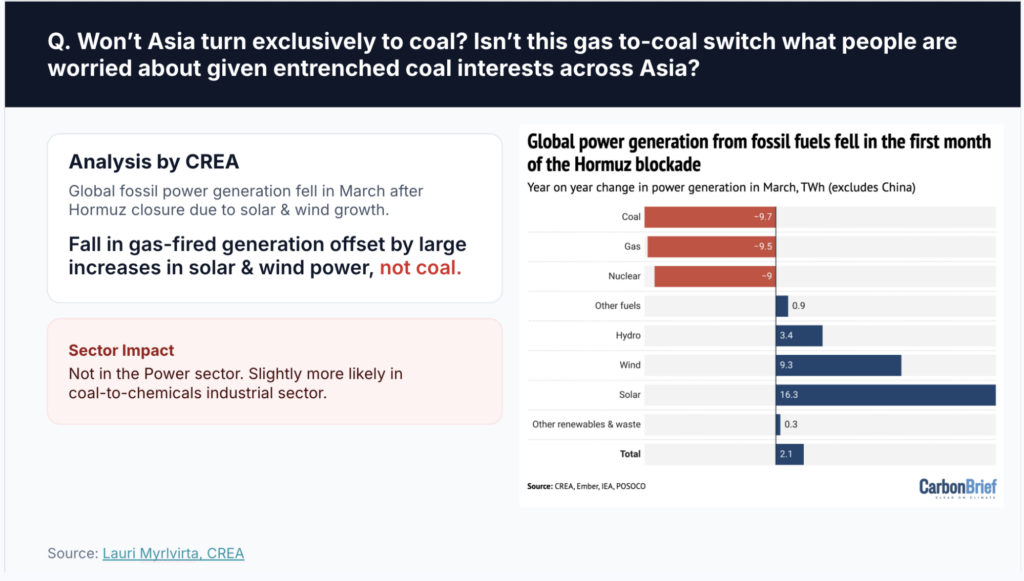
    There is also little sign of an increase in coal burning. Despite coal being possibly less vulnerable to chokepoints than natural gas, research by CREA finds the amount of thermal coal shipped in March was actually lower than a year earlier, even when shipments within large producers like Indonesia and China are included, and coal power generation was near flat.

    Despite the White House’s energy dominance refrain, US oil companies do not plan to ramp up production on a scale that would compensate for the barrels taken offline in the war. Industry figures cite reluctance due to the lower prices of longer-dated oil futures, Trump’s assertions that he’ll keep gasoline prices low, or just general uncertainty. Oil industry participants in the Dallas Fed survey guessed that the amount of US oil being pumped will only increase by a quarter of a million barrels per day and at most half a million barrels by 2027—about a quarter to a half percentage point of world consumption.

    In the short term, the war raises export income for US oil and gas producers. In the longer term, the energy dominance strategy is self-defeating—creating profound volatility, insecurity, and intermittency that militates against investors, consumers, and governments alike.

    Within the United States itself it might be difficult to sense just how quickly the world is changing. Equities markets have been reaching record high levels; crude oil futures are nowhere near the crisis heights expected by energy experts. Renewables projects are being cancelled all over the country and EVs are not filling the streets.

    Other rich fossil fuel exporting countries, from Norway to the UAE, have been diligently decarbonizing their energy systems for years. And for the last few years, many of the world’s poorest countries have been leapfrogging the age of fossil fuels with rapid uptake of solar panels and e-bikes. A carbon energy superpower, the United States looks increasingly like an energy island. Last year, we wrote that the central speculative question about US “fossil drenched” energy geopolitics was whether it would be forced “to watch as others climbed towards the solar uplands, or have the power to crush the spring.” This monumental energy supply shock sets the stage for that question to be answered. A fossil fuel supremacist government has made oil and gas costly and unreliable and accelerated the turn to the electric world order.

  4. Against Carbon Shock Therapy

    Comments Off on Against Carbon Shock Therapy

    At the end of April in Santa Marta, Colombia, two months into the US-Israeli war on Iran, fifty-nine countries attended the first high-level conference on transitioning away from fossil fuels. The attendees agreed that decarbonization was more than energy sovereignty. It meant “building a new economy…that empowers communities,” to cite Stientje van Veldhoven, the Dutch Economy and Climate Minister, co-organizer of the event. The German environment state secretary, Jochen Flasbarth, reassured the room that countries would emerge “more resilient” from the green transformation.

    This transformation, we argued in 2025, is a question of macrofinancial regimes: the combinations of monetary, fiscal, and financial institutions that shape decarbonization choices.1 Gabor, D., Braun, B. (2025). Green macrofinancial regimes. Review of International Political Economy, 32(3), 542–568. (<)a href='https://doi.org/10.1080/09692290.2025.2453504'(>)https://doi.org/10.1080/09692290.2025.2453504.(<)/a(>)(<)br(>) Countries can plan decarbonization through a big green state, derisk private green investments a la Biden’s US Inflation Reduction Act which showered private greentech manufacturers and energy producers with tax credits, or allow the market to drive transformation in response to higher carbon prices, in what we termed carbon shock therapy. This latter echoes the 1990s shock therapy imposed on post-Soviet economies, whereby state-owned companies were subjected to market discipline through price liberalization and the removal of cheap credit, subsidies, and tax concessions. Without state support, market competition and the price mechanism would sort out good from “bad,” inefficient firms, or, in a climate framework, green from “dirty” firms.

    We warned that in a world of high and volatile fossil prices and Chinese cleantech exporters innovating at Shenzhen speed, carbon shock therapy could emerge as the default stance of states unwilling, or unable, to support local industries through the green transformation and to protect them against these carbon shocks along the way. Central banks may amplify cost pressures by raising interest rates to contain further rounds of inflationary pressures. Decarbonization would unfold in a disorderly manner, and would lead, like the original shock therapy, to rapid deindustrialization.

    The US-Israeli attack on Iran, and the subsequent closure of the Strait of Hormuz, is threatening to unleash carbon shock therapy on the world. Yes, it is true that we have seen a shift to green technologies, with EV manufacturers like BYD reporting record sales, and demand for solar panels, heat pumps, and induction stoves on the rise. But this is precisely what “survival of the greenest” shock therapy looks like: a pick-up in green investments coupled with a disorderly destruction of economic activities reliant on fossil fuels and derivatives. Indeed, prices of crude oil, LNG gas, phosphate, helium, ammonia, sulfur, and urea, essential ingredients for economic activity, are rising. A looming scarcity of food, medicine, and other essential goods threatens to worsen already catastrophic levels of economic insecurity. East Asia is already experiencing an energy crisis, and rationing measures are spreading far and wide. Even where countries are resorting to patchwork emergency measures, like subsidies for fossil fuel consumption, the attending fiscal costs will eventually tip them into carbon shock therapy.2By mid 2026, fuel tax cuts were the most common government response to the energy crisis https://www.carbonbrief.org/iran-war-analysis-how-60-nations-have-responded-to-the-global-energy-crisis/

    The consequences would be devastating, as the German state secretary knows too well, since Germany did follow that route in the wake of the Russian invasion of Ukraine fossil price increases.

    The prospect of carbon shock therapy has made it more urgent than ever for states to scale up their planning capacity and establish a high-capital discipline, transformative public investment alternative: the big green state. This, we argue, is the pathway for the Santa Marta countries to achieve the decarbonized sovereignty imperative—the strategic pursuit of decarbonization as a matter of national security.

    Recent histories of Carbon Shock Therapy

    When the Russian invasion of Ukraine in 2022 menaced Germany’s industrial sector with a massive increase in energy costs, the country’s fiscal hawks capped gas prices for households and non-industrial businesses without shielding energy-intensive industrial firms. Price signals, the argument went, would discipline those firms into either shifting resources towards low-carbon technologies, thereby reducing dependence on Russian carbon fuels—or, alternatively, into shrinking operations.

    The market delivered shrinking: in late 2024, energy-intensive industrial output was still 20 percent below pre-Ukraine levels, mirrored in a broader contraction of industrial production. Carbon shock therapists in the government and the central bank interpreted this shrinking manufacturing capacity as a necessary market-driven adjustment process. Yet a few months later, the slowdown prompted the newly elected government to announce a €1 trillion defense and infrastructure spending package in early 2025—a delayed, and it now appears rather ineffective effort to reverse self-induced deindustrialization by leveraged buyout.

    For factories didn’t simply close down; instead, industrial conglomerates splintered, selling off operations to the highest bidder. In late 2025, chemical giant BASF sold its coatings division to Carlyle for €7.7 billion.3See (<)a href='https://www.ft.com/content/b2861b49-f10d-4f12-b8c6-d866bb4eb84e'(>)https://www.ft.com/content/b2861b49-f10d-4f12-b8c6-d866bb4eb84e.(<)/a(>) In February this year, Volkswagen received bids from Blackstone, EQT, and CVC for its Everllence unit, which produces shipping engines and heat pumps.4See (<)a href='https://www.ft.com/content/ef4337b5-4bf7-495a-941f-5001ae60e5e0'(>)https://www.ft.com/content/ef4337b5-4bf7-495a-941f-5001ae60e5e0(<)/a(>) The selloff is actively encouraged by the German government via its “Germany Fund,” a newly established derisking vehicle providing public guarantees to “mobilize private capital for investment to increase the competitiveness and future-readiness of the German economy.”5See (<)a href='https://www.bundesfinanzministerium.de/Content/DE/Pressemitteilungen/Finanzpolitik/2025/12/2025-12-18-deutschlandfonds-startet.html'(>)https://www.bundesfinanzministerium.de/Content/DE/Pressemitteilungen/Finanzpolitik/2(<)/a(>)025/12/2025(<)a href='https://www.bundesfinanzministerium.de/Content/DE/Pressemitteilungen/Finanzpolitik/2025/12/2025-12-18-deutschlandfonds-startet.html'(>)12-18-deutschlandfonds-startet.html.(<)/a(>) Meanwhile, in Brussels, the European Commission is exploring “ways to make it easier for investors in private companies to sell on their stakes.”6See (<)a href='https://finance.ec.europa.eu/regulation-and-supervision/consultations-0/targeted-consultation-private-equity-exits-2026_en'(>)https://finance.ec.europa.eu/regulation-and-supervision/consultations-0/targetedconsultation-private-equity-exits-2026(<)/a(>)

    These experiences offer a forceful warning about the dangers of pursuing the carbon shock therapy path. The alternative to the German model is a political horizon in which governments green their energy systems and industries, build green public mobility, and restore food security. In what follows, we outline a toolkit for decarbonized sovereignty that combines stabilization measures with transformative ones.

    A new politics of stabilization

    Since the 2008 global financial crisis, the dominant paradigm of stabilization combines inflation targeting with derisking to secure financial stability. Central banks purchase government or corporate bonds to improve liquidity and “investibility,” their attractiveness to investors with specific expectations about risk-adjusted returns. In this framework, stabilization aims to restore price signals and allow markets to allocate resources efficiently. It puts capital in the driving seat.

    Derisking, as a weak strategy of stabilizing on behalf of capital, often triggers political backlash since it uses public power to secure disproportionate distributional gains for investors. It is also ridden with coordination failures, since it assumes that the state can stabilize markets by modulating price signals without controlling them. Despite such systemic fragilities, the derisking regime remains politically appealing because it promises effective crisis management without institutional change and large public spending. Derisking is the path of least institutional resistance, the mark of a state that has hollowed out its capacity for direct intervention. This is why, in a situation of large price shocks—the kind triggered by petro wars, climate disasters, or supply chain shocks—derisking can easily tip into carbon shock therapy, as we have seen in Germany.

    In the age of US petro warfare and Israel’s “one battle after another” foreign policy,7(<)a href='https://www.ft.com/content/6d0e66bf-4982-430a-821b-d27dfa1b0a3e?syn-25a6b1a6=1'(>)https://www.ft.com/content/6d0e66bf-4982-430a-821b-d27dfa1b0a3e?syn-25a6b1a6=1(<)/a(>) this scenario has become increasingly likely. As the Hormuz closure pushes oil and gas prices up, central banks around the world are signaling that they will raise interest rates if inflationary pressures mount. Governments meanwhile resort to a patchwork of emergency measures to manage the ripple effects of the energy crisis. For the fifty-eight countries in the Global South close to or already in debt distress, protecting citizens and businesses from rising carbon prices through fiscally expensive subsidies will delay or derail the transition to decarbonized sovereignty. This is a recipe for chaotic demand destruction, threatening a long and disorderly adjustment of economies across the world despite the Santa Marta commitments—with only a few energy-secure exceptions.

    To avoid carbon shock therapy, we need a new politics of stabilization that can meet the challenges posed by bouts of inflation, recurrent shortages, and a lack of transformative state capacity. Isabella Weber and her collaborators have theorized recent episodes of corporations with market power taking advantage of price shocks to boost or protect profit margins as sellers’ inflation. We are currently in the early stages of another round. Every day since the start of the US-Israeli petrowar, oil companies in the EU have made €81.4 million in extra profits from skyrocketing fuel prices, around €2.5 billion in additional profits for March alone. To counter sellers’ inflation, consumer-focused relief measures—such as the electricity VAT cut and fuel price reductions proposed by the Spanish government—are not enough. Weber and Gregor Semeniuk have argued that governments will need to introduce price controls that should range from “wholesale price caps in commodity markets…to margins caps along the supply chain.” Without such interventions, measures to subsidize fossil consumption will effectively validate higher profits for oil and gas companies while increasing public debt (and trade deficits), restricting the room for transformative public spending. To counter the upward distributional effects of sellers’ inflation, governments should also introduce windfall taxes on energy companies—a demand that the governments of Austria, Germany, Italy, Portugal and Spain have put to the EU.8See: https://www.politico.eu/article/austria-germany-italy-portugal-spain-tax-energy-companies-benefit-iran-war/

    Governments must meanwhile prepare for recurrent shortages in essential goods and commodities. Rationing is already on the horizon across Europe and Asia.9See: see https://www.ft.com/content/7d3a6810-b571-4730-aa35-f7bfcacdc242?syn-25a6b1a6=1 But without state-led planning, it threatens to exacerbate existing inequalities. It is therefore necessary to build institutional capacity, such as a Provisioning Essentials Authority (PEA) that can plan rationing in a just and systematic way, as part of a broader transformative strategy. Here, Britain’s experience of WWII offers a useful lesson: rationing was introduced either to address shortages of a “commodity deemed essential to civilians, or it was decided that a deliberate shortage should be created in an effort to release man-power, raw materials, and equipment for use in other industries.”10Phillips, Charles F. “Some Observations on Rationing.” (<)em(>)The Journal of Business of the University of Chicago(<)/em(>) 18, no. 1 (1945): 9–20. http://www.jstor.org/stable/2349729. Stabilization and transformation went hand in hand.

    Indeed, any strategy of stabilization without transformation will quickly run out of steam. Price controls and rationing can easily lose legitimacy where capital systematically organizes to weaken their effects. Even in cases where competent technocrats succeed in buying a few months of reprieve, they cannot solve the question of underlying structural imbalances and state-market relationships that have given us derisking as the status-quo macrofinancial regime.11See redcaju.org for investible energy projects across the African continent. Stabilization alone cannot diminish the power of capital, even where it temporarily suspends its socially destructive profit imperative. Nor should we return to a world where private firms set the pace of renewable investment, coaxed with subsidies from the state—as ECB Executive Board member Frank Elderson called for in his post-Hormuz plea to orchestrate Europe’s energy sovereignty around investible renewables.12See https://www.ft.com/content/6fa21bdb-1387-4fb8-afc9-3d0b53affa58. To achieve a new, decarbonized sovereignty, we need to build a big green state that can plan real transformation.

    Transformations

    In theorizing green macrofinancial regimes, we can distinguish three factions of state managers who struggle over the distinct processes of planning, derisking, or shocking. Fiscal hawks subordinate decarbonization to the goal of maintaining a low-tax, low redistribution regime. Green planners seek to accelerate decarbonization by establishing non-market modes of coordination for green investment, usually through a mix of state-led planning and socialization of key sectors. And geopolitical hawks act as key arbiters, tipping status-quo derisking into either green planning or “let it rip” carbon shock therapy.

    In China, as we have argued, a unique blend of energy security concerns and green planning laid the foundations for a big green state. As early as 2003, the US invasion of Iraq reshaped China’s conception of the geopolitics of oil and caused it to push for oil import diversification away from the Middle East. Yet CCP leaders soon came to understand that regardless of origin, oil was seaborne, and therefore susceptible to blockades enforced by the US navy. As a consequence, from the early 2010s, electrification and cleantech global leadership became a national security project, pursued through the Made in China 2025 industrial policy.

    The petrowar against Iran has turned China’s geopolitical calculus into a powerful lesson for the rest of the world: you cannot import-diversify your way out of fossil fuel dependency. Europe’s shift to LNG imports from the United States, and insistence on decarbonization through derisking, looks particularly shortsighted today. The only secure way to manage an economy is to decarbonize it; the only form of sovereignty available at this moment in history is decarbonized sovereignty.

    How would a big green state, forged in an alliance between green planners and geopolitical hawks, pursue decarbonized sovereignty? There are three institutional pillars: state-led electrification for energy sovereignty, a coercive credit and industrial policy nexus, and a green social bargain.

    State-led electrification

    A national energy strategy should intensify state-led efforts to expand electrification as a means to reduce reliance on fossil fuel imports, alongside improved energy efficiency and attainable climate goals. In most cases, this will rely in part on Chinese cleantech imports, but where combined with a well-designed industrial policy strategy and transformative PEA rationing, it can also scale up domestic productive capacity.

    The big green state will furthermore have to weaken the influence of financialized private interests over key components of the energy system. Looking again to the UK, the development of Britain’s energy system—the construction of the electricity grid, nuclear and hydroelectric power stations, and of a nationwide gas transportation network, all at breakneck speed—occurred under public ownership. The subsequent privatization of the electricity and gas industries created a system that functioned for a time under business-as-usual conditions but that is fundamentally unfit to undertake necessary large-scale electrification.13Arthur Downing, a Director at UK’s largest energy supplier Octopus Energy, details this history in his forthcoming Power and the People. Schemes to transform this system invariably run into the profit problem faced by private renewables,14Christophers, Brett, 1971-. 2024. (<)em(>)The Price Is Wrong: Why Capitalism Won’t Save the Planet.(<)/em(>) Verso. while also failing to build the grid infrastructure that can absorb new renewable capacity. In Europe, “at least 120 GW of planned renewable energy projects…are at risk of delays or cancellation due to grid constraints, with many projects stuck in connection queues.”15See: https://www.review-energy.com/otras-fuentes/how-much-do-grid-constraints-threaten-europes-energy-security-and-industrial-growth Rather than pour fiscal resources into bringing their hurdle rates in line with the level required to “mobilize” private capital, governments should instead renationalize grid operators and utilities, and plan electrification.

    The pre Iran war “solar revolution” in Pakistan, where solar went from 4 to 25 percent of generation over just four years, offers a warning against market-led, government subsidized electrification. The country’s early derisking regime, which guaranteed dollar-payments to independent power producers, produced record-high prices. In response, millions of households and businesses turned to imported Chinese solar panels, with support from the Pakistani state that purchased their excess solar power at inflated rates. But as this strategy is propagating rapidly across the world, the broader implications should be considered carefully: such solar revolutions threaten a utility death spiral: when wealthy consumers go off grid, utilities have to recover fixed grid costs from a smaller pool of poorer customers by hiking prices, which in turn pushes more customers off the grid—a spiral of unequal access and escalating vulnerability that weakens the state’s ability to plan the larger transformation of the economy required for decarbonized sovereignty.

    Coercing credit

    Transformative climate aspirations are not new. The 2015 Paris Climate Agreement, signed by 195 United Nation members, recognized that the climate crisis could not be fixed with carbon prices alone, but needed profound economic and financial transformation. This new climate politics stated plainly that without fixing finance, you can’t fix climate. It took aim at the dirty credit that sustained climate-destructive capital. But what began as a commitment to systemic change that would restructure energy systems, break fossil capital, penalize brown finance and build green economies, was neutralized and repurposed into a narrative of mobilizing private investment, in renewables, green mobility, or green industrial capacity.

    Yet the experience of successful developmental states—from the East Asian tigers to contemporary China—teaches us that transformative industrial policy delivers where it is accompanied by coercive credit policy, where the state steers transformative investment through credit and equity flows. Together with Emil Huth, we theorize coercion as a two-pronged set-up: control over and through finance. Control over finance captures the state’s ability to direct credit allocation at the sectoral level, through state ownership of credit creating institutions (banks) or credit/equity allocating institutions (industrial funds). Control through finance coerces industrial capital into decarbonization priorities by rationing alternative sources of funding, while using credit relationships or equity ownership for close monitoring and enforcement of decarbonization targets. This coercive steering of credit flows replaces central bank independence with new forms of institutional coordination between central banks and green planning authorities.

    China offers the most sophisticated contemporary example of coercive steering, combining control over credit through state ownership of banks and government guidance funds with control through credit that has steered local capital into Made in China 2025 and newer decarbonization strategies. But China is not alone. The European Central Bank has built coercive credit capacity through the framework for tilting its corporate bond portfolio towards greener issuers. More recently, the EU’s Savings and Investment Union and the UK’s Pension Bill both envisage new mandatory powers to steer institutional capital. There is resistance from private interests, but in moments of crisis governments can use their power to scale up coercive credit capacity.

    Indeed, financial repression is coming back. Confronted with the relentless shocks emanating from the increasingly unstable core of the US-dominated global financial system, countries cannot transition out of fossil fuels under full capital mobility and central bank independence.  In the wake of the 2008 crash, capital controls once again came to be seen as a legitimate tool of macroeconomic management. But countries locked in the global US dollar system hesitated to deploy them for fear of foreign exchange shortages and external debt distress worsening.

    But this external constraint is contingent. It can be tackled by a combination of strategic rationing orchestrated by a Provisioning Essentials Authority and a rapid increase in domestic productive capacity, industrial and agricultural. Senegal is an illustrative case. Like many other poor countries in or close to debt distress, it is highly dependent on food imports, covering 70 percent of its food needs with imports from Europe, Asia, and Brazil. The way out is not investible agriculture, as advocated by the World Bank. Rather, as Marieme Toure suggests, what’s needed is a three pillar developmental framework for green agriculture: redirecting fiscal resources from blanket input subsidies and credit guarantees toward strategic public goods (climate-resilient storage infrastructure, public seed breeding and multiplication program, soil health mapping and rehabilitation); green credit policies; and public procurement to create guaranteed demand for climate-resilient produce. Like food sovereignty, there are other pieces of low-hanging fruit that could ease the external constraint for Global South countries.

    Green social bargain

    But achieving wide-reaching and transformative programs requires political legitimacy. 

    That green backlash is now ubiquitous in Western politics should not surprise us. The distributionally regressive consequences of its green carrots-for-capital toolkit are inconsistent with the notion of a “just transition”—there are too few winners to forge stable political coalitions. Similarly, an approach that limits itself to compensating “losers” on a policy-by-policy basis will fail to change the preferences and incentives of the people it affects.

    But building and maintaining green support coalitions is eminently possible. A government capable of non-market coordination can build broad support by offering citizens bold visions of a decarbonized future. Take the example of green public mobility. Restricting individual mobility may be unpopular among car owners, but radically expanded green public mobility, free at the point of use, is popular. Beyond local public transit policy, strategic rationing could align green public mobility with broader decarbonization plans. A government that is serious about such a vision may, for instance, need to ration the production of individual passenger cars to redirect industrial resources towards the production of electric buses and charging infrastructures.

    There is no doubt that countries can afford free green public mobility. Crushed by fossil fuel shortages far worse than anything Europe has had to deal with so far, the government of Pakistan has announced free public transit by bus, as has Ho Chi Minh City in Vietnam. Indeed, the most well-known example of this is Germany’s post-Ukraine Deutschlandticket, a vastly popular 9-euro monthly flat-rate fare, valid across the country. Since then, the government has increased the price of the Deutschlandticket sevenfold, making it unaffordable to most public transit users—in Germany, it seems, carbon shock therapy will continue until morale improves.

    Carbon shock therapy is a policy choice. It means a disorderly adjustment to a world of higher fossil prices, and growing shortages: a patchwork of emergency measures that may buffer citizens from the impending demand destruction, with distributive impacts that leave in place the status-quo, and cements the political appeal of green derisking for accelerating the shift to renewables. The alternative is a decarbonized sovereignty that could harness the crisis unleashed by Trump’s petro wars to build a big green state regime, combining emergency stabilization measures—from price controls to strategic rationing—with long-term transformative interventions. The latter would accelerate state-led electrification, build coercive credit capacity to support green industrial policy and food securit

    y, and forge a new green social bargain. 


  5. Unstitching America

    Comments Off on Unstitching America

    In mid-March, the Postmaster General told Congress that the United States Postal Service would be unable to deliver mail within twelve months unless Congress lifted its debt limit. Shortly thereafter, in response to rising energy prices following the US war on Iran, USPS announced a fuel surcharge on packages, a first ever in its fifty-five year history as a government corporation. Around the same time, Amazon presented USPS with the double insult of cutting its contract (USPS’s largest) by 20 percent and, according to the logistics consulting and analytics firm ShipMatrix, surpassing it in parcel volume. 

    The clouds on the horizon for USPS have coincided with the revival of proposals for postal privatization, long a dream of conservatives and neoliberals. In 2018, the first Trump administration called for privatization of the USPS, and in 2019 the Treasury Department attempted to assume control of USPS business decisions. But with the second term the threat has become more concrete. Even before the inauguration, in December 2024 the president-elect reiterated that the agency was on the proverbial chopping block. “We didn’t finish the job in the first term,” Carey Mulligan, the chief economist of the President’s Council of Economic Advisers during the first Trump administration, said at the time, “but we should finish it now.” In February 2025, Wells Fargo’s Equity Research team, an arm of its investment banking business, answered the call by publishing a “framework” for postal privatization, further whetting the private sector’s appetite. 

    What would privatization entail? Will the current struggles of rising energy costs, imperilled congressional appropriations, continued growth of private competition, and decreasing revenue from Amazon give such machinations new life? For postal privatization to proceed, there would need to be congressional action to overturn the Postal Reorganization Act of 1970 (which established USPS in its current form), a vote that would no doubt make legislators on both sides of the aisle queasy. While this does not seem like an imminent possibility, just months after Wells Fargo published its privatization framework, the USPS Board of Governors elected David Steiner, a member of the FedEx board of directors, as Postmaster General. By 2028, all eight of the members of USPS’s Board of Governors will be Trump appointees. 

    The unfortunate predicament of the post office is not going away, and this administration seems intent on letting no crisis go to waste. Senator Bernie Sanders has rightly said that the privatization of the post office would be a disaster. Here I’d like to get concrete about precisely why and how. 

    Mail and parcels

    With examples like the privatization of British Petroleum or Japanese National Railways in mind, one immediate question about the future of the US Postal Service is: why couldn’t private entities provide these services, or at least a market-inflected approximation? 

    In most accounts, the problem is the margins: much of what USPS does is unprofitable, USPS as a whole requires some federal subsidy, and so private companies simply wouldn’t want to provide its level of service. But Amazon is rapidly building out its rural delivery network, in recognition that rural customers buy plenty of things too. If it has found a way to make this work, along with plenty of other modern marvels, why not postal service?

    The answer is quite simple: no private company has built logistical infrastructure even approximating the breadth and coverage of USPS. It’s not that private entities won’t deliver postal service; it’s that they quite literally can’t.

    To see why, it’s worth diving into the basics of the Wells Fargo privatization framework, which has two essential components: first, sell or IPO the parcel business, the largest category of USPS revenue and the part that the big parcel carriers care most about. Second, continue to subsidize the remaining mail-only operation and pay for worker buyout packages, funding both by selling off USPS land—“unlocking $85 billion of real estate,” in their words.

    This framework helps clarify, first and foremost, that no private entity wants any part of having to deliver the actual mail. USPS operates under what’s called a Universal Service Obligation (USO) to deliver mail to every address in the US, six days a week—“from remote Alaskan communities to the bottom of the Grand Canyon,” in the words of David Yao, Vice President of the Greater Seattle Area Local of the American Postal Workers Union (APWU). Such concepts of “universal service” are as old as regulated monopolies themselves on both sides of the North Atlantic, and since USPS became an independent government corporation in 1971 it has been under one.

    This commitment is not simply an “inefficiency” that any private company would rationalize. It is also something that is logistically impossible for any private corporation to fulfill. Take a sparsely-populated state like Wyoming. By my current count, UPS has nine last-mile delivery facilities, i.e., buildings from which delivery drivers pick up their loads for the day and set off to deliver packages; FedEx has eight, and Amazon two. USPS, by contrast, has seventy-seven. The last-mile facilities for these private companies are perfectly adequate for the purpose of package delivery (especially if they can send anything they don’t want to deal with to USPS), but to actually deliver on the USO, they would need an order of magnitude more in terms of last-mile capacity—both additional buildings as well as more carriers to drive and walk regular routes.

    United Parcel Service, Inc. (UPS) last-mile facilities in Wyoming
    FedEx Corporation last-mile facilities in Wyoming
    Amazon last-mile facilities in Wyoming
    US Postal Service (USPS) last-mile facilities in Wyoming

    This is one of the glaring contradictions of the Wells Fargo framework: once parcels are hived off, they take it as obvious that USPS would sell off real estate to subsidize mail service, when mail service is only possible because of that real estate. They thus avoid the uncomfortable truth that their plan would inevitably eliminate the USO, making mail something that is delivered sporadically and only in more limited geographic areas. What they are proposing is nothing less than the end of mail service as Americans have known it.

    As for parcels, Wells Fargo is clear about the purpose of privatization: “Postal Reform Provides Positive Optionality to FedEx and UPS.” The bank’s analysts calculate that a privatized service would raise existing USPS parcel prices between 30 and 140 percent across product lines, “which would be positive for FedEx and UPS.” (It’s worth noting that Wells Fargo’s Board of Directors includes private equity mogul Wayne Hewett, who also sits on the board of UPS.) Again, the corporate interest in privatization is straightforward: for their entire existences, these companies have had to compete with a public option, and they are sick of it. To gird their bottom lines, investment bankers are prepared to sacrifice one of the last public agencies that physically binds the United States together as a nation.

    Amazon’s role

    It’s worth a brief digression on Amazon’s particular role in the drama of postal privatization. Though they are not named in the Wells Fargo framework, recent developments in their distribution network indicate that they are very concerned with the fate of USPS.

    Indeed, over the past few years, Amazon as a combined e-commerce and parcel delivery company has been doing the most of any part of corporate America to prepare for a world in which USPS no longer exists. The fastest growing category of distribution nodes in Amazon’s system are what it calls Sub-Same Day Centers and Rural-Super Rural (RSR) stations, the latter of which function as combined fulfillment and delivery operations in rural areas. The RSR network buildout is a significant departure from Amazon’s core parcel delivery strategy of building around population density, and no doubt the potential privatization of USPS, on whom it currently relies heavily for rural deliveries, is a significant motivation here.

    Not that long ago, it would have been laughable to think Amazon could benefit from postal privatization in the same way that UPS or FedEx could. But now as the largest private parcel company and also USPS’s largest service contract, Amazon is in the driver’s seat. The corporation recently renewed its USPS contract at 20 percent less volume, but I have heard that they are eager to imminently wean themselves off of USPS completely. USPS’s recent solicitation of bids to access its last-mile network was met with great frustration by Amazon (who at which time that had not yet settled the new contract), and the e-commerce company appears ready to assert a long-threatened independence.

    As is evident from the maps above, however, Amazon still lags behind its parcel competitors in terms of its rural buildout. Despite its recent troubles, a company like UPS still has a better infrastructural case to make that it could provide USPS-like service. However, even if it does not ultimately get a slice of the postal privatization pie, Amazon is still very concerned with this development because privatization would eliminate its low-cost rural delivery option. Either way, then, it’s clear that Amazon has a material stake in cutting its dependence on USPS as quickly as possible. 

    A senior staffer at APWU mentioned another reason, aside from no longer having a low cost parcel competitor/service provider, that Amazon would be interested in postal privatization.

    When we look at the growth of e-commerce, it’s not just a story about Amazon. Many of us understand the role that Amazon plays in the country, but there are thousands of small and medium-sized businesses that have really flourished in this new e-commerce environment, and particularly the smaller ones rely almost exclusively on the Postal Service because of their cost advantage to ship their goods out to customers.

    No other e-commerce company has built out the logistics network that Amazon has, and if postal service were privatized, Amazon would truly have its competitive moat.

    The class politics of postal privatization

    What would the end of mail as Americans have known it mean precisely? For the professional urban dweller, it might seem like postal privatization is a sad development in theory, but does not pose such a practical problem. Indeed, with email, digital fluency, and readily-available internet access, Amazon and UPS to deliver one’s packages, and an annoyance at the daily marketing mail that clutters a physical inbox, there’s a good argument that it simply doesn’t. The Danish postal service recently announced that it would be ending mail service at the end of the year due to the “increasing digitalisation” of Danish society. Our hypothetical American urbanite might read such a story and wonder, “If the Danes don’t need it, why do we?”

    For one, 92.5 percent of Danish households have broadband access at home, compared to 78 percent of Americans. For US households with income of $30,000 or less, coverage falls to 54 percent. Denmark also made public digital services mandatory in 2015, meaning that all interactions with public services, from utilities to healthcare, must be digitally accessible. As a result, 82 percent of Danes “use public digital services at least once a week.” In the US, by contrast, less than a quarter of people regularly interact with government services digitally.

    With underdeveloped digitization, USPS quite literally serves a socially integrative function that some urbanites might only take to be symbolic. According to Steve Hutkins, author of the remarkable blog, Save the Post Office, “the Postal Service’s vast infrastructure of 35,000 post offices and 230,000 delivery routes cover the entire country and really do bind the nation together.” This community binding is particularly evident in rural areas, which all commentators on postal privatization, from its champions to its critics, agree will be the hardest hit. As Jake (not a real name), a City Carrier Assistant who has worked in both rural and urban areas, told me, “Because carriers deliver the same routes, they form lasting relationships with the public and those on their regular route; people recognize when someone is walking around their neighborhood every day.” 

    The medical implications of postal privatization for rural residents are particularly concerning. Twenty percent of adults over 40 with chronic conditions get their prescriptions by mail, and veterans receive 84 percent of their prescriptions by mail. “When I delivered to a person in a relatively rural area who couldn’t leave their house due to their health, I put their medication in a slot in their door,” Jake related. “If this weren’t a service provided by the federal government, or this person had to pay extra for it, they would simply be left to die.” 

    However, while it would be easy to think that USPS privatization is primarily a geographic concern, many urban residents would also suffer given the range of social services in US cities that are still carried out by mail. As Jake continued:

    Information about your SNAP benefits is distributed by mail. Many residents of public housing as well as tenants of private landlords pay rent by mail. Many people, especially the elderly and those in public housing, are paid by mail. Tax returns, and especially refunds, are often distributed by mail. Many medications are delivered by mail. Our immigration system distributes notices and can accept submissions by mail. A paper trail in physical rather than digital form is easier to use in, e.g., housing court; sections of New York housing law actually require certain notices to be sent by certified mail.

    During the recent ICE raids in Minneapolis, postal workers delivered expedited passports in neighborhoods where many people weren’t leaving their homes, sometimes in harrowing conditions. “I deliver in a working-class immigrant community,” explained Tyler Vasseur, a city letter carrier in Minneapolis and a union steward with the National Association of Letter Carriers (NALC). “There was a period of time where for several weeks, every day or every other day, there were active ICE raids on my route.” This is obviously an extreme case, but one that speaks to the social constancy that USPS is obligated to provide. Whatever is happening in the country, even an ICE raid where “there’s tear gas getting shot off,” in Vasseur’s words, the postal service is there to deliver the mail.

    Other paths forward

    Critics of USPS like to point to twenty years of losses to justify the idea of privatization. The criticism rests on the assumption that USPS is a failing business—an unfair metric not only because it is a public service but also because it is subject to all manner of restrictions that actual private businesses are not. APWU’s senior staffer described USPS as in an “identity crisis created by Congress. They tell the Postal Service two conflicting things. We want you to be a public service, you’re going to have a lot of public service obligations, but we also want you to operate like a business. What the Postal Service ends up getting through law is the worst of both worlds.” 

    USPS’s financial crisis began in 2006 after the Postal Accountability and Enhancement Act, which required the agency “to calculate all of its likely pension costs over the next 75 years, and then sock away enough money between 2007 and 2016 to cover most of them”—something no corporation would ever do. USPS also has a limited line of credit, can only invest retirement funds in Treasury notes, and cannot ship alcohol. In no way are these the marks of a true “free enterprise,” and so it’s disingenuous to compare it to one. 

    At the same time, there is no shortage of ideas for generating new revenue streams. As Yao explained some of the ideas proposed by APWU:

    There are other potential ways to raise postal revenue…, such as allowing post offices to handle some functions of state and local governments, like hunting and fishing licenses, driver’s license and vehicle tab renewals. There is a pilot program to have mail carriers, who know their communities in detail, to act as census agents, instead of hiring and training temporary workers every 10 years.

    Jake was supportive of USPS’s recent solicitation of bids for access to its last-mile network: “Currently, we have only a few last-mile delivery contracts with a few large companies. If we were able to have more of these contracts, it would increase revenue and delivery coverage at the same time.” And there is also the long overdue proposal for postal banking, which would offer much needed financial services for the millions of Americans who don’t have bank accounts.

    But all of these questions and proposals revolve around the idea that the postal service needs to be something more than it is, that it is fundamentally deficient in some way. USPS is, at root, a modern logistical marvel that should be a point of national pride. As Jonathan Smith, President of the APWU, relayed to me:

    It is still a miracle that you can get a letter from New York to California for less than a buck. Challenge anyone to try and do that through any other means. It’s just a remarkable operation. The ubiquity of it is something really to be cherished. In moments of crisis, in the early days of COVID, or after hurricanes or earthquakes, you read news stories, and people will often say, “I saw the letter carrier going down the street, and I knew we were going to be okay.” The Postal Service is the first one back into a community after a disaster like that. You can count on the mail moving and getting to you wherever you are. It really is quite a marvel.

    The business press is always giving Amazon its flowers for new efficiencies in warehousing and delivery, always eager to lightly edit and republish the company’s press releases. But Amazon (and any other private carrier) is logistically incapable of doing what the postal service does, and its executives know that if postal privatization were to pass, amid a feeding frenzy in the parcel segment, the mail and the socially integrative function involved in providing it would quickly wither.

    Vasseur is one of the founders of a reform caucus at NALC called Building a Fighting NALC (BFN). When ICE used USPS parking lots to stage their operations in South Minneapolis, BFN members were there to protest. They will also be marching in Minneapolis’s May Day parade behind a banner that says, “Fund the Postal Service, Not War.” As Vasseur concluded:

    We can work around the edges to find solutions to some parts of the financial issues facing USPS and other public services, but I don’t think that’ll fix everything. Now’s the time to go on the offensive and point out the hypocrisy that we see every day about where the money goes. For that reason, our reform caucus [wants] to push the union to take up the fight to call for the Postal Service to be publicly funded, period.

  6. Soy Republics

    Comments Off on Soy Republics

    Early this year, in the Brazilian Amazon, a coalition of fourteen indigenous groups rose up against a government decree that planned to privatize the waterway between Itaituba and Santarém—two towns in the state of Pará—as well as a public project to dredge the River Tapajós. The giant commodities trader Cargill controls ports in both towns that act as key nodes of the logistics infrastructure through which soy grown in the rainforest and savanna is sent to global markets, mainly in Europe and Northern Africa. In 2022, around 13 percent of all soy exported by Cargill from Brazil was shipped from Santarém, including almost two-thirds of the beans grown in the rainforest.

    The groups launched the protest by camping in front of a Cargill terminal in Santarém and demanding that the government cancel both the privatization of the river and its dredging. The communities claimed that the plans, on which they hadn’t been consulted, posed a direct threat both to their livelihoods and to the rich biodiversity of the region, risking the release of harmful mercury from the riverbed. At its height, the camp had more than a thousand people. After just over a month, the government agreed to meet their demands. The reaction from the mainstream press was one of shock and horror. 

    The episode brings to the fore the critical role played by multinational corporations in conflicts around the Amazon. By looking at the South American soy boom in the biome and beyond, we can begin to grasp the ways in which corporate concentration in one of the region’s main export activities has contributed to both the rise of a far-right agribusiness bloc and popular mobilizations in defense of the environment. While one of my previous columns discussed how policies oriented towards “land-sparing” helped to create the conditions for bolsonarismo, here I will discuss another crucial factor in South America’s political evolution: the power relations within supply chains. 

    Capital in the Amazon 

    Global capital’s interest in the rainforest is nothing new. In the 1920s, for instance, Henry Ford bought a massive piece of land in the biome which he named Fordlândia and hoped to transform into a plantation of rubber trees from which to source the inputs for the tyres of his mass-produced cars. Yet the relative significance of foreign investment has fluctuated over time. Critical scholars studying the region have generally claimed that it would be misleading to make it a central focus, since the Amazon’s main problems have flowed from domestic political and economic factors. “The role of international capital in producing deforestation in the Amazon has been relatively minor,” wrote Susanna Hecht and Alexander Cockburn in The Fate of the Forest in 1990. Hecht later took aim at attempts to connect deforestation to the international demand for beef. ‘‘The so-called hamburger connection,’’ she argued, ‘‘simply does not operate in the current Amazonian context.’’ (The literature on this question, from that period, was summarized by Andrew Hurrell.)

    In the last three decades, however, the situation has changed beyond recognition. The rearticulation of the world economy around China made South America a key provider of primary commodities to global production, and transformed the role of transnational corporations in the region—including in the rainforest. There have been a number of sophisticated efforts to map this phenomenon empirically. A recent estimate indicates that 56 percent of Amazon deforestation driven by soy croplands between 2020 and 2022 can be attributed to international, rather than domestic, consumption. In an article from 2018, Victor Galaz and his co-authors argued that the main drivers of land-use change in the rainforest are soy and beef production, and that these two economic activities are dominated by only eight corporations: four giant grain traders (ADM, Bunge, Cargill, and Louis Dreyfus, usually referred to as ABCD), the largest private soybean producer in the world (a Brazilian firm, Amaggi), and three Brazilian meat-processing firms (JBS, Marfrig, and Minerva). Galaz et al. also showed that many of these companies are tightly linked to the sixteen financial firms most involved in activities threatening biomes critical for the Earth’s climate, and especially to the ‘‘big three’’ asset managers (BlackRock, Vanguard, and State Street, all headquartered in the US).

    The connection of ADM, Bunge and Minerva to these sixteen financial firms is mainly through stockownership, whereas in the case of JBS and Marfrig, ‘‘investors’ latent influence’’ operates predominantly through debt. (The three remaining firms—Amaggi, Cargill, Louis Dreyfus—are privately owned, which means that the data on their intertwinement with financial capital is limited.) The authors therefore arrive at a blunt conclusion: “the ‘Financial Giants,’ through their common blockholding power, have a previously ignored, yet considerable potential influence in companies shaping biomes critical for the stability of the climate system.’’ Last year, researchers from University College London and University of Exeter went further still, tracing the financial flows— including lending and equity and debt issuance—towards twenty-four corporations, including the eight firms mentioned above, which have been ‘‘linked to significant land use change and degradation’’ in the Brazilian Amazon between 2014 and 2023.

    Academics have also made occasional efforts to get these transnational corporations to change their ways. In 2019, a group of twenty-four prominent researchers proposed ‘‘expanding the focus from ‘corporate social responsibility’ to ‘corporate biosphere stewardship,’’’ advocating ‘‘a new business logic with the purpose of shepherding and safeguarding the resilience of the biosphere for human well-being.’’ Others appealed to central banks and financial regulators, arguing that it is their mandate to deal with ecosystem degradation that ‘‘poses escalating systemic risks to economic and financial systems.’’ To restrict a ‘‘substantial portion’’ of financial flows to companies that threaten the tipping points of the Brazilian Amazon and the Indonesian peatlands ‘‘would only require coordination across relatively few financial centres.’’ 

    The hope implicit in this literature echoes Rudolf Hilferding’s remark that the concentration brought about by finance capital could be seized upon to overcome capitalism itself—‘‘taking possession of six large Berlin banks,’’ he wrote in 1910 in Finance Capital, ‘‘would mean taking possession of the most important spheres of large-scale industry, and would greatly facilitate the initial phases of socialist policy”—except the goal here is no longer to bring about socialism, but simply to salvage a liveable planet by preventing ecosystem tipping points from being reached. 

    Can’t beat them? Join them

    The expectation that central banks might come to the rescue in a deepening climate crisis was evidently grounded in an ephemeral conjuncture, which came to an end with Donald Trump’s return to the White House last year. Yet even if this push had succeeded, it may have had difficult side effects. As Yannis Dafermos argued, ‘‘attempts of private finance to protect itself from climate risks’’—and attempts by monetary authorities to push them to do so—may exacerbate climate finance injustice by increasing borrowing costs faced by Global South countries and deepening their financial vulnerability.

    Research on the role of global capital in the climate crisis must therefore consider the impacts of corporate concentration on country-level politics, investigating the alliances built by transnational corporations with domestic elites and the potential resistance they may encounter. Seen through this lens, the case of the South American soy boom offers useful insights. Since the late 2010s South America has been responsible for more than half of global soy production and almost two-thirds of global exports of the commodity. In 2024, Argentina, Brazil and Paraguay accounted for 61 percent of all exports.

    The data made available by Trase.earth is clear about the dominance of the giant grain traders in Brazilian and Argentine soy exports, as shown in the figures below. (Data includes soybeans and “the raw equivalent of the traded sub-products,” that is, ‘‘soy cake and soy oil are converted to soybean equivalent tonnes.”) Statistics for Brazil start in 2004, when the ABCD firms responded for 48.2 percent of total soy exports, in tonnes. By 2009, their share had peaked at 59.8 percent, before gradually falling over the following years, to 42.2 percent in 2022—the most recent information available. Despite the decline, the four companies remained in control of a sizable share of a booming business: in 2022, exports totalled 93.7 tonnes of soy, up from 36.2 in 2004. The data for Argentina is limited to the period between 2015 and 2019 and shows that the share of the ABCD firms oscillated between a quarter and a third of the total. Adding a fifth giant commodity trader, Glencore, brings this figure above 40 percent.

    Founded either in the nineteenth or in the early twentieth century, the ABCD firms saw their global influence increase at the turn of the millennium in parallel with the expansion of future trading in commodities. Jennifer Clapp argued that this financialization of the commodity trade allowed them to “wield enormous power in shaping food systems.” Profiting from volatility that caused hunger and popular rebellions throughout the world, these corporations were known, according to Gustavo de Oliveira and Mindi Schneider, for “rerouting cargo ships mid-ocean to gain marginal profits on large volumes, and speculating on futures markets with the privileged information that results from controlling significant shares of non-transparent markets.” 

    In South America, their dominance was established in the 1990s through the surge in acquisitions that formed part of the process of neoliberalization. By extending the subordination of soy farmers, they set in motion a cumulative process that further tightened the companies’ grip. They squeezed prices paid to producers and so pushed them to combine intensive use of herbicides with genetically-modified seeds, “in order not to incur price deductions at the point of delivery, deepening the technological treadmill and the farmers’ need for finance.” By the early 2000s, they had come to control “the entire transportation logistics…as well as the port terminals, cargo ships and processing facilities that ultimately crushed the soybeans into meal and vegetable oil.”

    South American big capital did not put up much resistance to this trend. In Brazil, Amaggi maintained its powerful position, controlling more than 8 percent of soy exports from Brazil in 2022 and around 1.6 percent of the soy croplands in the mid-2010s, partly by coordinating with the global traders. It established joint ventures with Bunge and Dreyfus and obtained funding from Mitsui (a large Japanese trader). It also had significant political influence. Its owner, Blairo Maggi, was governor of the main soy growing state in Brazil (Mato Grosso) between 2003 and 2010, senator between 2011 and 2016, and Minister of Agriculture between 2016 and 2019.

    In Argentina, taxes on exports of unprocessed soybeans, strengthened large domestic agro-industrial capitalists who produced soy oil, allowing them to keep a share of total exports similar to the one of the ABCD firms (see figure above). The three largest Argentine corporations (Vicentin, AGD, and Perez Companc) controlled from a quarter to a third of total exports, between 2015 and 2019. (Embroiled in a series of scandals after 2019, Vicentin would eventually be rescued by an Argentine businessman with the support of Cargill.)

    Chinese state capital posed a more significant challenge. Following the so-called “2004 soybean crisis” in China, when a sudden change in the global price of the commodity pushed a number of Chinese processing firms into bankruptcy, the ABCD firms saw their control of the Chinese market surge. In response, the government prioritized the growth of Chinese traders, especially COFCO, in a dispute dubbed the “battle of the beans.” (See Tomaz Fares’ detailed account.) The ripples were eventually felt in South America: in Brazil, COFCO started exporting soy in 2005 and, since 2014, became responsible for a share between 5 and 8 percent of total exports; in Argentina, its share was even higher, around 10 percent, between 2015 and 2019. A substantial part of the post-2009 decline in the share controlled by ABCD in Brazil is explained by the rise of COFCO. Yet the shift in market shares may exaggerate the actual challenge. Being treated initially with “particular hostility” from the ABCD, who aimed “to maintain their oligopolistic control over soybean exports,” COFCO was forced to build alliances with the incumbents, reaching a preferential agreement with ADM. If you can’t beat them, join them.

    Corporate concentration and South American politics

    The rise of COFCO is unlikely to bring effective competition to the industry, simply expanding from four to five the firms at the helm of the oligopsony of South American soy. Given their focus on processing, marketing, and logistics, the real material process of growing soy is still done by a multitude of farmers, large and small. A tiny minority, usually backed by foreign and domestic financial capital, owns vast tracts of cropland and manages to retain some autonomy relative to the traders. Estimates with data from the mid-2010s indicated that seven giant farm management companies—pools de siembra, as they are called in Argentina—controlled almost 7 percent of all hectares planted with soy across Argentina, Brazil, and Paraguay. In Brazil alone, five of them (including Amaggi) accounted for about 5 per cent of the soy cropland area.

    Yet these are the exceptions, giant as they are. The vast majority of the soy farmers are significantly smaller, including large numbers of medium- and smallholders, who due to their size are deeply subordinated to the trading oligopsony. They are not only price takers but have lost most of the control of their own operations. “The nature and ‘autonomy of farming’ are increasingly disciplined and structured by external forms of management based on the application of technological packages and farm-service logistics,” Oliveira and Hecht wrote. In Argentina, this transformation of farming is referred to as sojización, characterized “by higher levels of capitalization, mechanization, foreign investment and economies of scale.”

    The political constituency represented by this multitude of farmers, connected to the most dynamic sector of the region’s economies, could in principle have been mobilized against the oligopsony, demanding a different organization of the supply chain. But instead, subordinated rural groups, suspicious of the center-left governments that presided over the consolidation of the trading oligopsony, turned sharply to the right. In Brazil, these radicalized soy farmers rose through the ranks of state-level soy producer associations to hegemonize rural politics for the country as a whole, providing Bolsonaro with a key electoral base. This marked the birth of what Caio Pompeia calls agri-bolsonarismo. 

    A similar development can be identified in Argentina. In 2008, when the government of Cristina Kirchner moved to increase taxes on the exports of soy, it was resoundingly defeated by a large coalition in a struggle that is now referred to as the crisis del campo, which Diana Córdoba and her co-authors described as a “rural protest of unprecedented scale in which disparate and historically fractured rural interests united in a common protest that lasted for months.” They went on to explain how

    Landowners, contractors, workers, hauliers and other rural actors—representing the rural elite, smallholders and the rural working class—participated together, using trucks and farm equipment to install blockades on rural routes and cutting off the movement of agricultural (and other) products throughout the core agricultural region.

    Some have argued that the origins of Argentina’s rightward movement—first with the election of Mauricio Macri in 2015, then with the victory of Javier Milei in 2023—can best be found in this crisis of 2008. In both Argentina and Brazil, then, the economic transformation led by the giant grain traders increased the countries’ foreign vulnerability at the same time as it sowed the seeds of anti-democratic politics. These examples from recent South American history reveal that corporate concentration in the global food industrial system not only threatens food security and fuels climate change, but also weakens democratic institutions. When the indigenous groups faced down Cargill earlier this year, it was not only their livelihoods that were at stake. 

  7. Producing Scarcity

    Comments Off on Producing Scarcity

    Following the US’s invasion of Venezuela on January 3 and abduction of President Nicolás Maduro and First Lady Cilia Flores, President Trump promised to “restore prosperity” to the country. His administration has now recognized the Delcy Rodríguez government and issued general licenses to ease sanctions on oil and mineral production, as well as licenses to disburse the proceeds from US-managed sales of Venezuelan oil. These measures have raised hopes that stability might be returning to an economy long stifled by Washington’s siege. But a key factor in any process of stabilization has so far been overlooked: the fortunes of the Banco Central de Venezuela (BCV).

    In 2005, amid escalating tensions, the George W. Bush administration began to consider the use of sanctions against Venezuela, announcing an arms embargo the following year. A decade later, President Obama declared a “national emergency” with respect to Venezuela, deemed the country an “unusual and extraordinary threat” to US national security, and imposed sanctions on various state officials, explicitly naming the BCV as a part of the government. In 2019, the Trump administration went further, refusing to recognize the Maduro administration, removing its Federal Reserve certification and sanctioning the BCV as a part of its “maximum pressure” campaign to foment regime change.

    The central bank sanctions and decertification of the BCV affected Venezuela’s entire economy and caused widespread suffering among its population. BCV is not just a government bank. As in most countries, it is a bank of banks for the public and private sector alike, acting as the “clearinghouse of the financial system.” Sanctions against a central bank therefore not only target the incumbent administration; they incapacitate the country’s entire financial infrastructure. Lifting them will be essential for Venezuela to recover.

    Bank of Banks

    The central bank’s main banking function is to act as bookkeeper for all banks in the national economy, settling transactions through the use of central bank accounts. In 2017 the BCV had 47 accounts open for local banks and financial institutions, which operated with 3,454 branches around the country and had about 46 million private sector accounts. The public sector, by contrast, had only 18 accounts. While the share of BCV deposits from the financial sector has declined—from 82 percent of deposits at year-end 2008 to 68 percent in 2015—it still sits at 53 percent today.

    A central bank usually draws from foreign currency—typically dollar—accounts offshore when a local business has to send payments overseas. Local currency is thus removed from circulation in an amount corresponding to the reduction in central bank foreign currency holdings abroad. If a central bank has no access to such foreign currency holdings, it must physically ship foreign currency—usually dollar bills or gold bars—to the foreign bank through which the payment is routed. Because this kind of shipping is inconvenient and costly, central banks usually keep their gold and foreign currency holdings in other banks abroad.

    A similar process takes place for private sector exports. Central bank correspondent accounts abroad channel cross-border payments from foreign buyers to local banks. Alternatively, if the central bank is prevented from having correspondent accounts abroad, the local bank usually turns to a  private correspondent bank account that bypasses the central bank. In this case, the foreign currency related to the export earnings remain in the local bank’s accounts abroad and are never made available in the local economy. This contributes to a currency crisis, as foreign currencies are owned by local private sector actors but are not brought back to the local economy.

    This is precisely what we saw happen with Venezuela’s foreign liquid asset holdings. Data on the BCV’s website corresponding to the international investment position—which includes the estimates for holdings of cash and opaque dollar-denominated assets abroad—shows that the Venezuelan private sector increasingly hoarded dollars outside of the central banking system, in Switzerland for example, even as the BCV’s reserves peaked and began to decline. In March 2019, the latest available figure, the amount held abroad was $133 billion. The $8 billion in central bank reserves (which were soon to be frozen) plus the $13 billion in public sector dollar holdings pale in comparison.

     Table 1. Venezuelan residents’ cash and liquid assets abroad (in USD billions)

    Bank for International Settlements (BIS) data for 2025 shows only $18 billion deposited in banks abroad, most owned by the non-financial sector in Venezuela, down from a peak of $73 billion in 2008. The lion’s share is deposited in the United States.1Due to the methodological shortcomings of the BIS data (by first counterparty and not by ultimate beneficiary), the data published by the BIS is an underestimate of the actual assets held abroad by residents of the Venezuelan economy.

    Financial Siege

    The BCV was not excluded from the global economy all at once but rather through a series of incremental restrictions, as the combination of sanctions and persistent US efforts to discourage business with Venezuela gradually toxified banking relations. The Global Sanctions Database lists Venezuela as a sanctioned country since 2006, around the time that Bush’s arms embargo initially triggered additional screening and reporting requirements. In 2011, Libya saw its central bank reserves frozen all over Europe and the US. Hugo Chávez tried to avoid the same fate by announcing the repatriation of $11 billion of Venezuela’s central bank gold reserves from Europe and the US back to the central bank’s coffers in Venezuelan territory.

    In 2016, on the heels of Obama’s sanctions, Citibank, one of the world’s prime global correspondent banks, closed BCV’s correspondent banking accounts, likely in response to the increased perception of risk associated with doing business via the BCV.2While there has not been public disclosure, it is reasonable to expect Citibank closed the BCV accounts either due to US government pressure, an expansive interpretation of Obama’s 2015 Executive Order (anti avoidance measures, for example), derisking (due to excessive due diligence because of the Executive Order), or (<)a href='https://documents.un.org/doc/undoc/gen/g21/269/56/pdf/g2126956.pdf?OpenElement='(>)overcompliance(<)/a(>) (because of fear of secondary sanctions). A 2017 IMF research paper analyzing bank account closures between 2012 and 2015 soon categorized Venezuela as a sanctioned country. BCV and the government responded with a diversification strategy with accounts in different countries: Turkey (Ziraat Bank), Hong Kong (CITIC), Russia (Evrofinance Mosnarbank), the United Arab Emirates (Noor Bank) and Portugal, among others. But the country’s macroeconomic challenges steadily worsened, and successive currency crises accelerated under the first Trump administration.

    Trump imposed sanctions on a number of individuals including Simón Zerpa, who was both the Vice President of Finance for PDVSA and the President of Venezuela’s Economic and Social Development Bank and National Development Fund, and would soon become the country’s Finance Minister. Trump also issued an executive order halting any dollar debt issuances from Venezuela and its oil company to US citizens or persons within the US. Crucially, because the BCV is the paying agent for the Venezuelan government’s debt, this implied increased compliance costs due to enhanced screening of BCV transactions of correspondent banks in the US.

    In September 2017, the US Treasury Department’s Financial Crimes Enforcement Network issued an advisory which reminded US financial institutions to “take reasonable, risk-based steps to identify and limit any exposure they may have to funds and other assets associated with Venezuelan public corruption,” which resulted in the closure of Venezuelan accounts in financial institutions, loss of access to credit, and other financial restrictions. By November of that year,  Puerto Rican Italbank closed the BCV’s account, which had been used to process payments for food and medicine, due to “concerns about reputational risk.” By the following September the BCV had sought to preemptively repatriate its gold holdings at the Bank of England, “because of fears it could be caught up in international sanctions.” These holdings are currently worth about $5 billion: about a third of BCV’s reported reserves. Yet the attempt to reclaim them failed to get off the ground because of lack of shipping insurance and disclosure requests. In December, BCV officials and Finance Minister Zerpa traveled to the United Kingdom to demand the return of the BCV’s gold. A British parliamentarian warned the Bank of England at the time: “It is entirely inappropriate for senior officials of the Bank of England to meet with an individual who has been placed on the U.S. sanctions list for reasons of corruption.”

    All this laid the foundation for the full-scale siege of BCV. The most consequential moves came in 2019 as the first Trump administration stepped up its efforts to topple the Maduro government. In January, the US recognized Juan Guaidó as Interim President of Venezuela and shifted its Federal Reserve Act 25B certification from Maduro’s government to Guaidó. As the Federal Reserve forbids FDIC-insured banks from processing transactions on behalf of another country’s central bank in the absence of 25B certification, this essentially acted as a significant sanction on the BCV. As a result, approximately $400 million in BCV assets at the Federal Reserve Bank of New York were forfeited to the so-called interim government. Three months later, the Trump administration followed up with direct sanctions on the BCV itself. The US Treasury’s Office of Foreign Assets Control (OFAC) designated the BCV as a sanctioned entity, resulting in the blocking of all of its US-based assets and effectively cutting it off from the international financial system.

    The US designation had ripple effects. Later that year, when the UK followed Trump’s lead in recognizing Guaidó as president, the Bank of England was given a perfect excuse to refuse repatriation of the BCV’s gold on account of the recognition issue. A long lawsuit ensued and has not yet concluded. Venezuela also opened a case against the Portuguese bank Novo Banco after it froze $1.2 billion of assets belonging to BANDES, Venezuela’s development bank, and PDVSA affiliates. Caracas eventually won its case in 2023 and the judge ordered Novo Banco to return the money. But because of the OFAC designation, BCV has not been able to receive this cash, which would be a major boon for the domestic financial system and currency stabilization efforts.

    In March 2020, in the midst of the pandemic, Maduro sent a letter to IMF Managing Director Kristalina Georgieva asking for a $5 billion emergency loan under the Fund’s Rapid Financing Instrument, normally accessible to all IMF members.  He did not get a response. In August 2021 the IMF allocated $5 billion worth of  Special Drawing Rights (SDRs)—a unique IMF-managed reserve asset—to the BCV, but the country was unable to access these resources in part because the IMF had joined the US and UK in not recognizing the Venezuelan government. As Alexander Main and Ivana Vasić-Lalović recently wrote, “If the nearly $5 billion of SDRs is released, it could help Venezuela’s central bank to fight inflation, which has soared following the US attack and oil blockade.”

    But this was not the only reason the $5 billion remains blocked. Even if the IMF did recognize the Venezuelan administration, it would be near impossible for the BCV to find another central bank willing to transfer dollars to an OFAC-sanctioned BCV in exchange for the SDRs as it would risk secondary sanctions. Indeed, since the 2021 SDR issuance, other sanctioned central banks, such as Belarus’, Russia’s and Iran’s have not exchanged a single SDR in this way. Because of the OFAC designation, the BCV could not pay £18 million ($22.75 million) owed to the UK banknote printer De La Rue. The BCV was thus prevented from regularly printing its own money, the Venezuelan bolivars, instead forced to charter Russian aircraft to import banknotes from Goznak at premium rates.

    Fallout

    The cumulative impact of these measures led the BCV to pivot to an all-digital strategy for domestic payments in local currency. The main driver was not “fintech innovation” so much as the need to adapt to the artificial scarcity of physical cash. According to the BCV’s payments statistics, between 2017 and 2019 the use of ATMs collapsed and “Pago Móvil,” the Venezuelan interoperable mobile interbank real-time gross settlement system, was launched. In October 2025, Pago Móvil surpassed cards as the main means of payment in Venezuela.

    Image 2. Number of monthly transactions by means of payment (millions)

    A significant loss of correspondent banking relationships (CBRs) has occurred in the private sector as well, mainly due to overcompliance: even if private Venezuelan actors are not themselves under sanctions, foreign banks prefer to “derisk,” play it safe, and avoid business relationships altogether for fear of being subjected to secondary sanctions. Those doing business with a private Venezuelan firm may worry that even if a loose connection to the sanctioned central bank or another public sector entity is determined by OFAC, they are also at risk of being sanctioned. The IMF determined that US-imposed sanctions against a country were a major and statistically significant determinant for loss of correspondent banking relationships for that country between 2011 and 2015. The BIS reported that between 2011 and 2019 Venezuelan banks’ number of transactions with foreign correspondent banks fell by 87 percent and the amount transacted fell by 99 percent. Between 2019 and 2022, the amount transacted did not recover, though the number of transactions nearly doubled.

    Statistics from the BIS and SWIFT demonstrate that the Venezuelan private financial sector lost 35.9 percent of their correspondents between 2011 and 2015, well before the 2019 sanctions. By 2018, they lost almost 70 percent. According to the IMF, the loss of direct correspondent relationships forces trade into “nested” relationships—operating through a network of lower tier banks, increasing transaction costs of private sector imports by 20 percent.

    While there has been a general market trend towards derisking, this occurred much later and at a smaller scale in the rest of Latin America. By 2022, Venezuela had lost over 80 percent of CBRs; Mexico, by contrast, lost only 24 percent of CBRs and Colombia lost 36 percent during the same period.

    As a result of the restrictions, Venezuelans with sufficient means now hold billions of dollars in US bank accounts which can be used to make payments between US accounts while physically in Venezuela. Many Venezuelans rely on US apps like Zelle to make payments, creating an informal parallel market of transactions that never enter the country. Others have turned to stablecoin cryptocurrencies like Tether (the US’s January 3 invasion of the country, sent the trading price of the dollar-linked coin soaring to $1.40 on the dollar, a hefty premium for Venezuelans seeking to hedge against depreciation). These shifts have given rise to the structural offshorization of the domestic payment system and a shortage of dollars in the domestic economy.

    Under the pressure of a dollar shortage, BCV reportedly also turned to crypto, allowing the use of Tether in currency exchanges. So too did the state oil company PDVSA, which began using the cryptocurrency to settle its oil transactions. Yet even this is not sanctions-proof. Tether recently froze $182 million worth of the stablecoin in five crypto wallets that observers speculate were linked to Venezuela. Just weeks prior, JP Morgan announced that it was freezing the accounts of two stablecoin fintech firms linked to Venezuelan customers.

    While some Venezuelan households and firms have plenty of dollars, those dollars are not being allowed to back local currency circulation in the domestic economy. This weakens the local currency and creates a depreciation-inflation spiral for large parts of the local population. Nor can private banks cannot repatriate their holdings back to Venezuela, which is why the proceeds from the recent US-managed sale of $500 million of Venezuelan oil—first deposited in a US-controlled bank account in Qatar and then disbursed with OFAC’s permission for specific uses by Venezuela—has caused such jubilation. A fresh batch of dollars is being injected into the Venezuelan private banks’ correspondent accounts abroad, and the private banks can then sell local currency to the central bank. Though the US government has framed this as a remedy for Venezuela’s economic woes, it is more a partial antidote to the poison administered by Washington itself. Were it not for US sanctions, the Venezuelan economy would not be in such desperate need of cash. 

    That the US government was able to unilaterally bring the BCV’s functioning to a halt, inflicting such profound damage to the Venezuelan economy, reveals the singular power wielded by the US in the hierarchy of the global financial system. Nations that do not issue major world currencies are vulnerable to the whims of the US and its sometimes capricious leaders. So long as the United States remains atop in the hierarchy in the global financial and monetary systems, it can wield the economic weapon.

    Dollar holdings abroad, SDRs, and gold are money equivalents managed by the central bank, a state-owned institution. But once liquid, they are used to make payments on behalf of the entire economy, public and private. As much of these reserves back cash and deposits, they ultimately belong to their Venezuelan depositors, both people and businesses, not to the government. While the Trump administration has already begun to ease certain sanctions on Venezuela in an effort to catalyze investment, and has recognized Rodríguez as president, it has clearly not gone far enough. 

    OFAC delisting and 25B certification are crucial to recover SWIFT rails and reduce the shadow banking premium, to sever overcompliance and restore private banks’ relationships with foreign partners, to repatriate the billions from the Bank of England, and to redeem the SDRs for dollars. This reset would allow the BCV to resume its role as bank of banks, with a progressive and transparent repatriation of the payment system and careful long-term strengthening and stabilization of the local currency.  This is precisely the ask of the new Venezuelan government. At the World Government Summit in February, Venezuela’s vice president of economic affairs Calixto Ortega urged the US to “allow us to have access to our own assets… If you allow us to function like a regular country, Venezuela will show extraordinary improvement and growth.”

    The fact that the BCV is still being prevented from standing on its own two feet may speak to tensions within the Trump administration around the goals of US intervention in Venezuela.  It’s possible that Marco Rubio’s State Department does not, in fact, want to see the Venezuelan economy thrive so long as Rodríguez, formerly vice president to Maduro, is in power. The hobbling of the BCV may therefore be an intentional continuation of the general sanctions strategy: deliberately create indiscriminate economic harm in order to increase the chance of an electoral defeat or uprising.

    Trump himself, however, seems unlikely to have agreed to this approach. The current arrangement may simply suit his desire to keep the Venezuelan economy maximally dependent on the US, reliant on the liquidity that it controls. Yet this policy may ultimately be self-defeating, since Trump’s own interests—increased oil production and decreased migration—require that the BCV be allowed to do its job. As its future under the Rodriguez government now hangs in the balance, it is clear that targeting the central bank is not just another tool of statecraft. It is, rather, an attempt to cut out the beating heart of the country’s private financial system and force its people to suffer the consequences.

  8. Home Depot’s New Last Mile

    Comments Off on Home Depot’s New Last Mile

    The rise of the big home improvement retailers—Home Depot and Lowes in particular—has coincided historically with the era of ever-appreciating residential real estate in the US. They tell the stock-buying public that their business forecasts depend on home values. “Our consumer [has] seen their home prices increase by over 50 percent since 2019,” Home Depot CFO Richard McPhail told the Reagan Economic Forum last year. “That means they’re sitting on $11 trillion in tappable equity. The means to spend is there.” 

    While both Home Depot and Lowes benefited from the Covid inflation of home prices, Lowes’s annual revenue has decreased dramatically in the past few years after a pandemic high, while Home Depot’s growth has maintained its stronger upward trend. In 2020, Home Depot’s annual revenue was 1.47 times that of Lowes; in 2025, it made 1.91 times that of its second fiddle. Part of this has been Home Depot’s expansion into commercial business-to-business sales to the construction industry: despite McPhail’s description of Home Depot’s market as DIYers working on their own homes, 55 percent of Home Depot revenues come from the just 5 percent of customers in their “Pro” membership business—general contractors and other kinds of businesses in the construction industry. For Lowes, the comparable figure is only 25 percent. 

    Another key reason for Home Depot’s success has been its ability to meet this demand. Over the past eight years, Home Depot has been on a building and acquisitions spree, restructuring its trucking networks and rapidly taking over a half-dozen logistics companies. In the process, it has created a unique opportunity for organized labor. Aiming to achieve same- or next-day delivery for ninety percent of its customer base on things like lumber, pre-fabricated materials, and home appliances, Home Depot’s expansion and centralization of its logistics business has required onboarding thousands of directly employed drivers at the trucking and warehousing companies it has acquired. In this process of solidifying dominance over Lowes and the big construction materials distributors, it has brewed a great deal of frustration for these new employees, and inadvertently propped open the door for unions.

    Last mile, with bulk

    Last mile delivery is the most expensive part of any parcel’s journey, often accounting for up to 50 percent of total shipping costs. It’s to internalize—and therefore control—these costly operations that Amazon built its own outbound network of Sortation Centers and Delivery Stations, as well as creating the aggressive subcontracting system of captive third-party Delivery Service Providers and casualized Flex gig drivers. Walmart has similarly invested in its Spark driver program, and Target in its Metro Sortation hub strategy—all in the name of finding ways to get packages to your doorstep with reliable speed. 

    Home Depot wants in on this game too. But given its product catalog (think windows, doors, lumber, appliances, vanities), it can’t simply assign gig workers as Amazon does to pick up a load of packages. Its strategy for speedy distribution of these bulky items has therefore involved two new kinds of distribution nodes that they have built out since 2017: what it calls its Market Delivery Operations (MDOs) and Flatbed Distribution Centers (FDCs). 

    Home Depot’s MDOs are cross-docking facilities, i.e., smaller warehouses that do not hold inventory and merely serve a routing function, near or in urban centers that handle appliances, and more recently larger items like patio furniture. The FDCs are larger warehouses where flatbed trucks are loaded up with construction materials for Home Depot’s professional clients. According to a recent company presentation, Home Depot currently operates 160 MDOs in the US, evenly distributed across the nation’s geography, and 17 FDCs in all the largest urban centers—which are also the largest construction markets. 

    MDOs provide three key benefits to the business of delivering to consumers: First, by routing all appliances through these cross-docks, which are connected upstream to vendors and other Home Depot distribution facilities, they can achieve speedier delivery on the company’s full assortment (one million SKUs online, as opposed to ~35,000 SKUs in store), beyond what’s available in-store. Equally important, the MDOs allow Home Depot to do quality assurance checks that reduce the number of returns on bulky products—for which the reverse logistics is an albatross. Lastly, the MDOs protect stores from dealing with the growth of home delivery. Attempting to expand deliverable inventory and increase quality assurance to the levels of a warehouse at a retail store degrades the in-store experience. 

    Despite the retail industry’s experiments with store-as-last-mile-facility strategies, many multinational retail corporations are increasingly coming to recognize that the logics of traditional retail and of e-commerce differ pretty significantly. You can’t do both in the same place very well without degrading the in-store experience or limiting the e-commerce assortment. This is especially true for bulky items like appliances. At around 9 percent of net sales, home appliances—refrigerators, dishwashers, washing machines and dryers—is pretty consistently Home Depot’s largest merchandising department.

    The MDO expansion has relied not only on new warehouses, but on new trucking fleets and services. Home Depot decided to internalize a portion of this with its own private fleet, announcing in 2020 that it was handling 20 percent of MDO “deliveries in-house, while the rest are farmed out to third parties.” In 2023, it also acquired Temco Logistics, a trucking company that describes itself as providing “white glove” service to retailers as an appliance delivery and installation company. Home Depot rolled its existing private fleet into its new subsidiary, and today Temco handles a variety of different services for Home Depot in addition to MDO routes, including both deliveries from stores and, as we will see, deliveries from the new FDCs. 

    Like a pro

    The FDC side of Home Depot’s new last-mile operation is being built to meet demand from the professional construction industry, not DIYers. First opened in 2020 in Dallas, Texas—a stronghold of open shop employers since before the McCarthy era—the FDCs are giant warehouses in which flatbed trailers are loaded up with bulk construction supplies. The idea is to be able to deliver lumber and other building materials to job sites via flatbed truck either same- or next-day. The Dallas FDC opened with the ability to accommodate 65-75 flatbeds per day. Since more than half of Home Depot revenues come from this market, the company has invested a great deal in the build out.

    But FDCs are only one component of Home Depot’s strategy of bringing in the Pros. In 2004, it created a division called HD Supply for maintenance, repair, and operations (MRO) products and services. In other words, HD Supply provides big apartment complexes, nursing homes, hotels, etc. with replacement appliances and things to fix electrical and plumbing systems, all at wholesale prices. Home Depot sold this division in 2007, spinning it off into an independent corporation that grew its own distribution network of 129 facilities, by my current count. But in a renewed effort to grow its professional market, Home Depot reacquired HD Supply in 2024. Some of Home Depot’s largest warehouses by employee count today are HD Supply facilities. 

    The same year it acquired HD Supply, Home Depot also bought SRS Distribution, which supplies professionals in roofing, pool, and landscaping businesses. The deal came with 11,000 employees and 4,000 trucks across 700 branch locations. (Roofing is a key play for Home Depot at a time of slow housing construction, as 80 percent of roofing purchases are for repairs on existing homes.) It was also an indication to building materials distributors that the big retailers are coming for them. The major business-to-business materials distributors that are competitors in the Pro space with Home Depot include ABC Supply (~$21 billion net sales in 2025), W.W. Grainger ($17.9 billion), Builders FirstSource ($15.2 billion), Ferguson Enterprises ($12.8 billion), Graybar (~$12 billion), Boise Cascade ($6.4 billion), TopBuild ($5.4 billion), and BlueLinx ($3 billion), and F.W. Webb (~$2.4 billion). With 55% of its revenue coming from Pros, Home Depot’s comparative annual revenue for its Pro segment is $87.7 billion—more than four times its largest rival in the space.

    A new workforce

    The corporate reorganizations accompanying Home Depot’s logistics expansion represent a new centralization of business power. This centralization has not been altogether happy, but the pain is not without remedy. In February of this year, Temco Logistics drivers in Lithonia, GA became the first workers at a fully-owned Home Depot subsidiary to win an NLRB union election. 

    The newly unionized drivers, however, do not work out of an MDO or a store, but rather out of an FDC in Stonecrest, GA, just east of Atlanta. The warehouse is part of a large industrial cluster, including warehouses for Pepsi and a few other logistics and manufacturing operations. The Temco workers deliver building materials to job sites in flatbed trucks with Moffett forklifts on the back, which they also operate to unload the materials. The Lithonia workers are one of five Temco flatbed locations in the country; all other Temcos run two-man crews delivering appliances. 

    Among other factors contributing to the union effort was the fact that workers’ vacation time had gone down and their insurance costs had gone up since the acquisition. But it was work rules that seemed to most upset Temco’s drivers. Before the Home Depot acquisition, the majority of drivers with Temco had a steady four-day week of ten-hour shifts, and if the work was done early, they could go home and still get paid for the full ten hours. According to Matthew Rupley, a lead organizer with the Teamsters who worked on the campaign, after Home Depot bought the company it “stopped doing that. They make people sit in the yard and wait, or they send some people home and not others. The favoritism is crazy.” 

    “Terrible” is how Rupley described the conditions at Temco in Lithonia. “Their jobs were threatened every day. They have a pre-shift meeting at 5am where managers bully drivers. People do not feel like their job respects them at all.” Temco driver Jaree Beatles confirmed the hostile and stressful nature of these meetings: 

    Drivers would try to speak in a meeting, and they’d tell a grown man or woman to just hush. Like, we can’t talk. It was treating us like we were in middle school. And those meetings would go until like 5:30 am, and we would [still] have to be off the yard by 6 and… do a pre-trip [inspection] and… check our loads.
It’s a lot of stuff to do and still be off in 30 minutes. It was just too much.

    Temco is not the only carrier that works out of Home Depot’s Stonecrest FDC. Home Depot also contracts with TMC Transportation, and it was common for Temco management to threaten their drivers that Home Depot would give their hours to their TMC counterparts. As Rupley described the threat, “If you don’t do like you’re told, your work’s gonna go to a contractor.” At the same time, TMC drivers weren’t forced to stick around after they finished their routes. Beatles says TMC drivers were also allowed to better heed safety precautions: “When they get to a location, and it’s not safe to do, they bring the stuff back. If we bring it back, [they tell us] to go back out and try to deliver that material” to the same location. 

    Beatles had previously driven for UNFI, a wholesale grocery distributor, and knew the benefits of being a union member. His leadership and respect among the drivers was instrumental to the success. But also aiding their effort was the fact that, in January, 59 drivers for the Pepsi plant in the same logistics cluster as the Stonecrest FDC won an NLRB election to be represented by Local 528. According to lead organizer Rupley,

    We were organizing [Pepsi] drivers, and when we went out to do gate action, and hand out flyers to get out the vote,… Temco drivers came over to talk to us as they were getting off, because they’re literally across the street. Then the Pepsi guys were supporting the Temco guys, and now that whole corner of the industrial park is celebrating each other’s victories and pulling for each other.

    After their successful election in February, Beatles said that management has turned up the pressure. “They implemented and started enforcing more policies that have been there but they weren’t enforcing before, like uniforms, point systems [their disciplinary system]. They’re being more tedious with that, and just overall.” Meanwhile, the informal flexible hours policy, where workers can go home after completing their daily routes, was re-instated for box truck drivers at the nearby Temco location in East Point, GA, which services a Home Depot MDO—an improvement in working conditions no doubt intended to halt the spread of unionization. 

    Temco workers are not the only drivers working directly for a recently acquired Home Depot subsidiary. SRS Distribution, the roofing, pool, and landscape supply company Home Depot bought in 2024, has 3,378 drivers for its 4,000 truck fleet, all of whom, like Temco employees, are adjusting to working for a new corporate entity. HD Supply, which has 12,000 employees and 700 delivery trucks, also has its own in-house delivery workforce. You don’t have to dig very much on Reddit or Glassdoor to find some simmering resentment among these employees. An SRS Logistics Specialist complained after the Home Depot acquisition that “There is now very little incentive for frontline employees to do anything other than the absolute bare minimum. On top of that, Home Depot continues to restrict branch resources putting an even harder workload on fewer employees.” On Reddit, a Home Depot employee expressed “My sympathies to SRS, their employees will be treated the same way we are.” Another noted: “I worked for hd supply/ Crown Bolt and was told nothing would change with acquisition. Everything changed with a year. Be prepared.”

    In the flurry of activity to rework their last-mile options for both home and job site delivery, however, Home Depot may also have created a toehold for workers that want collective bargaining. The integration of their subsidiaries has created deep frustration among a variety of directly employed drivers who are essential to the success of their speedy delivery model. Of course, Home Depot can and likely will use third-party delivery options where they face the threat of unionization, as they have an established core carrier program and already appear to rely on a variety of them for flatbed deliveries. They will also try to divide the workforce by offering concessions to workers who reject unions. But for the moment, there’s a unique point of entry at an historically open-shop stronghold of big-box retail. As Beatles concluded, “If drivers come together, and they really stick together, the companies will have to start treating everybody fairly instead of treating us like a number.”

  9. War on Iran

    Comments Off on War on Iran

    The illegal war launched by the United States and Israel against Iran has triggered the mother of all commodity-supply shocks. In response to the unprovoked onslaught, Iran has all but closed the Strait of Hormuz, bringing to a standstill the delivery of huge amounts of the world economy’s critical inputs. 

    Iran is the seventh country to undergo US military intervention in the first fifteen months of Trump’s presidency; five of these seven are rich in oil. Oil wars might make sense if American companies actually wanted to drill more. But they are hesitant to do so when oil is oversupplied and under-demanded. The raid on Caracas in January earned little interest among international oil majors, who were unenthused about the prospect of resuscitating Venezuela’s decrepit infrastructure and bitumen-like oil reserves, despite White House exhortations. 

    The world has never seen an interruption on this scale to the supply of stuff. It easily surpasses the 1979 oil crisis, sparked by the Iranian revolution, in which crude oil production declined by 4 percent. Forty-seven years later, Hormuz is the passageway for one fifth of the world’s crude oil and one fifth of its liquefied natural gas. It’s also the transit point for a third of exported urea—a feedstock used for making fertilizer which grows the food for an estimated half of the world’s population. Almost half of exported sulfur—used for fertilizer as well as extracting metals out of rock—are affected, as is helium, used for manufacturing microchips. Petrochemicals such as methanol and polyethylene are also being blocked.

    Day by day, the Middle Eastern war has become an ecological catastrophe. On land and sea, fuel depots, oil fields, petrochemical refineries, oil and gas tankers, are burning, billowing toxic smoke into the air and releasing sludge into waters. Source: CRS

    The attacks on the Strait have not just stopped shipments. Thanks to strikes on oil and gas infrastructure, and a lack of storage, many companies have been forced to shut down production as well. It’s this that will ensure that shockwaves will continue to radiate long after the war ends. In many cases, restarting facilities won’t be fast, or predictable. Urea plants may take a couple of weeks to get back up; oil fields in Kuwait and Iraq may take as long as six months to start pumping again. Some of Qatar’s LNG capacity will be offline for years to come. Nothing can restart until Iran lifts its blockade. The long-term impacts remain to be seen, but they will no doubt be far-reaching and profound. 

    Source: Center on Global Energy Policy

    The war on Iran will be a reckoning of US military prowess. It may also undermine dollar centrality if Iran’s offer of safe passage for shipments invoiced in renminbi eventuates. In addition, this war will surely strike a blow to the prevalence of the global fossil energy system that the US dominates. Where once oil signaled stability and prosperity, this war will ensure that hydrocarbons will increasingly come to be seen as a vector of insecurity, intermittency, and scarcity, as the philosopher Pierre Charbonnier has argued. 

    A short war?

    For now, global commodities markets are in Road Runner mode, and afraid to look down at the abyss. Prices of crude oil futures, LNG, fertilizers and other commodities have not even reached their nominal record levels. This comes in contrast to urgent warnings from experts in energy, fertilizers, shipping, and defense, all of whom warn that the scale of the coming crisis has yet to be registered. The IEA’s executive director has called the crisis “the greatest global energy security threat in history.” 

    If the market response has so far been fairly muted, that is thanks to persistent expectations of a short war. Oil markets were calmed by announcements about the US tying naval escorts to government insurance for ships, strategic reserve release, plus erratic declarations from Trump’s social media accounts about the imminent end to the war. The reaction illustrates a market consensus that over-indexes on the power of finance and US military power, and under-indexes on Iran’s resolve and asymmetric chokepoint power, and the physical vulnerability of production and logistics.    

    Oil markets are finely balanced, and there is little short-term “elasticity” on the consumption side. Certain levers are available to governments seeking to manage the supply shock, but with 20 percent of supply disappearing for an uncertain duration, and limited alternatives available, the world is now facing the possibility of “demand destruction” both in the short and long term. When demand is destroyed, consumption is suppressed—and often does not come back. Oil producers fear this phenomenon. It was a feature of the early 1980s, when oil consumption fell by more than 10 percent amid a recession that was partly caused by the 1979 oil crisis. In the aftermath of the 1979 crisis—which itself followed the oil price shock of 1973–74—countries like Japan and France built out nuclear power in order to cut their oil dependence, energy saving measures were mandated around the world, and cars became twice as efficient in the following decade.

    Demand

    In Asian countries, which are the largest direct importers of Gulf hydrocarbons and refinery products, governments have already responded with Covid-style demand-side measures. Vietnam’s government has instructed people to work from home. Bangladesh has begun implementing fuel rationing and India has banned restaurants from buying liquified petroleum gas in an effort to prioritize supplies for households. The Philippines, which on March 20 said it had only forty-five days remaining of fuel supply, has declared a state of national emergency, which allows the government to make decisions about fuel allocation while strengthening enforcement against fuel hoarding and profiteering and compensating affected farmers.

    These are temporary measures, but there are already signs of enduring policy shifts. The Philippines’ state of emergency includes longer-term intentions to accelerate the move to renewable energy, electric vehicles, and active transport. South Korea, too, has loosened its restrictions on renewables. 

    An overview of all demand-related policy measures that have been announced by governments since the start of the crisis. Source: IEA

    Asian and European countries are now competing over scarce LNG cargoes. In 2022  Europeans outbid Bangladesh and Pakistan over energy supplies, leaving them in the dark. In a stark reversal of these dynamics, at least eleven LNG ships en route to Europe were diverted to Asia this month, according to Kpler. In Bangladesh, four fertilizer plants have been closed and Petrobangla is buying spot LNG cargoes for between $23 and $28 per million BTUs—almost triple the price in December. 


    China, which usually supplies a third of Australia’s jet fuel and half for the Philippines and Bangladesh, has now banned fuel exports, prioritizing its home market. Australia is in line to receive special shipments of refined products from the US, but for some countries such preferential treatment (which comes at a steep price) is off the table.  Thanks to its extraordinarily scant reserves, Australia will likely still have to restrict diesel sales, and some farmers are already postponing their crop seeding while they wait for deliveries of the fuel.

    Energy security

    Amid this supply shock, big changes in the energy complex now seem inevitable. Reduced  demand will be one consequence and, with it, the accelerated shift away from dependence on an imported feedstock. The US will nonetheless continue to project its agenda of fossil-fuel dominance at home and abroad, but for countries that rely heavily on imported oil and gas—which is most of them—this conflict will raise an existential question: stick with hydrocarbon disruptions or build electric shock absorbers. 

    American hegemony relies on its military strength, its control of the reserve currency, and—more subtly—the regime of fossil fuels that it continues to impose on the world. This means underwriting the stability of oil flows, as well as limiting certain countries’ access to fuel markets as a disciplinary measure. The American promise of market reliability is provided by the US’s own production—its shale oil and LNG boom since 2010, and its commitment to sending “freedom molecules” to energy-starved Europe and Asia.

    Energy experts agree that energy security—getting out of the grip of the US-led fossil order—will become the priority for many. The IEA has pointed towards a greater appetite for renewable energy sources—as well as for nuclear restarts and, in the short term, coal as emergency backup in Asia. Electrification will be crucial. Electric vehicles, heat pumps, and induction cooking all remove the need for constant imports (or constant purchases from domestic suppliers who can charge global prices). The UK government announced it would make solar panels and electric heat pumps mandatory in new building developments, and that it would speed up approval for “plug-in” solar panels. 

    The American petrostate, which uses its power and influence in fossil fuels to discipline other countries, has a major competitor in China’s powerful electrostate. For now, China is working to cut its own dependency on fuel imports. Its surge of investment into the “new three”—EVs, batteries, and solar—was expected to crush oil demand by five million barrels a day by 2030. It is in the process of remaking the world’s energy order. It already makes four-fifths of the world’s solar panels—with a virtual lock on key inputs like polysilicon—which are being installed around the globe at a staggering rate. China’s largest EV brands are now household names in many parts of the world. BYD dealerships have been reporting a two-fold increase in EV orders since this war began.

    Over the past decade, China has been supplying alternatives to fossil fuels at cheap prices and building clean tech factories both at home and overseas. Source: JP Morgan

    Increasingly the US is not so much the gatekeeper of the world’s only energy system, but the paranoid guardian of an ailing oil order that is rapidly losing primacy. Clean energy alternatives are becoming more attractive, cheaper, and—most importantly—more reliable. China’s prolific production of solar panels, batteries, and electric vehicles is an increasingly viable alternative for many countries seeking to insulate themselves from ongoing disruptions in oil. Pakistan, for example, has already saved itself $12 billion thanks to the world’s fastest solar boom. How many other countries will follow suit? The bombardment of Iran, and the disruption it has caused to the fossil-fuel system, has drastically undermined America’s own agenda, but it may well pave the road to a greener, cleaner, and more secure energy future. 

    The Polycrisis now has a podcast, Electric World Order, which you can listen to here.

  10. Rupture, What Rupture?

    Comments Off on Rupture, What Rupture?

    Opinion remains divided on exactly what the second Trump administration represents. Its arbitrary resort to tariffs and flagrant disregard for international norms has prompted many to condemn the supposed sabotage of Pax Americana—what Canadian Prime Minister Mark Carney described as a decisive “rupture” with the post-war multilateral system. Others, citing the administration’s foreign policy on the Middle East and its obedience to financial speculators, see as much continuity as change. Yet regardless of their emphasis, most commentators invoke the standard of a “rules-based international order” against which to measure the current state of global instability and insecurity. 

    The reality, though, is that such “ruptures” have been a recurrent feature of global governance for decades. If we are to fully understand Trump, and imagine how we might replace the world he symbolizes with a more just and stable one, we must recognize the extent to which the previous period of supposed order has, contra Carney, been a succession of US-led experiments in hegemonic destruction and reinvention. Only then will the contours of a more equitable international settlement begin to reveal themselves.

    Bastardized multilateralism

    The so-called rules-based international order was born out of the rupture that followed the death of President Roosevelt in April 1945 and the onset of the Cold War. The US’s adoption of the Truman Doctrine broke with the original New Deal aspiration for an expansive model of international cooperation focused on the promotion, coordination, and financing of ambitious public policies and investments. Soon after, the Korean civil war became—thanks to a compromised UN Security Council and a US-led intervention—a full-blown regional conflict, and the confrontation between America and the USSR froze any lingering hopes, harbored by Roosevelt until his death, that the new multilateral arrangements forged through a series of conferences during and immediately after WWII would include the Soviet bloc. 

    Just as significant was the Truman administration’s abandonment of the “Bretton Wood’s approach” to development, defined by Henry Morgenthau as “the realization that it is to the economic and political advantage of countries such as India and China, and also of countries such as England and the United States, that the industrialization and betterment of living conditions in the former be achieved with the aid and encouragement of the latter.“ In January 1949, Truman made a well-publicized commitment to support “underdeveloped areas” as part of the struggle against communism. His Point Four Program was geared to the provision of large-scale technical assistance, with a particular emphasis on scientific knowledge and expertise, and an expanded role for private capital flows. At the end of that year, the agreement signed in Havana to establish an International Trade Organization, with a strong development mandate, was abandoned to the deliberations of a hostile Congress where it languished and died.

    Multilateral development assistance, as well as other bilateral programmes, followed this hegemonic lead, particularly as European countries progressed from recovery to more sustained economic growth. As the emphasis shifted from designing and negotiating rules and institutions to overseeing their day-to-day operation, a hybrid and more technocratic form of multilateralism emerged. On the one hand, it retained some of the founding commitments to financial stability based on a dollarized payments system, capital controls, and adequate liquidity provisioning, as well as preserving policy space in support of growth and jobs; yet, on the other, a coordinated investment push, with a prominent public dimension, gave way to more market-friendly forms of international cooperation and a dogged effort by European powers to maintain colonial business relationships. 

    Managing disintegration

    It did not take long for a further rupture to occur in the relatively new multilateral system. Nixon’s unilateral decision to suspend the dollar’s link to gold, followed in 1973 by its abandonment, combined with a generalized rise in tariffs, ended the system of fixed exchange rates and opened a period of contestation over the future direction of multilateralism. The US defaulted on its gold obligations, throwing the future of world payments into question, as well as the reserve status of the dollar. 

    As policymakers in advanced countries grappled with a slowdown in growth, recurrent economic shocks, and mounting inflationary pressures, their firms turned to new markets and low-cost investment destinations to boost profitability.  Amid the confusion, developing countries saw an opportunity to push, through negotiations at the United Nations, for a new international economic order that would give them greater control over their markets and resources, bolster industrialization efforts, and improve access to international finance and technology. Yet despite some initial momentum, those negotiations stalled over divergent interests, such that it was predominantly policy decisions in the advanced countries that would now determine how this rupture would be closed. 

    Governments and business groups increasingly viewed the threat of further redistribution measures, and the monetary disorder of the uncertain dollar, as the root of a wider socio-political malaise. Moves to cut welfare provision, control the money supply, liberalize financial flows, and use unemployment as a tool of adjustment crystallized into an alternative policy paradigm. This was aimed squarely at dismantling the post-war political and social compromise, shifting the distribution of income back towards profits and protecting the rights of capital to move where and when it wanted. The international regime needed to be brought in line. This was, yet again, a rupture with any so-called “rules-based order.”

    The Federal Reserve Chairman Paul Volker (an inspirational figure for Carney) made clear that the aim of regime change at the international level was to regain monetary stability in a world of liberated private capital flows and floating exchange rates with a reinvigorated dollar backed by the Federal Reserve. Stability would be managed through cooperation among independent Central Bankers in collaboration with properly trained (at Harvard, MIT, Yale, etc) policy makers familiar with the workings (and rewards) of financial markets. The institutional facade of the international trade and finance system established at Bretton Woods would remain in place, but the interior plumbing was ripped out and replaced with “an open and liberal system of capital movements”.

    Living in the past

    As a Central Banker and quintessential Davos man, Carney has been a long-time acolyte of what Perry Anderson has called “the neoliberal international regime” that emerged from the rupture of the Bretton Woods System. While he is conscious of the risks of “extreme global integration”—having faced them during the global financial crisis as Governor of the Bank of Canada—the building blocks of his  “bigger better stronger and more just” world are clear: untethered private capital flows, endless financial innovations, deeper “free” trade agreements, and what Alan Greenspan calls “sound public policy.” Preserving this regime, albeit without a hegemonic lodestone, and with more liberal values and professionally managed markets, is the principle of Carney’s “third way.”

    There is little concern here about the fact that our world has become populated by an unprecedented number of billionaires, rent-seeking corporations, traumatised workers, distressed households, and heavily indebted governments. The only policy agenda on offer is a familiar litany of tax cutting, trade liberalization, public private partnerships, increased military spending and derisking measures. Nor does this account of the international order contain any acknowledgement of the institutions and alliances that have emerged from—and among—the countries of the Global South in recent years, as a response to their continued economic subordination and restricted policy options. In a telling faux pas during Carney’s Q&A session at Davos, he falsely claimed that 20 percent of global economic output comes from Canada and the Nordic countries (they actually account for less than 3 percent), and ignored the fact that the BRICS’ share is currently well over 30 percent.

    This interpretation of recent history thus has no means of tacking the most damaging trends of a hyperglobalized world or reforming an international architecture that has liberated and strengthened capital, via tax havens, corporate carve outs, intellectual property rules, investor-state dispute systems and an ingrained austerity bias. If discussions on reforming the international trading system, currently underway at the WTO in the run-up to its Ministerial, are any guide to the ambition of “middling powers,” then we are not headed for rupture so much as repetition.

    Echoing Carney’s “value-based realism,” fairness, predictability, flexibility, and transparency are liberally scattered across the proposals from the collection of middling powers known as the EU for reforming a system that no longer reflects “the nature of contemporary global trade.” Far from pushing back against the weaponization of trade measures by the Trump administration, or recognizing their own derogations from “free trade” and the advantages enjoyed by their own multinational corporations, the reform proposals are aimed squarely at what they deem the abusive practices of developing countries who have resisted further opening of their markets, and whose state owned enterprises and industrial policies are accused of fragmenting the level playing field and undermining a fair trading system. The US submission to the WTO ministerial follows much the same logic. Getting governance right in a ruptured system, it turns out, means less multilateralism, more liberalization, and the marginalization of development challenges. 

    Back to the future

    What is noticeable in the recent surge of rupture rhapsodies is their unwillingness to engage with the multilateral principles forged during the first half of the 1940s against a backdrop of World War and the memory of a Great Depression. To the New Dealers who advanced those principles, “organized money” had rigged financial markets, captured politicians, and created a world of deep economic instability. Kowtowing to the “privileged princes” of finance was no more acceptable at the international level than at the national one, with strong regulatory controls required on both fronts. Building an open and stable international economy was then seen as inseparable from strengthening the capacities of national governments to pursue a public policy agenda tied to local goals and circumstances without falling back on the kind of “beggar my neighbor” measures that had compounded the economic chaos of the 1930s. 

    This meant strong and inclusive growth, robust aggregate demand fuelled by rising wages and backed by organized labour, and a full employment economy. It meant strong public investment to boost the “general welfare” at home and abroad, plus state guidance and regulation to ensure that the profits of private business are channeled into productive investments. The aim of the new international architecture was to support those ambitions, mitigate contagion from unforeseen shocks, and counter bullying by the most powerful players. 

    Allowing private capital free rein to roam and rack its way across the global economy under a variable geometry of middling powers offers no blueprint for a better future. Rather than bemoaning the unilateralism of the current moment or reinventing international alliances to preserve the inequities of a hyperglobalized world, we could instead begin to think about recovering these basic principles of a decent economy which were used to establish multilateralism some eighty years ago, and could help us to reform it today.